
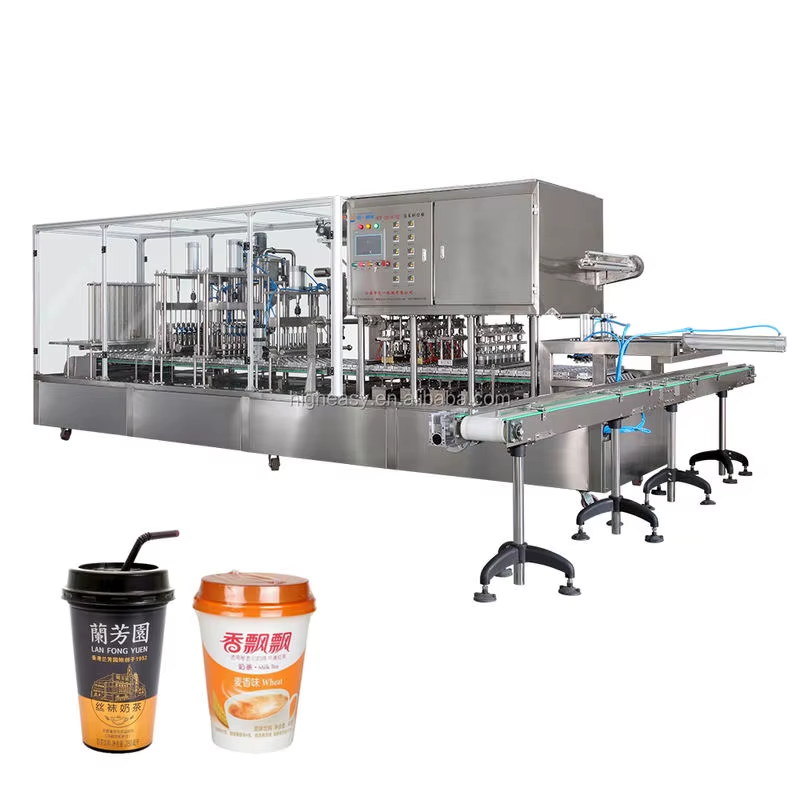
A shift supervisor at a juice bottling facility in South America noticed seal failure rates climbing from 0.2 percent to nearly 4 percent over the course of a week. The maintenance team initially replaced the heating elements — no improvement. Then they recalibrated the temperature controller — still no improvement. The actual cause was a worn pneumatic cylinder on the sealing head that was applying inconsistent pressure despite correct temperature readings. That diagnostic sequence — temperature first, then controls, then mechanical components — reflects a troubleshooting logic that applies across most cup filling sealing machine faults.
Seal-Related Failures
Incomplete or Weak Seals
When a machine produces seals that leak or peel open, the cause typically falls into one of four categories. Temperature deviation is the most common — sealing platens running 10 to 15 degrees below the film's activation range produce visually intact but structurally weak bonds. Before replacing heating elements, verify actual platen temperature with an external thermocouple rather than trusting the PLC display, which reads from a sensor that may itself be faulty. Insufficient dwell time — the duration the heated platen contacts the film — produces the same symptom as low temperature but requires a different fix: checking the pneumatic system air pressure and verifying the sealing head mechanical linkage is not binding. Contaminated sealing surfaces collect product residue that acts as an insulator between the platen and film, reducing effective heat transfer — daily cleaning with food-grade solvent prevents this. Worn platen surfaces develop uneven heating patterns that create weak spots in the seal — resurfacing or replacing the platen becomes necessary when temperature variation across the surface exceeds 5 degrees.
Film Misalignment and Registration Errors
Pre-printed film with branding and date codes must align precisely on each cup. When a photoelectric sensor fails to detect registration marks, the film indexing drifts — seals shift off-center and printed information appears misaligned. Dust accumulation on the sensor lens is the most common cause and resolves with cleaning. Sensor sensitivity adjustment becomes necessary when switching between film types with different opacity levels. Mechanical causes include worn film feed rollers that slip under tension and brake systems that fail to maintain consistent film tension during indexing — both produce intermittent rather than constant misalignment, making diagnosis more challenging than a simple sensor issue.
Filling System Faults
Volume Inconsistency and Dripping
Filling volume drift in a cup filling sealing machine typically traces to worn piston seals or O-rings in the filling head — as seals degrade, product leaks past during the fill stroke, reducing dispensed volume. For flow-meter systems, calibration drift caused by sensor fouling produces the same symptom. Dripping after the fill cycle completes indicates a worn nozzle check valve that fails to seat properly, allowing residual product to escape. The fix involves replacing the valve seat and seal, a procedure that takes approximately 20 minutes per filling head. For products containing particulates — fruit pieces in yogurt, herbs in sauce — particulate buildup behind the valve seat accelerates wear, and inspection frequency should increase accordingly.
Foaming and Fill-Level Problems
Excessive foaming that contaminates the seal area originates from either product formulation or filling technique. Bottom-up filling nozzles that dispense product below the liquid surface reduce foam compared to top-down dispensing. When foam persists despite correct filling technique, verify that product temperature is within specification — warm product foams more readily than cold — and check for air leaks in product supply lines that introduce unwanted aeration before the filling head.
Frequently Asked Questions
What causes intermittent seal failures that come and go?
Intermittent failures typically indicate a mechanical rather than control system fault. Worn pneumatic cylinders that bind at certain positions, film feed rollers with flat spots, or air pressure fluctuations in the plant supply line all produce failures that appear and disappear. Monitoring system air pressure with a data logger can capture pressure drops that correlate with failure events.
How should operators diagnose filling volume drift?
First verify the filling head itself is clean and free of particulate obstruction. Then check piston seals or O-rings for visible wear or damage. For flow-meter systems, run a calibration check using a graduated cylinder to compare actual dispensed volume against the PLC setpoint. Recalibrate if deviation exceeds 1 percent of target volume.
Why do seals fail more frequently on certain product types?
Acidic products such as fruit juices and vinegar-based sauces accelerate corrosion on sealing platen surfaces if not cleaned promptly after each production run. Oily products leave residue that acts as a thermal insulator, reducing heat transfer efficiency. Products with high sugar content caramelize on hot sealing surfaces, requiring more frequent cleaning cycles than low-sugar alternatives.
What preventive steps reduce machine downtime?
Daily cleaning of sealing surfaces and film alignment sensors prevents the two most common fault categories. Weekly inspection of pneumatic system air filters and lubrication levels catches issues before they cause cylinder performance degradation. Monthly temperature calibration of each sealing head using an external thermocouple verifies the accuracy of built-in temperature sensors.
How can maintenance teams distinguish between sensor failure and mechanical wear?
Sensor faults typically produce sudden, complete failures — film stops indexing, temperature readings drop to zero, the machine halts with an error code. Mechanical wear produces gradual degradation — seal quality slowly declines over weeks, filling volume gradually drifts, film alignment becomes progressively less accurate. Tracking performance data over time helps distinguish between these patterns.
When should filling nozzles be replaced rather than cleaned?
Replace filling nozzles when cleaning no longer restores consistent performance — indicated by recurring dripping after seal replacement, visible erosion of the nozzle orifice affecting stream pattern, or chemical pitting on product-contact surfaces that creates bacterial harborage points. Nozzle replacement costs are minor compared to the product waste and downtime caused by malfunctioning filling heads.