
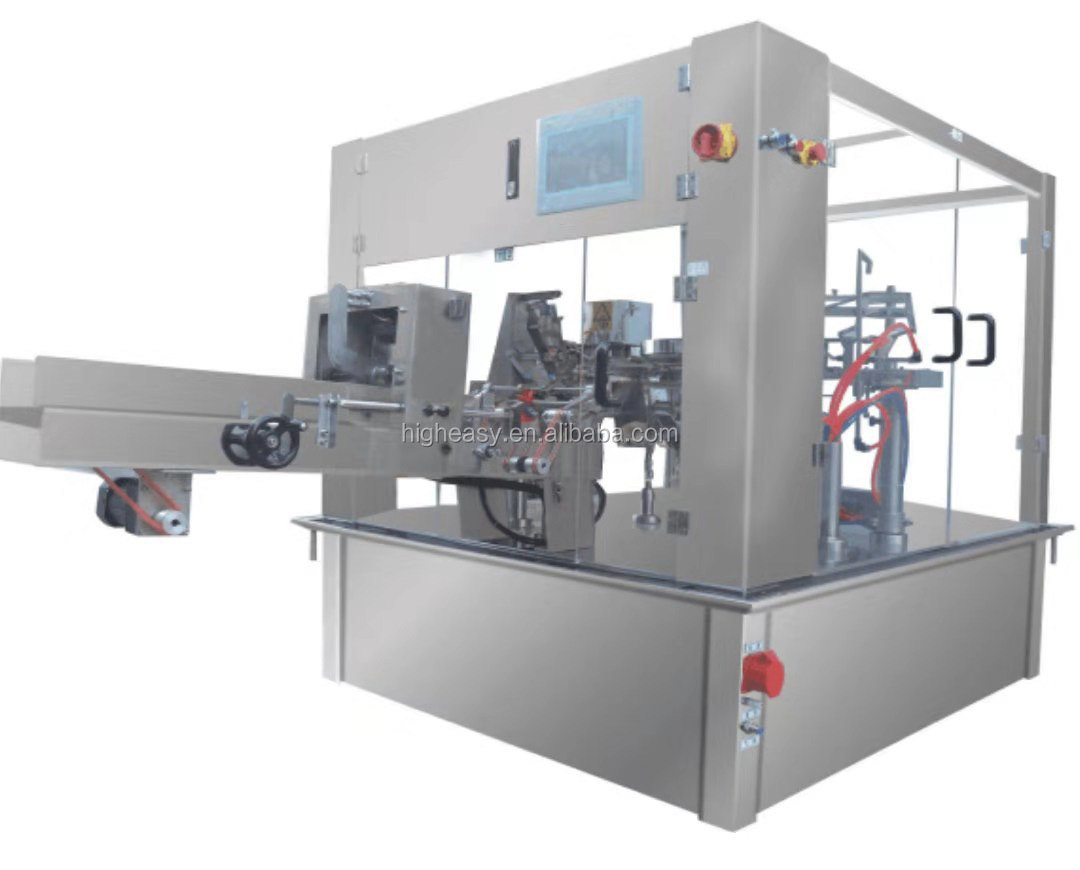
Rated vs. Real-World Production Capacity for Spout Pouch Filling and Capping Machines: The Difference Between Manufacturer Ratings and Sustainable Line-Integrated Output
Manufacturer speeds are not reflective of actual operational capacity. The speeds on the specs sheet of each machine run from 20 - 120 pouches per minute (PPM). These are achieved in lab conditions. Think of the scenarios: pouches of identical shape and size on a stable material consistency, an unbroken machine, and pouches that run feeder to feeder. The real-world scenario runs about 30% less than those specs according to the daily operational variance of material thickness, feeder jams, extreme temperature changes, and the requirement of a reliable and high-performing connection to the production line. The 2023 packaging operational research reported that only 10% of the facilities managed 90% operational capacity. The fast machine setting is not about the speed of the machine, it is how well the machine is integrated within the larger production system.
There is usually tracking spreader bars, sorting tracking, integrating quality checks, and conveyor speed adjustments. It is common to get a speed reduction of roughly 15 to 25 PPM on each of these, which is a perfect give and take to keep things operational and keep reject products to a minimum.
Main reasons for speed reduction are changeover time, spout alignment, and capping torque.
There are three main operational restraints that consistently reduce overall performance of a system;
1. Changeover time: The time spent during a shift for spout size or pouch dimensions adjustments takes 15 – 30 minutes and effectively reduces annual capacity by 25%.
2. Spout alignment: Sealing or re-sealing cycles are triggered by a vertical misalignment of 1.5 mm. The horizontal misalignment also increases rejection rates by 12%. (Packaging Digest, 2022).
3. Torque inconsistency (over/under): Caps that fall below 12 N·m cause 5 – 7% reprocessing losses due to spout deformation; and caps below 8 N·m cause leaks and also result in 5 – 7% reprocessing losses.
All of these issues result in Overall Equipment Effectiveness (OEE) that is below 65% and in some cases, may fall even lower with non-optimized lines. This is a lower performance target by 15% of what can be achieved with fully automated and sensor-based systems combine to achieve to 85%.
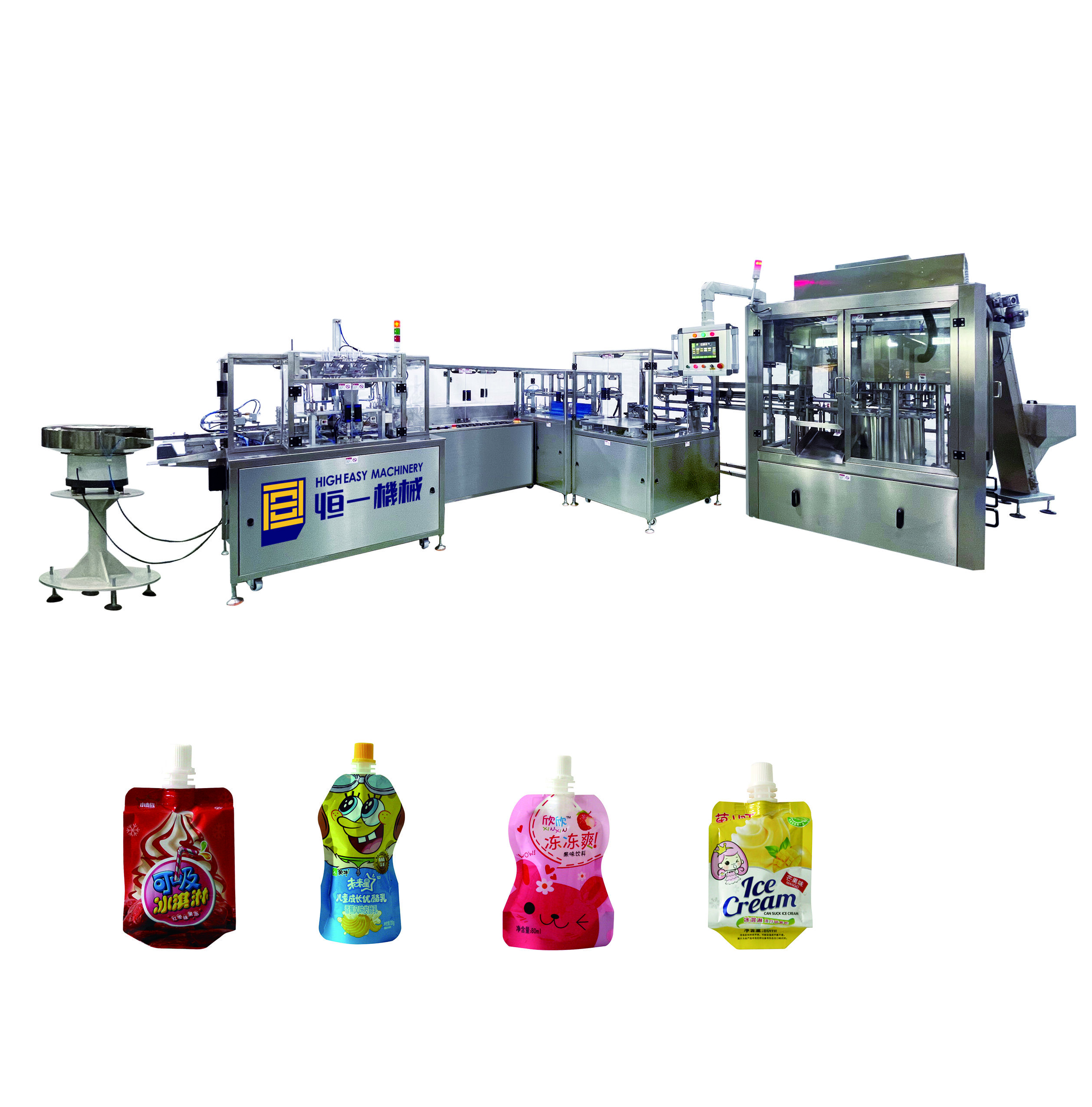
What Critical Technical Factors Spout Pouch Filling and Capping Machine Output are based on
There are three factors that cycle time (the cyclical nature of fill and seal) is dependent on, and they are:
- Fill volume: The larger the fill, the larger the cycle time. For example, a cycle time for a 1 liter fill is 2 times that of a 500 ml fill under the same conditions.
Viscosity: When working with products that exceed 5,000 cP, fill rates must be reduced by 15-30% in order to avoid the entrapment of air and spilling during acceleration.
Spout geometry: Spouts that are smaller than 15mm in diameter flow 20-40% less than larger spouts; spouts that are angled require exact positioning of the nozzle, which adds 2-5 seconds of time to each cycle.
Optimized material handling and pouch configurations can achieve less than 8 seconds per cycle with 500mL pouches, but only with the integration of the 3 customizable parameters.
Weak points in throughput in material handling subsystems:
Pouch feeders with lower than 98% reliability can result in 3-8 stoppages per hour, wasting approximately 12% of the scheduled time.
If the film tension is inconsistent, misalignment of sealing jaws can occur, which is the most common cause of leaking in approximately 0.5% of the units.
Capping failures due to spout positioning that is not accurate to within 0.5mm cause rework to an unacceptable level and reduce output by 18%.
Vision guided corrective systems provide an answer to these challenges but the $50,000 to $120,000 cost can be prohibitive. For mid volume producers trying to balance the cost of automation with the value of decreased downtime, that can be an important consideration.
Automation Levels and Scalability: Maximizing Volume and Maintaining Quality
The Trade-Offs Of Spout Pouch Filling and Capping Machines: Semi-Automatic Vs. Fully Automatic Overhead, Labor, And OEE
Semi-automatic systems usually reach an output range of 15-25 units per minute, however, an operator must load the pouches and align the spouts. These systems are low-cost and great for small production runs, especially for products that are seasonal. There is an increased need for human labor, longer changeowns if you are switching to different products, and the systems tend to have a fair amount of sealing errors. Overall Equipment Effectiveness (OEE) is often stuck at around 60 percent. Fully automated systems show greater improvements, and reach outputs of 60-120 PPM due to robotic arms, continuous motion filling, and camera guided smart filling. These systems cost 30-50% more than other systems, however, customers see a 70% decrease in labor costs and OEE goes above 85%. When looking at scalable production, a single well-configured automated line can increase production capacity by 400% just by altering speed settings.
Keep in mind, all that extra throughput hinges on achieving precise torque settings, as well as having excellent air elimination integrated into the system so that seals remain intact at high speeds.
Choosing the Right Spout Pouch Filling and Capping Machine for Your Volume Needs
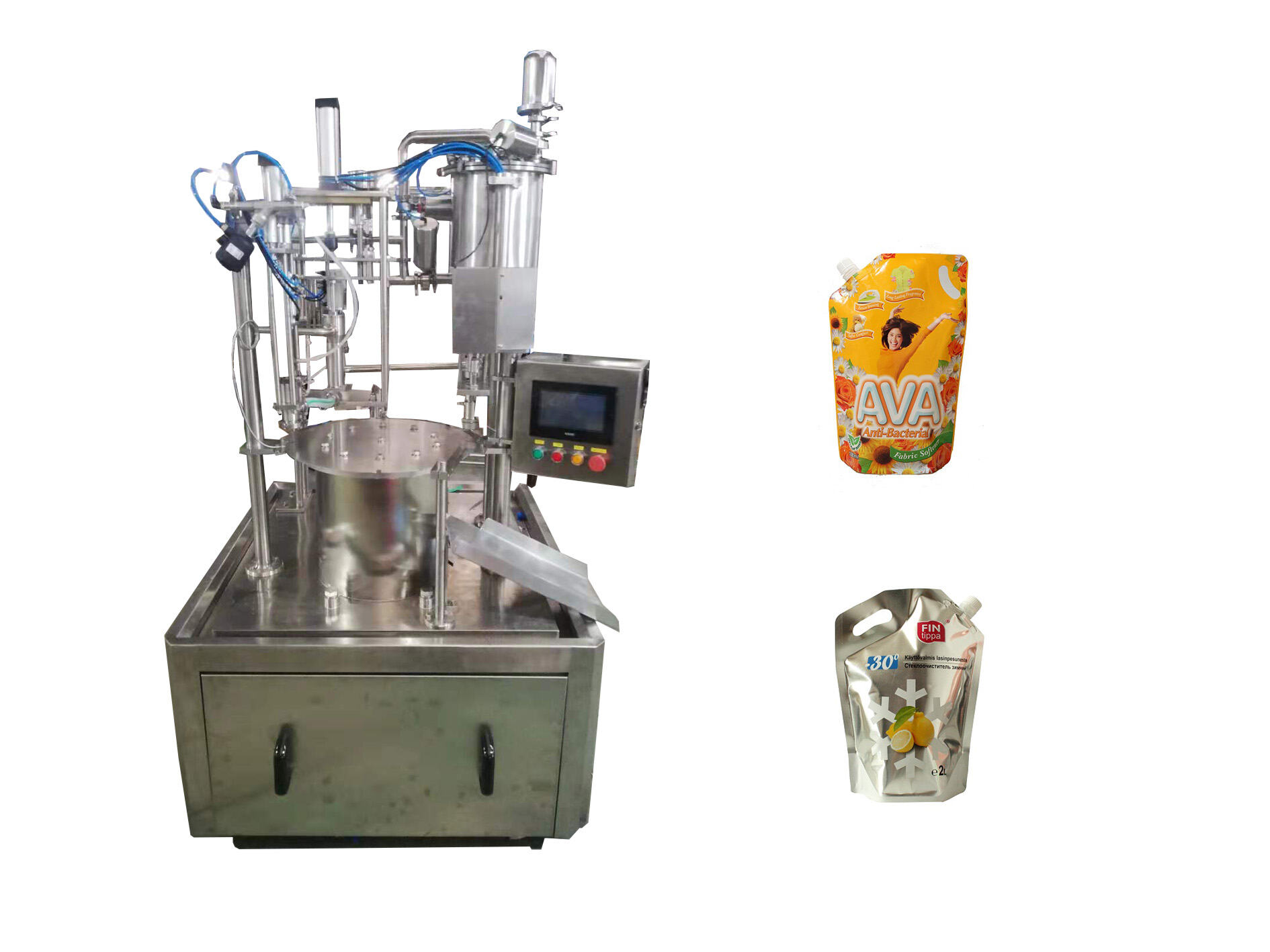
Specifications have limitations and the more important and often overlooked area is what the system needs. From experience, companies specifying excessive requirements end up paying more during the planning stage, as well as more monthly payments afterward. Underspecified requirements cause frustration for whole sections of operations that get completely backed up. The best way is to use real production numbers from the past year, as well as estimates of seasonal and product-type variations. Many forget that machines operate well below their stated capacity, often 20% to 30% of what is stated due to changeovers, inconsistent materials, and poor floor layout. Low-to-mid volume (<5,000 units/hour): Semi-automatic machines offer cost-effective flexibility but require skilled operators and accept higher labor and reject costs.
Fully automated systems with integrated quality sensors, especially for torque and spout alignment, should be first considered for sustained output and for maintaining leak integrity.
Modular systems that allow for scaling through additional filling heads, robotic palletizers, and inline vision inspection, become critical as demand increases.
During factory acceptance testing, actual pouch dimensions, input type, and product viscosity must be considered. These variables will invariably set sustainable throughput, not nameplate ratings, and will invariably set achievable throughput.
Please explain the difference between rated capacity and actual output.
Rated capacity is the ideal listing by manufacturers for maximum speed achieved under optimal scenarios. Actual output is the most realistic figure and is often 20-30% lower. This is often caused by material differences, integration with other production line components, and size limitations.
Overall Equipment Effectiveness (OEE) - why measure OEE?
OEE is the measure of the operational efficiency for production lines. It attempts to quantify the impact of downtime and quality issues that reduce production output. High values for OEE indicate that there are not significant obstacles to the flow of the production line.
What are the advantages of fully automated spout pouch filling machines as compared to semi-automated spout pouch filling machines?
Fully automated spout pouch filling machines are able to achieve higher production rates and lower workforce requirements leading to reduced operational expenditures. Fully automated systems achieve higher OEE compared to semi-automated systems.
Table of Contents
- There are three main operational restraints that consistently reduce overall performance of a system;
- Weak points in throughput in material handling subsystems:
- The Trade-Offs Of Spout Pouch Filling and Capping Machines: Semi-Automatic Vs. Fully Automatic Overhead, Labor, And OEE
- Please explain the difference between rated capacity and actual output.