
Liquid Products: Strike a Balance Between Speed and Precision for Beverages and Juices
Filling Precision Based on Product Viscosity
In packaging operations, getting flow control accuracy for juices and water can be a hassle due to their low viscosity. To address these challenges, many modern spout pouch fillers are equipped with mass flow meters that measure flow with an accuracy of about 0.5%. This allows companies to prevent product loss while simultaneously maximizing the speed of their production line. Changes in temperature can affect the viscosity of these liquids by as much as 20%. As a result, many pouch filling machines are equipped with automated control to actively adjust filling rates based on internal temperature. This way, machines can prevent scenarios where an underfilled pouch contains cold pressed juice or where vitamin water spills during filling. In multiple beverage production facilities, the switch to automated filling machines resulted in approximately 30% less product rejections.
Mitigating Foaming and Splashing in Carbonated and Dairy-Based Products
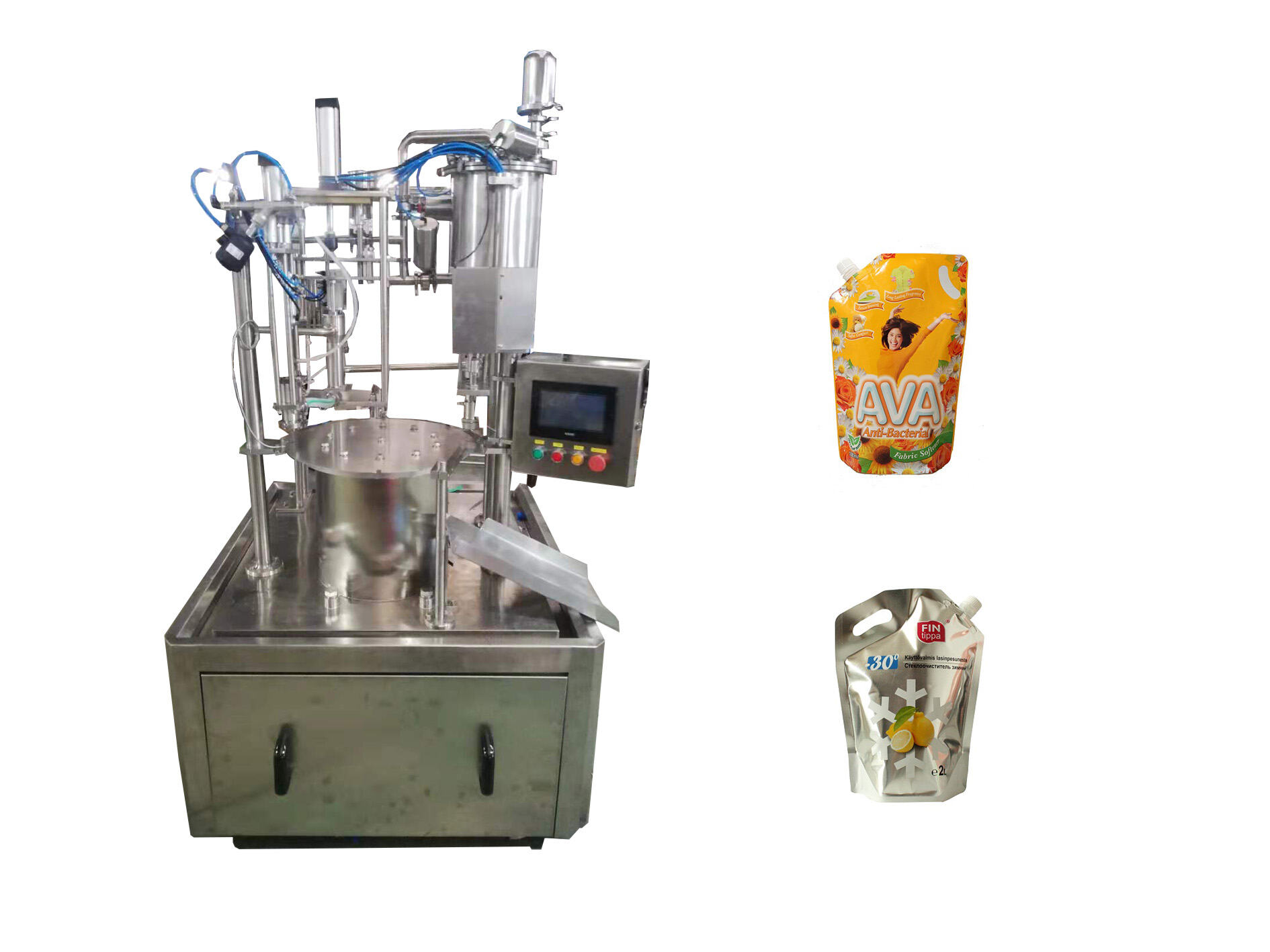
Anti-foam engineering for dairy and carbonated drinks must be customized. Three-phase systems solve this:
- Counter-pressure fillers for CO₂ retention in sodas
- Low-shear nozzles for yogurt drinks to limit denaturation of proteins
- Vacuum degassing chambers to eliminate air
Solution Example Application Foam Reduction
Ramp-and-hold filling Energy drinks 40%
Bottom-up filling Cream liqueurs 55%
(Data source: Beverage Production Quarterly 2024)
These methods allow modern engineering to maintain the integrity of the liquid while maximizing throughput: 200 pouches per minute on volume-driven lines.
Powders and Granulars: Guaranteed Dust-Free and Uniform Fills in Spout Pouch Filling and Capping Machine Systems
Auger Fillers with Anti-Static Controls for Seasonings and Nutraceuticals
The auger filler is an engineering marvel that incorporates a turning screw within a tube that has been custom engineered for superior measurement. This technology allows for incredible dosing of both powders and granules. For example, both delicate spices and chunky dietary supplements can be dispensed with an accuracy of +/- 0.5 grams. The operator is in control of both the revolutions and the duration of the screw turn for consistent filling and dosing. Static electricity has long been a problem in filling. To reduce filling dust clouds, product loss, and contamination, custom engineered solutions that are either ionized air or conductive materials are often employed. For moisture sensitive proteins, certain protein powders and other products, some auger filler systems are designed with vacuum systems to eliminate air contact with the product while filling. One of the leading design advantages of auger filler is the modular design of the filler. The filler design allows the operator to switch to a different size granule in minutes, avoiding any need to reconfigure the system. The modular design and rapid interchangeability of the auger screw has been shown to reduce product loss as compared to traditional volume fill systems. Volume fill systems traditionally waste an estimated 18% of the fill product.
Additionally, all these features ensure that the equipment meets the stringent hygiene standards necessary for food processing and pharmaceuticals manufacturing.
Specialty Formulations - Oils, Creams, Chemically Active Materials
Sealing Compatibility and Material Compatibility Issues with Oil and Personal Care Products
Working with oils, creams, and other chemically active materials can require special engineering when designing spout pouch filling and capping machines. For oil products, such as cooking oils or essential oils, producers require contact surfaces that are made from non-reactive materials, typically ranging from 316L stainless steel, which aids in preventing oxidation and keeping oils from going rancid. Personal care creams that are highly lipidic really challenge the heat seals as even micro amounts of surface oil contamination of (< 0.1%) can weaken that seal by 15% to 30% on average. Industrial solvent and acidic cleaning agents present yet another challenge requiring gaskets and components that are inert in the presence of harsh chemical breakdown. Smart manufacturers address these challenges with multi-layer films of which the inner sealing films are oil impermeable and sealing jaws that are temperature controlled to tight tolerances. They also test the materials compatibility to ensure all materials equilibrate to the desired performance. Once the pouch is filled, on-line vision systems are also used to guarantee the integrity of every micro leak, essential to maintaining the safety of the pouch contents and meeting expected shelf-life.
FAQ Section
1. In what way do mass flow meters ensure accuracy while filling liquid products?
Mass flow meters determine the flow of liquid while maintaining an accuracy of 0.5 percent. This accuracy also helps reduce the amount of liquid product waste during the liquid packaging process.
2. Why is foaming an issue when dealing with carbonated beverages?
Foaming can create a loss of product and therefore increase the chance of spilling while packaging. This is the reason we use anti-foam engineering solutions, for example, counter-pressure fillers, to deal with this issue.
3. How do auger fillers reduce the problems caused by static electricity?
Most auger fillers include a system that blows ionized air and uses some conductive material to reduce the effects of static electricity, thereby eliminating the dust cloud and ensuring the fill is consistent.