
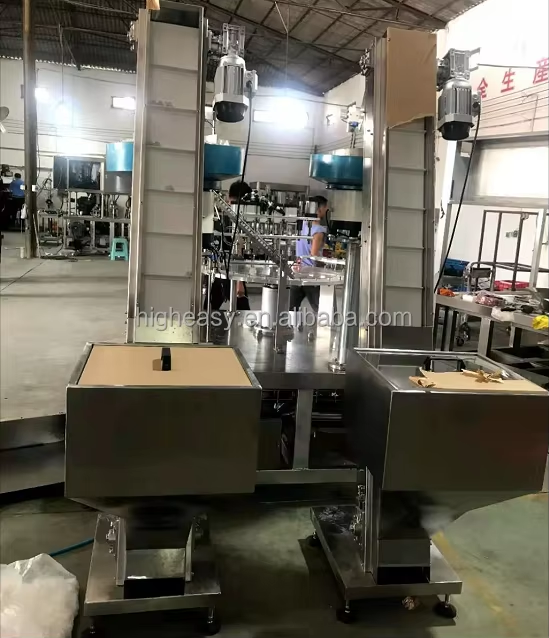
Filling and Capping Systems Using Regenerative Braking and Variable Frequency Drives
Filling and Capping systems that incorporate Variable Frequency Drives (VFDs) are pioneers in energy saving systems. Most modern spout pouch filling and capping machines have VFDs. Each machine’s individual VFD allows for the optimization of each motor’s speed to match the requirements of the individual filling and capping stations. Older filling and capping systems consumed fixed amounts of energy, regardless of whether that energy was needed. On the other hand, newer systems consume 25 to 40 percent less energy than those older systems. Another energy saving technology that is, in combination with speed optimization, is regenerative braking. Instead of heat, regenerative braking systems reuse energy from braking and feed that energy back to the power system. These braking systems, their braking system and filling measurement systems, maintain less than 0.5% tolerance accuracy on the filling system, in combination, significantly reduces or eliminates the electrical spikes from their braking systems. Overall, modern spout pouch filling and capping systems with regenerative braking are able to both optimize energy consumption during filling and capping processes and save their own regenerative energy systems.
Smart Standby Modes and Load-Based Power Modulation
Smart standby systems save energy and avoid slowing down operations. Instead of some of the production equipment like conveyor belts and heaters staying on, they will shut down without user intervention during the short pauses of the production run. Also, the motors will adjust to the load in each container and the air systems will shut down automatically if they are not required to perform sealing operations. With all of the above, the energy consumption can be reduced by around 70%, which means that all of the equipment will still be kept on standby, and will, more importantly, be able to return to full operational capacity in 3 seconds, which preserves Overall Equipment Effectiveness. This type of system typically generates annual savings of between $18,000 and $42,000 per production line in factories that have 3 shifts a day. Therefore, it allows manufacturers to have a quicker return on investment without affecting output volume or product quality.
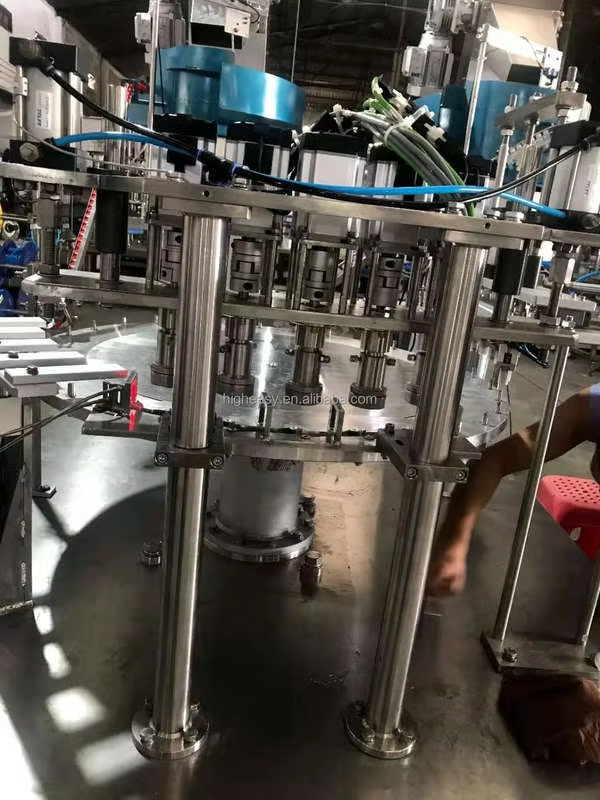
Capping and sealing technology’ reducing thermal waste with pouch packaging
Induction sealing and traditional heat sealing: kWh usage
Induction sealing is 30 to 40 percent more energy efficient than traditional heat sealing methods. Last year’s Packaging Digest showed that heat sealing requires about 1.3 to 1.8 kWh for every 1,000 units sealed, while induction sealing requires only 0.8 to 1.2 kWh. Induction sealing technology is more efficient because instead of heating everything around the seal, the electromagnetic process targets the seal only. Additionally, induction systems only use energy for sealing and do not have to run continuously like traditional systems do. This means that waste thermal energy and thermal management systems are significantly reduced. Regular thermal management systems use up to 25% of the total energy consumed. This is a big benefit for sealing systems for sensitive products like dairy or health supplements, where even small temperature changes are critical.
Integrated Thermal Recovery and Cooling Optimization
Advanced sealing systems now feature a closed-loop thermal recovery system that captures and reuses between 50 and 75 percent of thermal waste prior to sealed internal heat exchangers. What happens next? The re-captured energy is used to preheat the air entering the sealing chamber or can be used in other auxiliary processes. This approach reduces the overall energy input required. Similarly, the interchangeable cooling systems are being replaced with variable speed chillers, which control cooling dynamically in response to the operation of chillers using IoT temperature sensors. Smarter chillers reduce cooling energy consumption by 35 percent, and eliminate condensation that can cause seal failure. All these system enhancements, together with variable speed chillers and IoT temperature sensors, can reduce thermal thermal energy losses by 60 percent. This is significant thermal energy savings, especially for large scale operations.
Beyond Watts: Understanding the First Steps to the ROI of Energy-Saving Spout Pouch Filling and Capping Machines
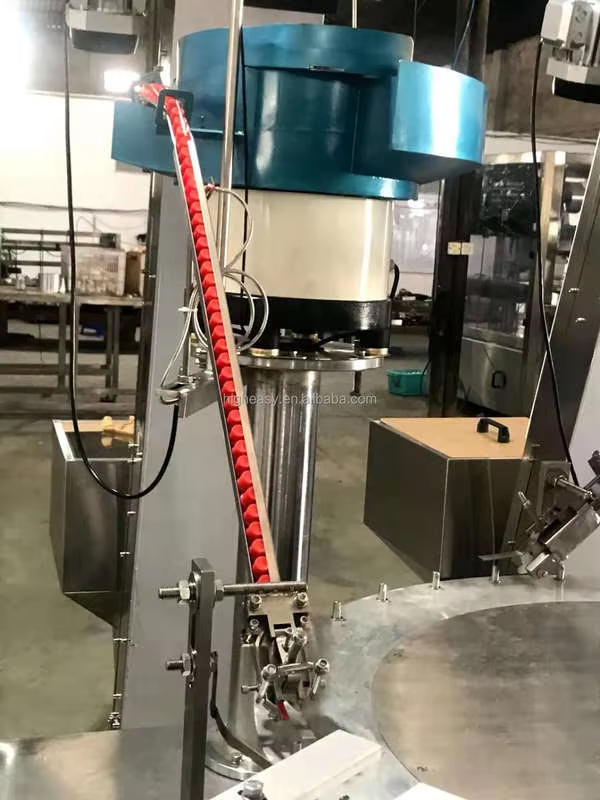
(Operational) Energy Assessment and Payback Period Calculation
The ROI of energy-efficient spout pouch machines goes beyond the reduction in electricity costs. Machines that come with variable frequency drives, regenerative braking systems, and heat recovery systems, to name a few, do diminish energy consumption from the outset. However, the real cash flow benefits to the machines come from the reduction of maintenance costs, the reduction of product waste, and of course the extended longevity of machines before replacement. Actual data from a number of factories, show that operational data returns of about 35% in 2 years is not atypical when all of the hidden, and not so hidden, costs are considered, such as the costs associated with operational downtime and wasted raw material, in addition, of course, to the operational energy costs. All good evaluations of these machines must consider all of the costs, savings, operational, and energy, that are found in the monthly utility bills, of these machines, over the lifetime of the machine.
Annual operational savings, covering energy costs, labor costs, and scrap savings
Preventative vs. reactive maintenance costs (parts/labor)
Production flexibility allowing scalable demand
When companies automate quality inspections in their filling operations, scrap rates tend to drop around 18-22%. These systems also have built-in diagnostic features that reduce maintenance costs by around 30% because they identify issues before they become major problems. Plants that invest in quality equipment tend to break even on their investment in around 2 years. The majority of facilities that have installed these systems over a 5 year period have saved in excess of $740,000. This figure is consistent across a number of different manufacturing sectors.
FAQ
What is the major energy-saving feature of modern spout pouch filling machines?
Regenerative braking and Variable Frequency Drives (VFDs) are the primary energy-saving feature of modern spout pouch filling machines and can save as much as 25 to 40 percent over older machines by optimizing energy use.What is the energy efficiency improvement for the system?
The system is able to focus electromagnetic energy on the sealing area alone to minimize energy waste and cooling needs. This allows for an additional 30 to 40 percent efficiency compared to traditional methods of heat sealing.
What is the financial benefit of buying energy-efficient filling machines?
Maintenance costs, product waste, lifespan, and machine maintenance can all be reduced with the purchase of energy-efficient machines. This can lead to a 35 percent return in less than two years, with a four to five-year period for the facility to realize savings in the range of $740,000 to $740,000.
In what way do the machines operate in smart standby mode to conserve energy?
When an operation is in smart standby mode, energy is used is dropped by about 70 percent, as the operation will be turned off and non-essential components such as conveyors and heaters. This means they will be enabled to quickly ramp back up and maintain productivity. Se.