
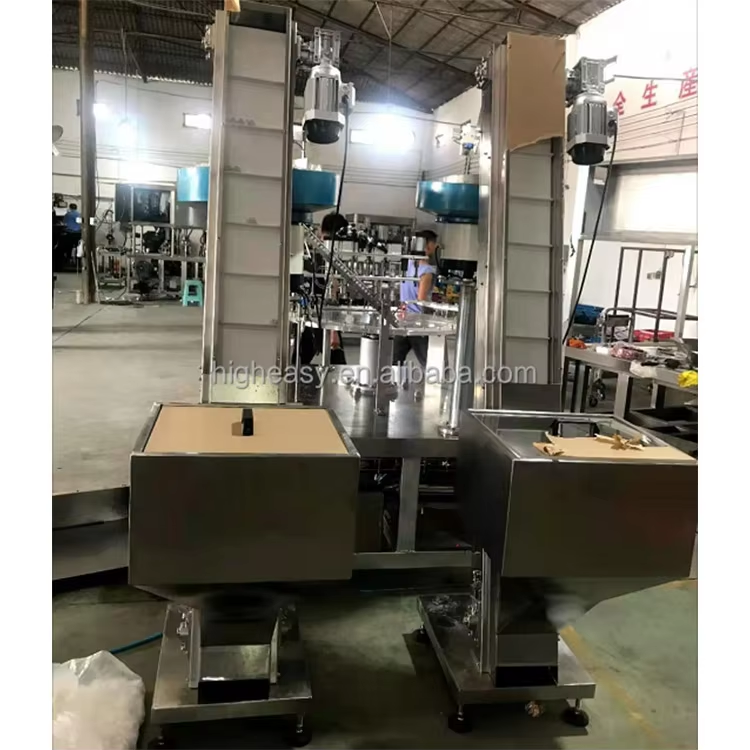
To understand spout pouch filling and capping machines, we will examine how the spout pouch filling and capping machine handles the filling, sealing, and capping process for each spout pouch.
The system grabs previously made pouches and places them on an endless conveyor belt using new robotic technology. With their advanced servo motors, the proprietary pumps can fill anything from liquids to thick pastes to coarse powders. Additionally, they can consistently hit their fill weight target and minimize product loss to approximately 1%. After pouches are filled, an automatic brush will clean the spout area to ensure no product is there prior to sealing. Pouches are capped by the magnetic controller gates. When configured and made properly, the seals can be controlled to make capping very difficult and frustrating for the end user. These new automated systems have reduced the amount of operator intervention required by 90%. They also provide the food-safe environment required by the strict FDA and EU regulations, guaranteeing food and packing safety.
Key Components: Nozzle Assembly, Spout Positioning, and Cap Delivery Systems
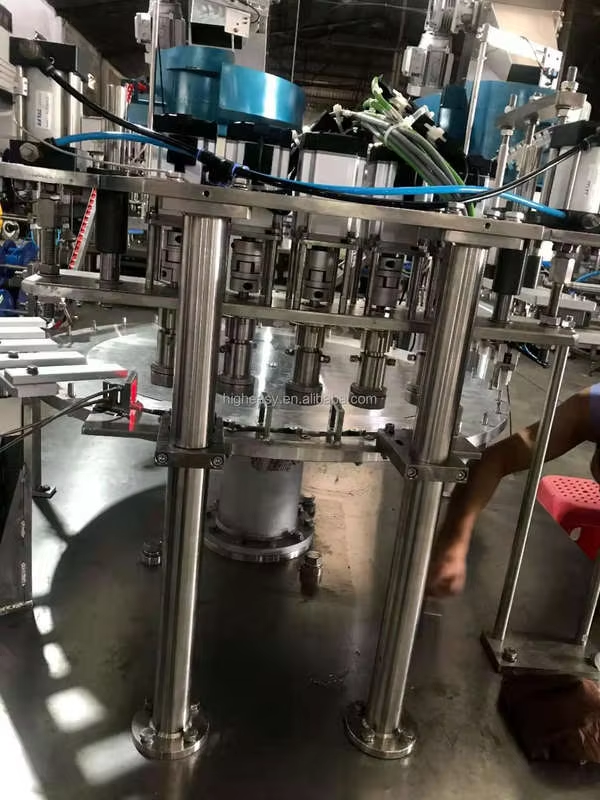
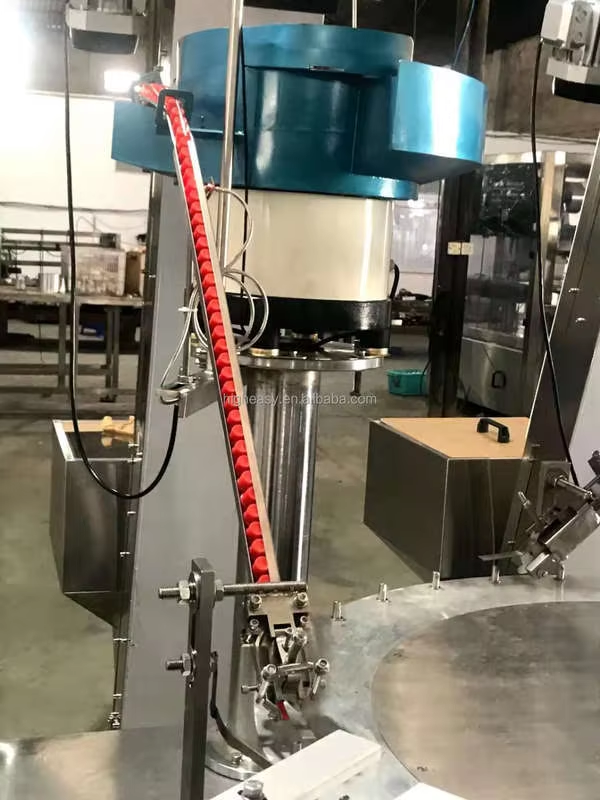
Our system optimizes three core components working in unison. The nozzles use variable speed servos to handle a wide range of product viscosities. Consider the challenges posed by runny products, such as juice, and thicker products, like shampoo, and the need to manage each without allowing any to create a mess. In terms of spout positioning, two approaches are used. Some systems deploy robotic vision systems that are able to position components within 0.5 mm. Others use mechanical systems. Regardless, achieving proper fitting of the caps is the goal. Interestingly, the process that deals with caps begins with a bowl system that vibrates to sort the caps and releases them into a rotating track. Then, a pneumatic actuator takes the cap to the spout. The last position of the system is occupied by a capping head, which is designed to apply a specific range of twist torque between 5 and 15 Newton meters –just enough to not cause any damage. These components working together throughout the process, ensure that the machine is reliable about 99% of the time, even at a fully loaded speed of 60 pouches per minute.
Most Important Aspects of Spout Pouch Filling and Capping Machines
Compatibility with Throughput and Line Integration
Packaging operations greatly depend on the consistency between the machine speed and the production requirements; therefore, pouch producers with an output of more than 100 pouches per minute tend to look for more sophisticated options such as servo driven systems and automatic cap feed systems, while some pouch producers look for semi automatic systems. In addition to the speed and automation level of the machine, the ease of integration with the existing system components like conveyor belts, labeling systems and coding systems using standard PLC connections is a key element to consider when evaluating new machines. If the system components do not match in speed, it could lead to a significant decrease in the overall productivity of the system. As an example, a modular spout pouch filling and capping system with Ethernet IP connectivity, which allows it to be integrated with other systems in the production line, greatly contributed to the enhancement of the productivity of a soft drink company by 30%, which also indicates the challenges that companies had to face in order to gain this [ribbon of productivity].Pouch and Spout Type Versatility
Flexibility for various pouch sizes (50ml-1000ml) and spout types means shorter changeover times. Look for machines that can accommodate:
Flip top closures (typical for sauces)
Sport closures (for drinking on the go)
Tamper evidence (pharma/chemical applications)
Also consider material compatibility, as silicone valve spouts require different nozzle pressure settings than the polyethylene ones. One of the top brands in dairy reported a 22% reduction in packaging waste after implementing a dual nozzle spout pouch system that had the ability to fill both thick yogurt and thin juice.
Benefits of Efficiency, Hygiene, and Waste Reduction
The latest spout pouch filling and capping machines are designed to integrate the best of both worlds in precise engineering and automated hygiene to deliver tangible and measurable value in three main areas:
Exact filling with precision and less product loss
Volumetric and gravimetric filling nozzles are able to achieve a ±1% tolerance which means the product giveaway and portion inconsistency has been reduced by 3% to achieve closed loop consistency. Drip and splatter waste prevention as well as pouch transfer waste are also controlled with the continuous viscosity and flow feedback control.
Application of Aseptic Caps and Adherence to Pharma/Food Industry Regulations
Prior to application, integrated sterilization tunnels with H₂O₂ vapor or UV-C light, achieve log-6 microbial reduction, and decontaminate caps. Vision-guided feeders provide caps, sealed without contact, ensuring compliance with FDA 21 CFR Part 11 and EU Regulation 2023/2006. This contributes to the removal of contamination vectors and the provision of complete lot traceability via SCADA data logging.
Benefit Category Operational Impact Compliance Advantage
Filling Precision Reduces product loss by 2–5%. Compliance with net content regulations.
Aseptic Capping Prevention of contamination that could cause recalls. Validation of HACCP/GMP protocols.
Automated Hygiene Removal of risks associated with manual handling. Documentation of sanitization that is auditable.
Maintenance, Training, and ROI Considerations
Regular, routine maintenance of equipment along with employee training on use and care of equipment plays an essential role in a company’s bottom line. Companies that spend money on routine maintenance of their nozzle systems and cap feeders stay in business by avoiding the problems associated with unanticipated line shut downs. From this perspective, unanticipated line shut downs become even more of a problem when one considers that the Ponemon Institute indicates that on average each unanticipated line shut down costs a manufacturer $740,000 per annum in direct production loss. Well conducted employee training has been proven to reduce the error rate in the workplace by nearly 40%. This leads to an increase in the amount of product that is actively used and a decrease in the amount of product that is wasted, in addition to improved compliance with the cleaning standards that are mandatory in the food and drug manufacturing industries.
While analyzing ROI, it is essential to analyze direct and indirect saving.
Cost Factor | Saving Source
Maintenance labor/parts | Longer life of equipment
Training implementation | Decreased product loss
Downtime mitigation | Better consistency of throughput
If we analyze how iterative saving from short downtimes and round uptime machine utilisation saves predictive maintenance costs, we can get estimates up to 300% ROI. For example, predictive maintenance costs are around $50,000, and operational savings are often $150,000. A good facility manager knows how to think about equipment construction as well. Modular construction simplifies repair. Before any major investment, a long payback time is a signal to do a real-world study on the potential increases in operational efficiency.
FAQ\x0cWhat are the key advantages of spout pouch filling and capping machines? \nThe key advantages are in efficiency, filling accuracy, and compliance with applicable product loss and hygiene standards. They also allow for the cleanest manufacturing operations and minimal manual intervention to reduce the chances of contamination during the process. \nWhat is the mechanisms of spout pouch filling and capping machines that allow for cost savings? \nThey allow for cost savings due to less product loss, reduced maintenance and labor costs, and more production uptime. These are the mechanisms that assist in having a positive ROI. \nAre spout pouch filling and capping machines suitable with different pouch sizes and varied spout types? \nYes, spout pouch filling and capping machines are suitable for adapting to different sizes from 50ml to 1000ml and varied types including removable, flip-top, sports cap, and tamper-evident seal spouts. This are the less time-consuming changes.