
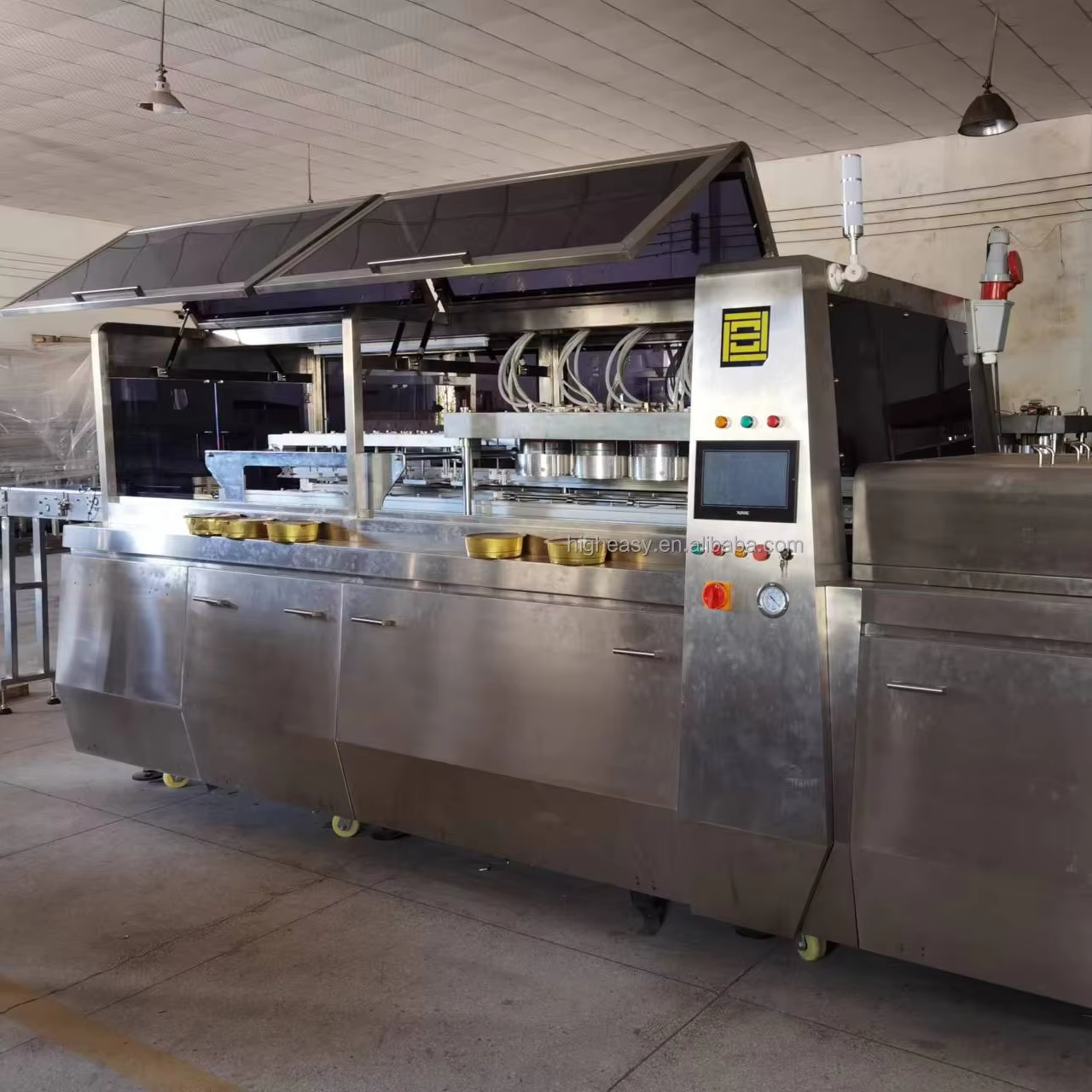
Core Sealing Parameters on a Horizontal FFS Machine
Heat sealing temperatures: sealing vs damage
Heat sealing temperatures determine the proper seal without damaging the horizontal form fill seal machine film material. When temperatures are to hot the polymers begin to break down and lead to burnt seams. When heat is insufficient the fusion of the film will be inadequate resulting in a weak spot in the film that can leak. Most polyolefin films like LDPE and CPP seal best at 120 and 150 degrees Celsius. For PET based laminates the temperatures need to be increased between 140 to 170 degrees Celsius. The PET films are more challenging to heat and take longer to do so. Small changes in temperature are essential for consistent sealing. The newest equipment that incorporates infrared sensors can stabilize the temperature to within 2 degrees. This is associated with a sharp reduction in seal failure when equipment runs at high speed.
Sealing bars and uniform contact across all bars
Achieving uniform contact with all seal bars is important for uniform adhesion and eliminating air pockets. Many horizontal FFS machines run at 40-60 psi, but laminated materials (especially those with aluminum) require operators to set the machines at 25% higher pressures due to uneven surfaces and the need for a pressure differential to obtain the contact required to melt the layers. Mechancial drawbacks can undermine this pressure, and gaps between sealing jaws can knock the pressure at the sealing surfaces down by 15% or more, resulting in poor seals. Higher levels of uniformity and automation are a feature of more modern machines, with laser-levelling and dynamic-adjustment pressure-plate compensation such that, at higher speeds (e.g. 120 ppm), the seal pressure varies by 5% or less across the width of the seal.
Time spent sealing: coordinating with horizontal FFS machine speed and film dwell zone
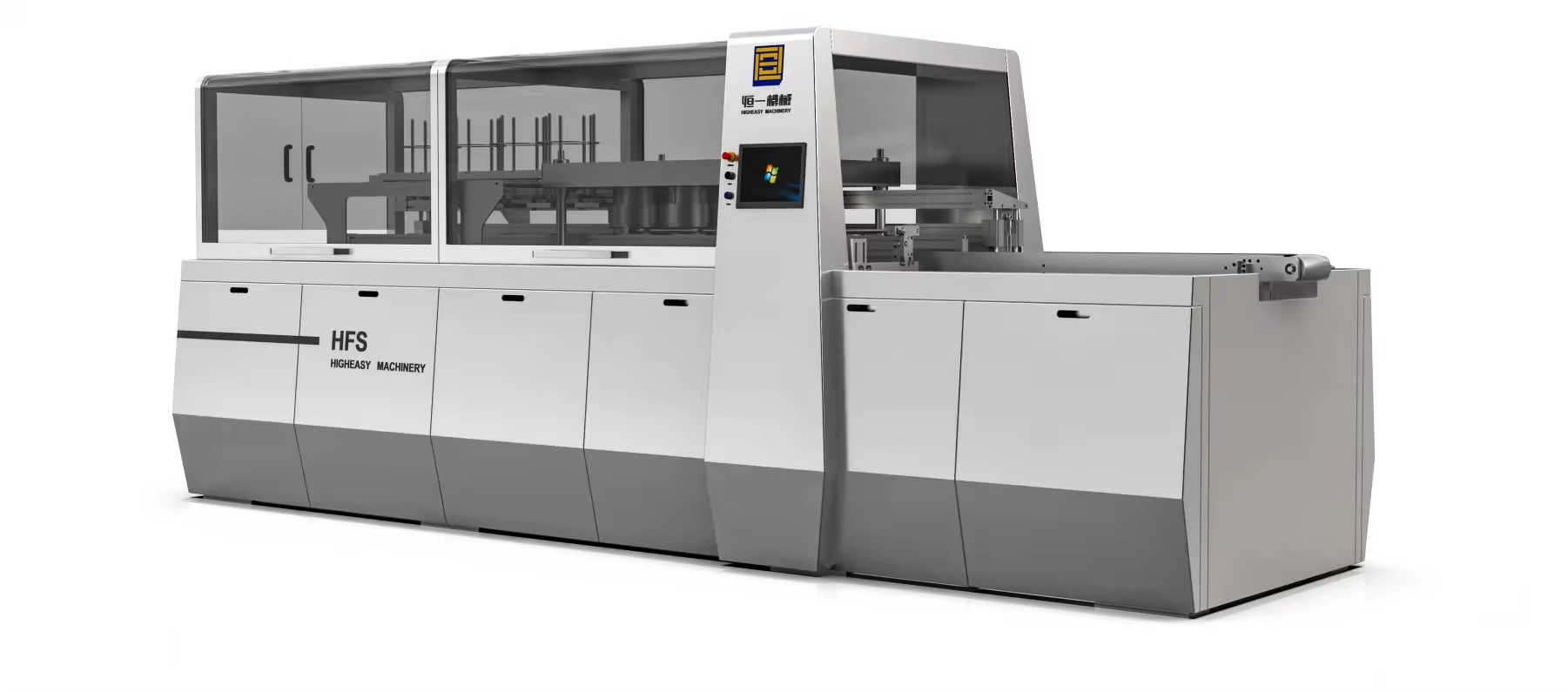
The time and date that sealing forces are applied are specific. The active window of sealing forces made by heat and pressure is dependent on the flow rate of the production line. With standard films at an operational speed of approximately 30 meters per minute, we typically achieve optimal bonding in the range of 0.8 to 1.2 seconds. However, seal dwell times at line speeds in excess of 50 m/min must be further reduced to prevent overheating. To address this, special cooling sections are installed into the system that are capable of losing the seal in under 1/3 of a second. The type of film also has a significant impact. Plain polyethylene is fused approximately 30 percent faster than the laminated film structures of PET/AL/PE. Therefore, the operators' adjustments must be made with greater precision to avoid the occurrence of either seals that are too weak, or seals that are too strong.
Diagnosing and Fixing Sealing Issues on Horizontal FFS Machines
Diagnosing and fixing sealing issues based on sealing parameter deviations
From experience, sealing issues indicate a recurring problem with the process parameters. A weak seal results from insufficient sealing pressure and temperature, which prevents the polymer chains from fusing. Incomplete seals are a result of uneven temperature distribution, inappropriate machine dwell time, and excessive film thickness. Heat and cold spots also cause uneven seal formation. A burned seal surface is one that is discolored, and is brittle or black from excessive temperature and carbon deposition from prolonged sealing contact. Approximately, two-thirds of the sealing defect issues reported in the previous year’s packaging defector report are attributed to the issues mentioned above. The first step in defining the problem is to check:
The calibration of the thermocouples in all the sealing jaws
The uniform pressure distribution of the impression film
Time cycles audits aligned with film dwell zone specs
For incremental temperature and pressure adjustments (±5 degrees and ±10%, respectively), follow each step with a film response observation. Maintaining continuous logs of each parameter reduces average troubleshooting time by 40% versus reactive adjustments.
Parameters of Different Packaging Films Applicable for Horizontal FFS
LDPE, CPP, PET/AL/PE laminates, and mono-material films: thermal and mechanical response profiles
Which sealing technology to use depends on how the films respond to sealing. As an illustration, LDPE films seal at temperatures of about 105 to 115 degrees Celsius, and so we run the seals at 110 to 150 °C. However, one has to be careful regarding the sealing pressure. Too much pressure will create channels, resulting in seal weakness. CPP films require sealing at temperatures of 140 to 170 °C, which is definitely hotter than LDPE, and have a shorter sealing time. This is especially useful in sealing applications where clarity is important because of the sealing. Sealing of PET/AL/PE laminates is also challenging. The reason is that the aluminum layer insulates the interior layers from heat, so about 10 to 15 percent more heat than normal is required to seal the layers. However, one has to be careful not to use too much heat, as this may cause the layers to delaminate instead of sealing them. Some companies have also adopted new structures made from all-PE materials, which also improve recyclability.
These alternatives function adequately; however, they require precise control of temperature, pressure, and time for them to achieve similar strength and protective capabilities as conventional laminates. Always consult the film manufacturer before making alterations to your equipment settings. Minute differences are pivotal; for example, a variation of 5 microns in thickness can change the ideal settings by 8 to 12 percent.
Adjustments of Horizontal FFS Machine Parameters with Real-World Variables

Adjustments with respect to temperature, humidity, and film tension drift.
Warranted to a multitude of mechanical and environmental factors, the quality of the seal is subject to variation. Given temperature fluctuations of roughly ±5 degrees Celsius, the film's viscosity may change by 12 to 18 percent. Subsequently, the 'melt' flow requires an adjustment of ~±2 degrees. Additionally, with a humidity level exceeding 60% relative humidity, there is a significant reduction of 15% in thermal efficiency. This can be addressed by the operator, who may either keep the dwell time increased by 0.1 seconds for every 10% relative humidity or, simply, choose to increase the temperature set-point a little. Additionally, faulty reel alignment can cause film tension to drift, resulting in a poorly aligned conveyor system, which creates wrinkles that can cause the seal to fail in 1 out of every 4 packages. These issues may be resolved by enclosing the automated systems with real time infrared sensors and closed loop tension controllers.
To develop correction curves based on film performance in response to various film lots and environmental conditions, correction curves would be more effective than theoretical methods to achieve consistent performance across all film lots, environmental conditions, and shifts, and across all film batches. Correction curves would be more effective than anything based on theory to ensure consistent performance across all film lots, environmental conditions, and shifts, and across all film batches.
FAQ Section
How does heat sealing temperature affect film integrity?
The seal must be created at the proper temperature of the sealing surface. If the temperature is too high, the polymer begins to break down and the seam is burned. If the temperature is too low, a weak area in the seam is created. Most polyolefin films will seal between 120 to 150 Degree Celsius.
Why is sealing pressure important?
To achieve the proper bonding of the adhesive layers, sealing pressure is essential, especially for the laminate, to create even contact across the seal and to eliminate all air pockets.
What role does sealing dwell time play in sealing?
The sealing dwell is the time for which the seal is subjected to heat and pressure, and this time must be coordinated with the speed of the machine, and this time must be controlled to achieve a seal of the desired strength. If too much time is allowed, the seal will be weak. If too little time is allowed, the seal will be insufficient.