
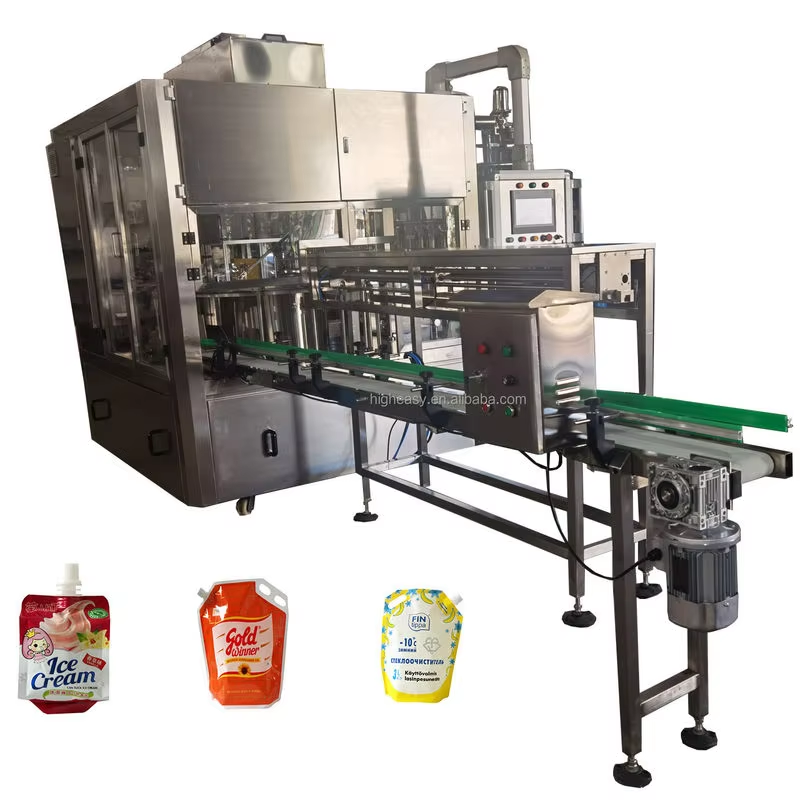
The spout pouch filling and capping machines of modern design incorporate cutting edge servo technology to enhance size adjustability for filling and capping pouches ranging from 100 to 750 milliliters. To be precise, these machines are capable of self-calibrating to adjust for differences in pouch size with an accuracy of 0.5 milliliters, in such a way that liquid filling and capping are done efficiently and effectively. Furthermore, with the implementation of modular design technology, operatives are able to make quick, effective, and efficient design changes, such as changes to the design of the gripping and guiding parts, in less than 90 seconds, and without the use of special tools. Automated alignment systems reduce user error in the alignment of devices and reduce the need for operational adjustments. This leads to a reduction of approximately 18% in liquid product waste compared to classical mechanic systems that are still operational in some Production systems.
The functionality of spouts, fill nozzles, and capping heads that allow for quick changeovers is possible due to the following three systems:
Spout Adapter Systems: Magnetized docking stations allow quick changeovers of spouts with diameters of 15 to 45 mm.
Fill Nozzle Systems: Sliding stainless-steel rails enable changeover of the filling nozzles for viscous-sauce to thin-juice in 45 seconds.
Capping Head Systems: Changeable chuck assemblies have the ability to handle flip-top, screw, and press-fit closure caps.
These tool-free changes enable manufacturers to adapt to a variety of product formats—for instance, switching from almond milk (500 mL) to energy gel (125 mL) packaging—within 3 minutes, optimizing line efficiency while maintaining accuracy.
Technical Limits of Pouch Size Adaptation in Modern Machines
Standardized Size Ranges (100–750 mL) and Tolerance Limits
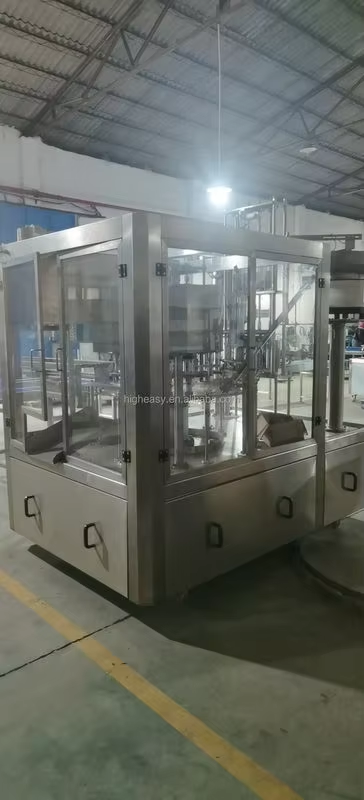
The spout pouch filling and capping machines can be said to be versatile in their application, however they still have limitations in a few areas. In most situations, standard machines work best in filling a range of pouch volumes between 100 to 750 mL, with a +/- 1% accuracy. This range is optimal as closures in sealing the pouch should not induce excess stress or strain on the sealing materials. Sealing and sealing problems can also be caused if volumes below 100mL are filled as sealing problems can arise with too much open cavity space, while volumes over 750mL can cause excess stretching of pouch gussets. There are other limitations though that impact the overall adaptability of the system. For instance when pouch widths deviate from standard widths due to variations greater than 5%, or when spouts (filling/capping) are misplaced (misaligned) by 1.5 mm means that the gripper fingers malfunction, and production is slowed by 15 to 20% due to the added need to re-calibrate the servo systems.
Spout Design and Pouch Material affect the Operating Range
Spout geometry and substrate material affect the operational flexibility of the equipment. For instance, equipment configured for small diameter spouts (around or below 15mm) would require new nozzles when shifting to larger (28mm and above) ones. Different nozzles lead to different torque generation during capping which may even break seals. Regarding pouch materials, the adaptability of the systems is determined by the materials of the pouches. For instance, aluminum laminate pouches have a very low stretchy ( < 5%), meaning limited resizing. Manufacturers have more flexibility when using pouches made of plastics which have an elongation of 12 to 15 percent. Things also get a little complex with barrier coated pouches. The heat sealing of different materials may differ by about plus or minus 8 degrees Celsius. If operators go above or below this temperature range, sealing may leak. Therefore, all of the above means, in practice, machines operate only 30 to 50 percent of their average potential.
Performance of Changeover: Real World Examples involving Speed, Precision, and Verification
Study: Aseptic Beverage Line Changeover in Under 3 Minutes (125-500 mL)
The first purpose-built beverage manufacturers get to witness the effects of full automation on their aseptic packaging lines. They achieve configuration changes from 125 to 500 mL pouches in just over 2 minutes. This system features servo-motor driven fill nozzle and cap head adjustments, while production changing pneumatic clasps hold spouts of different varieties. Inline sensors confirm if pouches meet ISO 9001 compliance for fill accuracy (± 1.5%). Therefore, manual product sampling by workers is not necessary, decreasing product waste by almost 18% according to internal data. Additionally, smooth operation and system control in process ensures no downtime in matrix production of varied pouch sizes throughout the day.
Flexible Standards Refined: From Manual Interfacing to AI Integration
Set to take effect in 2026: Automated Smart Changeover by Preconfigured, Sensor-Aided Setup Profiles
The industry for filling and capping machinery is experiencing rapid advancements in terms of smart technology, particularly in relation to spout pouch packaging. By 2026, most companies anticipate employees using touchscreen interfaces with preloaded options for various pouch sizes and rapid spout pouch packaging changes. Current models are fitted with cameras and pressure sensors that verify alignment and spacing accuracy within a tolerance of 0.5mm, assess fill level accuracy, and ensure caps are applied with the correct torque. These models operate using a closed loop control system and iterative process control. Advanced control systems and iterative process control optimize product changeover by using historical seal integrity data and product flow control data to adjust control system settings. Plants that adopt these models experience a reduction of approximately two-thirds in time required to change pouch sizes.
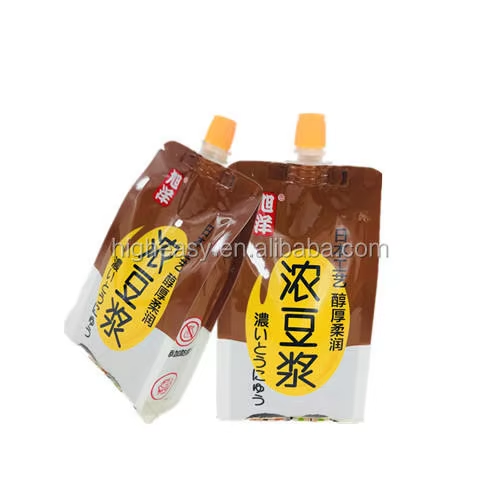
An interesting feature that makes the machines so versatile is that the operators don't have to make any adjustments to screws, levers, or cranes, or measure anything, so all the transitions are seamless, even if switching sizes from 100ml to 2 litre containers.
FAQ
What is the size range that spout pouch filling and capping machines can handle?
The machines typically cover pouches sizes between 100 to 750 ml.
How quickly can manufacturers switch between different pouch formats?
With no tools required, manufacturers can switch formats in under 3 minutes.
What are some of the limitations of spout pouch filling and capping machines?
Pouches widths that are more than 5% different than standard can cause problems, as well as spouts that are not aligned. Due to the difference in torque when capping, some spout sizes require changing the cap to a different size.
What advancements help in the quick changeover between different pouch sizes?
The latest in automation technology, such as servos, modular systems, and other intelligent sensors, has improved changes in pouches sizes significantly.