
Automated Technology and Integrated Systems
Real-Time Monitoring and Remote Diagnostics via IoT and PLC
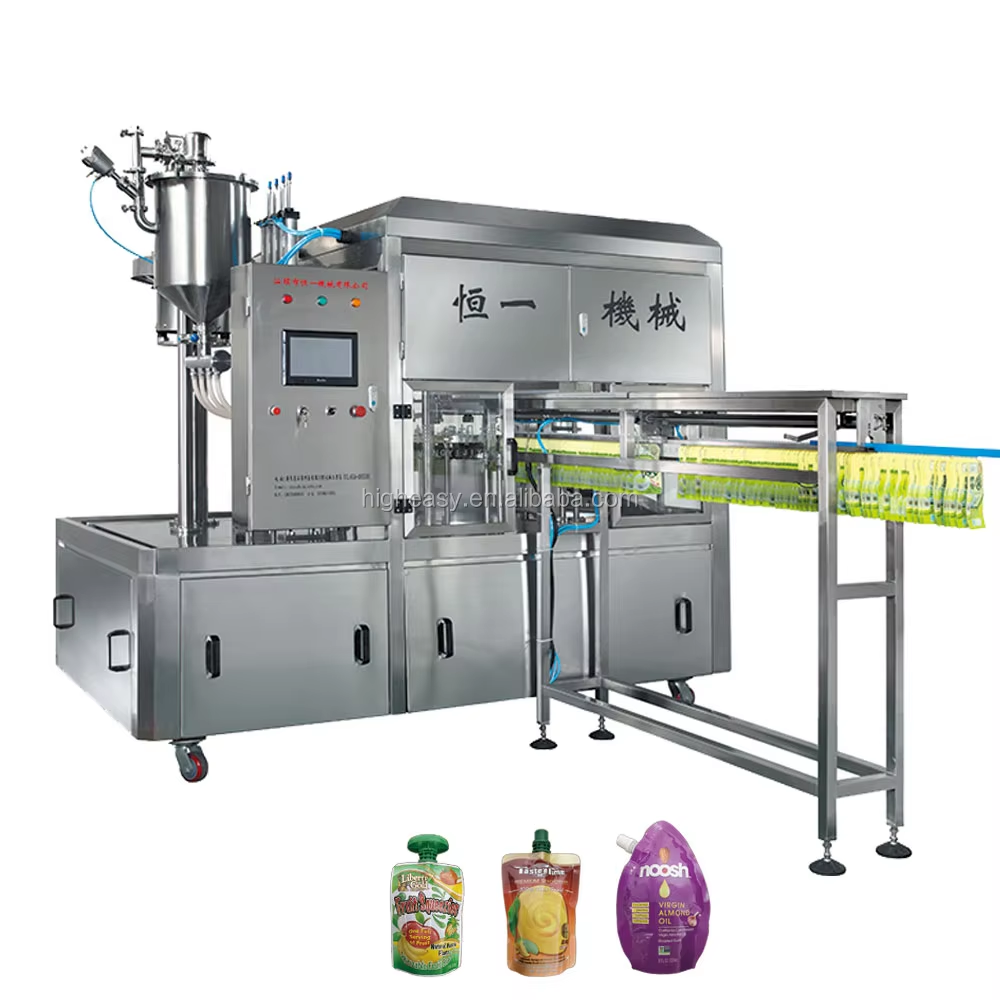
The newest filling and capping spout pouch systems integrate PLCs with IIoT sensors for real-time monitoring and remote troubleshooting. These machines typically have about 0.3% accuracy in filling volume measurement and nearly perfect accuracy in torque application measurement. Live dashboards push updates to operators, notifying them in real time. Special vibration sensors detect irregular movements of the motor and alert the maintenance team to perform preventative maintenance before the motor breaks down. Companies with these systems report a significant reduction in unplanned downtime, with smart systems reducing unplanned downtime by nearly 40%.
Predictive Maintenance Enabled by Cloud-Based Analytics & Vibration Sensors
With cloud-based analytics, past records and real-time data are integrated to predict failure based on a multitude of parameters including impute vibration and heat data, and actuator cycle counts. This fundamentally changes the maintenance approach by moving from a reactive approach of breakdowns to a predictive approach of anticipating issues. Incorporating analytics leads to a significant extension of the equipment life by appx. a year, and unplanned downtime is reduced by approx. 30%. In 2023, Ponemon Institute published a research study aligned to analytics research where there was a 25% increase on mean time between failure (MTBF) and an average of $26,000 reduced from the yearly reactive maintenance expense.
Mean Time Between Failures (Ponemon 2023)
ERP/MES Interoperability through OPC UA for Complete Traceability
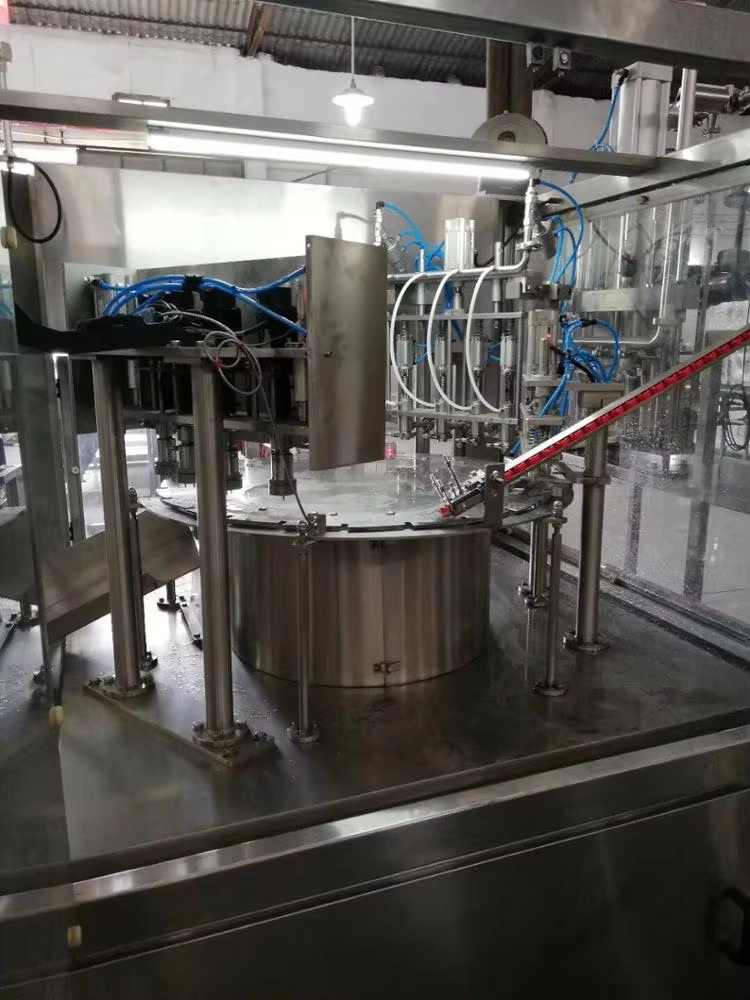
With OPC Unified Architecture, communication can happen securely, and in real time, between spout pouch machinery and business systems like ERP and MES (without being constrained to specific vendors). When the system is processing batched pouches, digital work orders are filled out automatically, and everything is tracked by a serialized code; from the moment they arrive at the facility to the moment the pouches are sealed. This type of system integration virtually eliminates the hand entry data errors and can decrease approval time for batches by 50%. For manufacturers who are focused on quality assurance, such production lines simplify daily operations tremendously.
Cutting-edge Filling and Torque-Controlled Capping Technology
Spout pouch filling and capping technologies are designed using the latest precision engineering, so there is minimal product waste and the technology can consistently and reliably perform across a range of fluid viscosities, from thin liquids to thick pastes.
Servo-Controlled Filling Heads Achieving ±0.3% Dispensing Accuracy
Piston fillers driven by servos are able to maintain volumetric accuracy within 0.3% by keeping flow rates accurate as adjustments are made on the fly. These types of machines utilize feedback control, meaning that an actuator can measure and alter its flow rate based on the viscosity of the product being dispensed. Without getting too technical, they also have no pouch, no fill sensors that can stop the entire line if something is out of alignment. The entire process is able to be automated which eliminates the frustrating problem of costly overfills, or underfilling and getting your company in trouble with the regulatory agencies. This is especially important when dealing with concentrated solutions or medications, as expensive items are costed by the drop. Based on company reports, when switching to these types of systems from traditional gravity fed technologies in the case of dispensing machines, organizations have seen annual savings of 1.5 to 2 percent.
Adaptive Torque Control for Consistent Spout Seal Integrity
Electromagnetic capping heads work by taking control of a certain amount of torque, typically around 8 to 12 Newton meters depending on the cap type being used, whether it be PP, PET plastic, or aluminum caps. These machines have integrated force sensors that evaluate each closure every half second. If a closure malfunction is detected, they dispose of it so problems such as leaks or damaged threads do not occur. The system prevents two problems from occurring, being under tightening that would allow contamination and over tightening that would break the spout bases on some designs. Despite processing 1200 pouches per hour, the system is capable of an incredible 99.98% integrity of the seals on the pouches.
Smart Integrated Quality Assurance on Every Spout Pouch
Triple Sensor Quality Assurance: In-Line Weight Measurement, Vision-Based Seal Inspection, and Ultrasonic Leak Detection
New spout pouch systems have integrated into their fully automated production systems three dimensions of quality control: first, special load cells that control the net weight of the product filled in each pouch, targeting even 0.5 grams close to the filling weight (0.5 grams over or under the target weight); secondly, ultra-high speed cameras (200 pictures/second) that inspect the placement of the spout and cap, and can detect and analyze tiny seals that may have a wrinkle or a speck of foreign material contamination; and finally, ultrasonic leak sensors that, without damaging the pouch, test the integrity of the pouch by gentle pressurization, and detect micro-leaks (as small as 5 microns) by monitoring the rate of pressure drop. This three-dimensional system not only enhances speed, but also with the integrated quality control, ensures capturing over 99.98% of product defects to minimize the defects that the FDA announced in the packaging recall data for 2022, of which more than 25% were attributed to quality control defects.
Agile Operation and Human-Centered Design for Spout Pouch Filling and Capping Machines
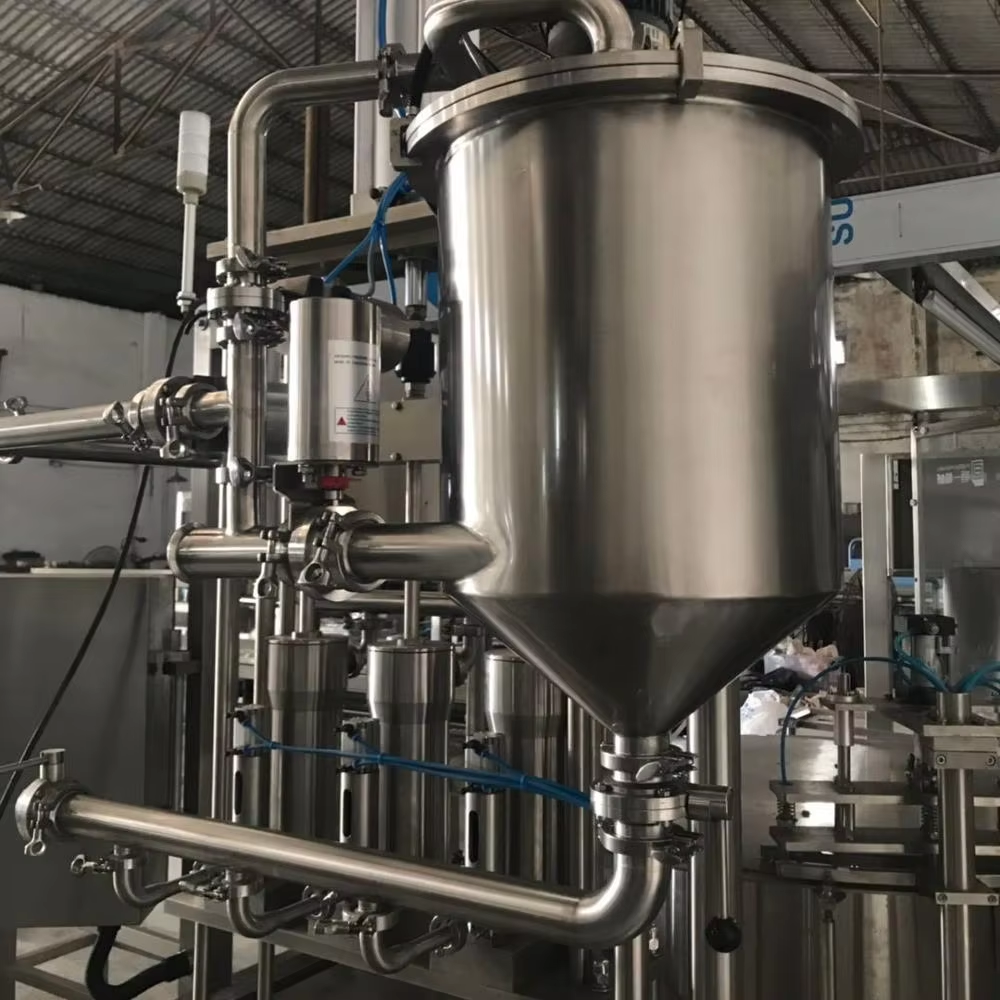
The next-generation spout pouch fillers and cappers combine operational agility with human-centered design for those who operate them. The agility spout pouch fillers and cappers offer remarkable floor flexibility and operational safety for workers while enhancing productivity across shifts. The quick change tooling system enables manufacturers to switch out different pouch shapes and caps in record time, often decreasing changeover time by two thirds compared to older tooling models. Touch screen interfaces help operators set parameters more easily, as they also provide real time diagnostics allowing operators to quickly identify problems. Maintenance closes gaps with ergonomically designed access panels and no-tool-required areas in access to routine maintenance. Facilities that have modernized their equipment to this level are able to get their lines operational 15 to 30 percent faster after switching to a different product. This enables companies to efficiently manage smaller orders without sacrificing output velocity and quality of the finished product.
Frequently Asked Questions
What does PLC + IoT architecture mean?
PLC + IoT architecture means the combining of Programmable Logic Controllers (PLCs) and Industrial Internet of Things (IIoT) sensors for the purposes of real-time monitoring and remote diagnostics of manufacturing processes.
How does predictive maintenance help improve the reliability of equipment?
Using cloud analytics and sensors, predictive maintenance reduces unplanned equipment shutdowns, extends the life of equipment and reduces maintenance costs by predicting failures of equipment parts before they occur.
What advantages does OPC UA bring to system integration?
For system integration, OPC UA provides secure and vendor-neutral communication for the integrated systems and operational technology i.e. machinery, for the better accuracy of the integrated data and reduced time to approve batches.
In what way do servo-controlled filling heads keep the same level of accuracy?
To keep the same level of accuracy, the servo-controlled filling heads continuously adjust the flow rate to high feedback and, therefore, help to reduce the level of product waste and underfilling.
What is the role of vision-based seal analysis and ultrasonic leak detection for quality control?
The role of the two systems is to ensure product integrity and reduce recall of packaged products by high accuracy detection of sealed and unsealed packs.