
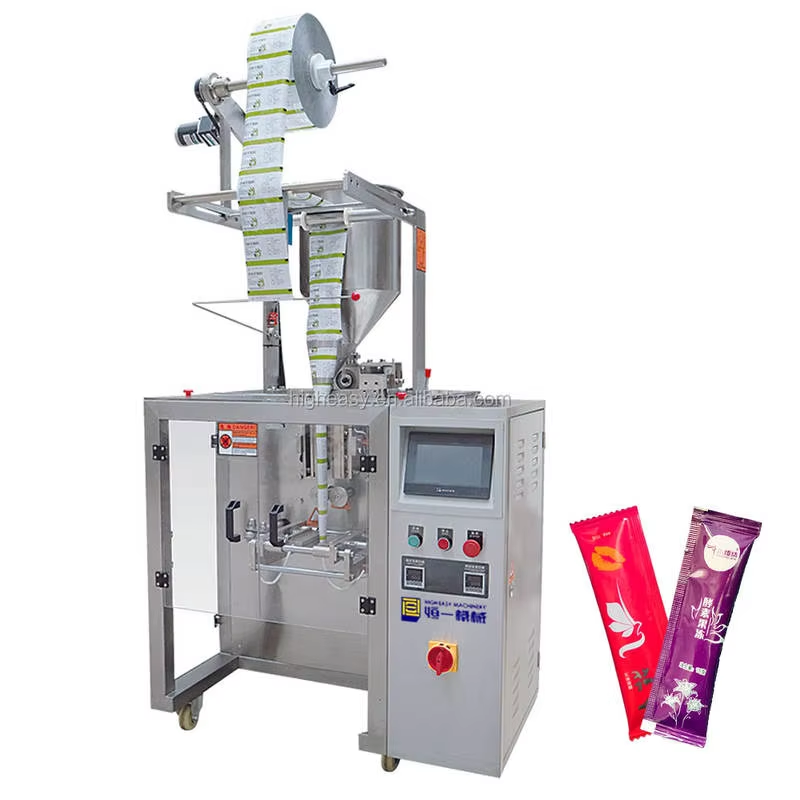
Precision Filling Control Technology: No More Overfilling and Underfilling
Volumetric and servo-driven pouch fillers: Consistent spout pouch fill difference of only ±0.5%
When it comes to spout pouch filling and capping machines, there are two primary technologies in use today: volumetric and servo-driven. For volumetric and servo-driven machines, less than ±0.5% variation is an achievable goal and, when compared to older technologies, is an impressive fill consistency. A volumetric filler measures a predetermined fill amount via a chamber that is set and calibrated. A servo-driven machine is more intelligent and has the ability to utilize an instantaneous flow meter (a form of flow measurement that detects the motion of the fluid as discrete packets or droplets) and, at the same time, has a controller (a computing device that can make, but not physically control, a flow) to adjust the flow rate up or down, depending on the desired flow rate, the conditions (whether there are things to slow down the flow in the flow path) or varying speeds of production (i.e. when the production rate changes). This type of technology neuters the 3-5% variation caused by manual fill adjustments. Less product waste when closing the pouch means fewer overfilled pouches that are not supposed to be sent out to customers and are to be unacceptable to regulatory agencies, and no underfilled pouch complaints from customers. And, more of the same positive things to take away is that the closed loop feedback control system (a system that is designed to maintain the output of the system near a desired set point) adjusts in real-time to maintain the set point. Continuous control of the output of the system to ensure production is at an optimal flow rate means less variability is presented from day to day conditions that will vary control feedback systems on an ongoing basis.
Data-backed impact: 92% less underfilled pouch occurrences compared to manual processes (PMMI 2023)
PMMI's 2023 packaging automation report showed that companies using precision filling systems saw an almost 92% improvement on underfilled pouch problems. This improvement was largely due to the complete absence of human measuring and pouring. For example, the Ponemon Institute (2023) found that businesses lose about $740,000 every year when pouch filling leads to product overpours. This is especially true for overpours with high value liquids such as medications or premium olive oil. In addition to the above, eliminating overfills means companies cut their material usage from 15 to 20% which helps them meet their sustainability goals. The improvement on filling operations shown above is the first time in a long time that filling operations has produced true value for businesses while remaining compliant with standards in filling operations.
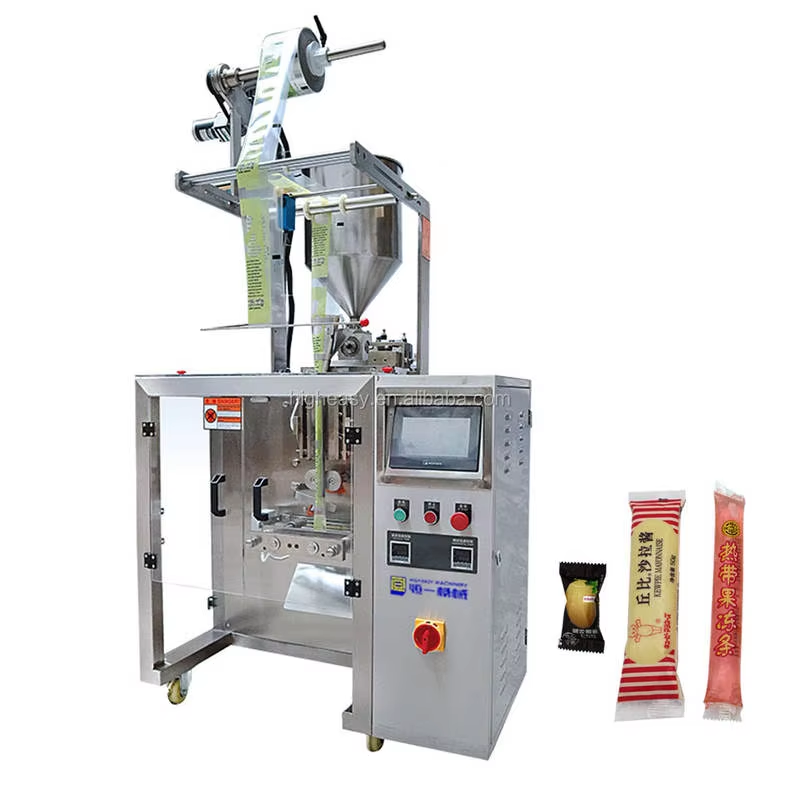
Smart Valve Technology: Stops Spout Dripping, Backflow, and Contamination
Anti-drip spout and vacuum shut-off during spout pouch filling and capping
The most advanced pouch filling and capping machines contain proprietary anti-drip spout technology with vacuum shut-off. As the machine finishes filling a pouch, the spout nozzle swiftly disengages and the vacuum shut-off system pulls the last bit of fill away from the spout. This technology prevents drips during changeover between capping heads and prevents backflow of liquids into the machine during capping. This leads to a significant improvement in operational cleanliness and eliminates the risk of cross-contamination during product changeover. All of these functions are done automatically with no manual intervention required.
Actual results: A 67% drop in pouch rejections caused by clogging after upgrading to servo-pneumatic valves.
Servo-pneumatic valves help to prevent particle build-up in dispensing channels by dynamically adjusting pressure and flow in response to changes in product viscosity. As a result of implementing this technology, a large beverage industry client experienced a 2/3!!! decrease in pouch rejections. They also reduced their shift time by 30 minutes due to the self-cleaning functionality of the valves. Less waste, more efficient production runs, and better overall efficiency of the manufacturing line are clearly the benefits of this technology.
Integrated Smart Sensors for Real-Time Monitoring and Adaptive Correction
Feed-back dielectric load cells and vision-guided fill-level adjustment systems reduce scrap rates by up to 40%.
The packaging industry is experiencing a transformational change in quality assurance by incorporating intelligent devices, specifically smart load cells. Smart load cells provide real-time weight feedback as the product gets filled. This real-time feedback allows the operator to adjust the weight on the fly and stay within a target accuracy of 0.5%. Simultaneously, infrared vision systems detect fill-level discrepancies within a measurement range of a few microns. Integrated smart load cells and infrared vision systems adjust their feedback in real-time, automatically enabling the balance to correct itself for the subsequent pouches without an interruption of the production line. Case studies on factories shifting from ergonomic manual pouch fill-level checks to smart load cells and infrared vision systems demonstrate approximately a 40% reduction in operational waste, i.e. the number of bags that contain a fill level outside a specified range. This does predict-and-impact shift in quality assurance, coupled with the ability to adjust the fill levels, allows manufacturers to sustain their operational production rates of greater than 200 pouches/minute.
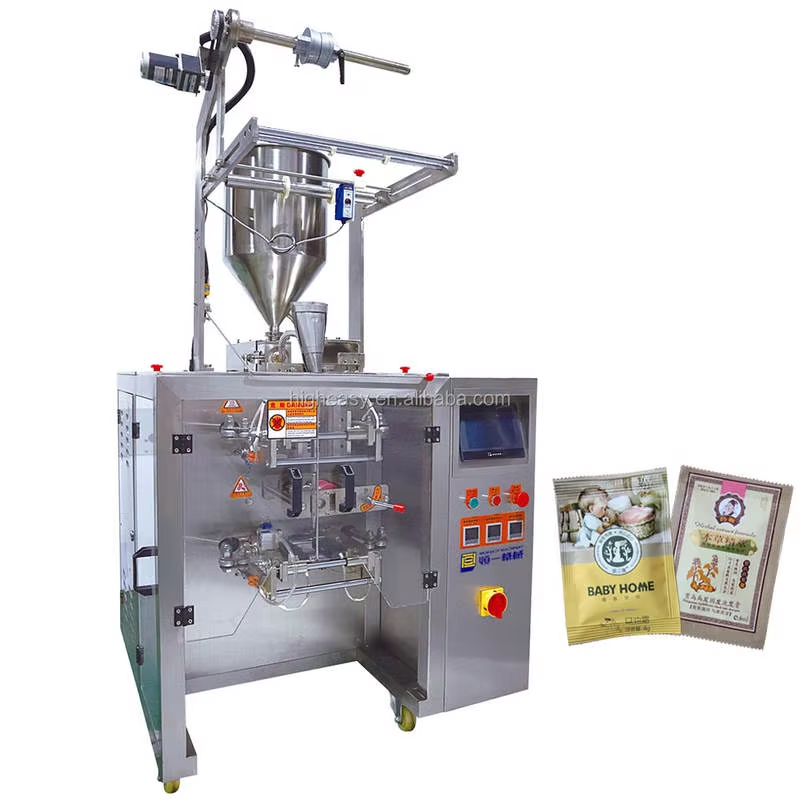
Cumulative Material Efficiency: Less Film Usage, More Uptime, and Better Sustainability
The integration of technology such as smart valves and instant sensing provides clear manufacturing resource savings. A key contributor to annual resource savings of 15% in manufacturing film materials includes the elimination of overfills and drips. Additionally, real-time sensor technology predicts potential development issues and proactively addresses them to avert factory shutdowns. This results in approximately 40% less energy wasted during product manufacturing. Reliable factory operation allows for the use of thinner, more easily recyclable film materials. This, in turn, provides approximately 30% reduction in landfill diversion. All of these advancements assist customers in achieving their circular economy targets. The goal is to rely less on the use of new plastics and reduce carbon pollution, while maintaining cost savings for our customers as they achieve their Environmental, Social and Governance (ESG) targets.
FAQ
What are the main technologies used in spout pouch filling equipment?
In order to achieve a fill accuracy of approximately ±0.5%, spout pouch filling uses either volumetric systems or servo-driven systems.
What are some advantages of using intelligent valve systems in pouch filling?
Intelligent valve systems with anti-drip cutoff valves and vacuum shut off nozzles drip, backflow, and cross-contamination, and provide cleaner operations and less product interference.
What impact have precision filling systems had on pouch underfilling?
Precision filling systems have reduced underfilling pouch problems by 92%. This in turn, allows for a net profit of $740,000 for the company by stopping over filling, and reducing material waste.
What is the effect of smart sensors on pouch filling efficiency?
Smart sensors such as load cell feedback and vision systems provide quality control in real time, and reduce scrap by 40%. This allows for efficiency and speed to remain in the system while keeping production rate accuracy.