
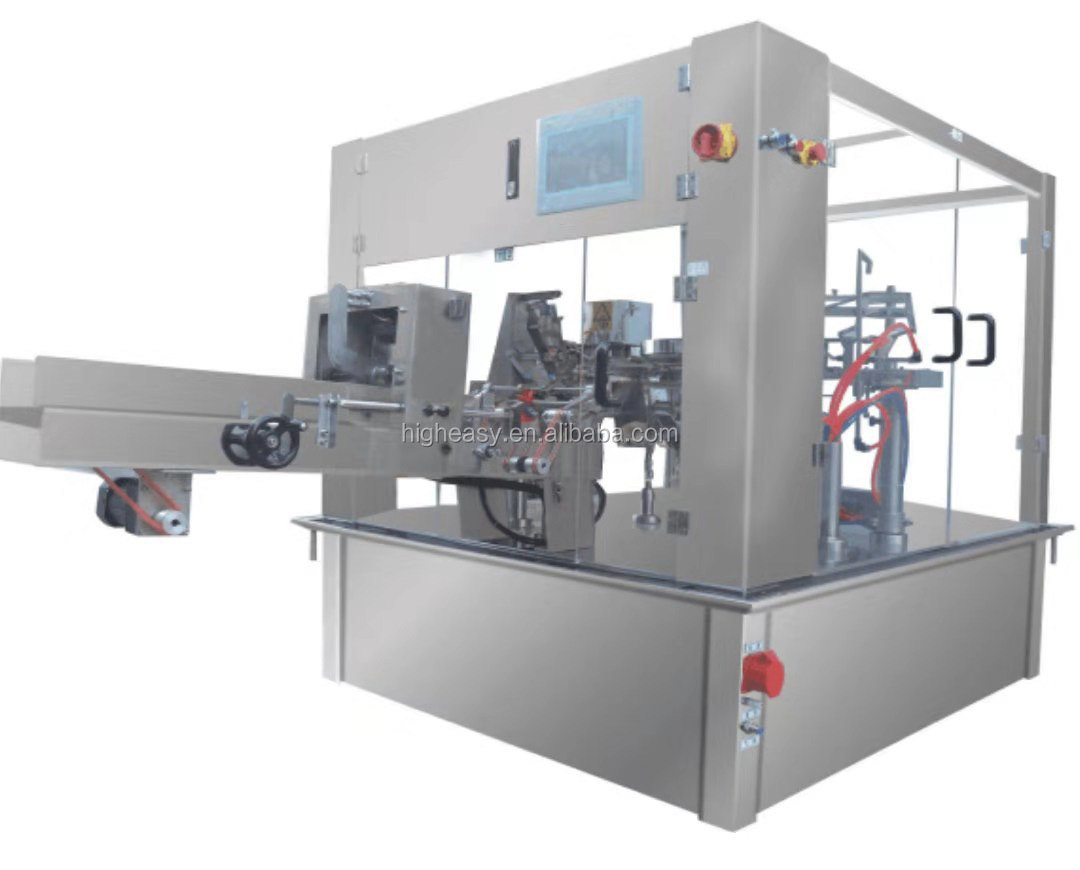
Granular products, such as spices, mixtures for pet food, and protein powders, exhibit different behaviors based on the size and weight of the individual granules and whether they become electrostatically charged. A fine powder, for example, can behave like a liquid and can cause inconsistent filling of containers. In contrast, coarser granules can cause a blockage in a storage bin and prevent the product from flowing freely. To address these issues, manufacturers often use auger systems or volumetric fillers with anti-arching features. For certain products, moisture control can also be a concern. Filling and sealing for liquids depends on the viscosity as well. For example, runny liquids, such as oils, are best filled using gravity feed systems with special non-drip nozzles. In contrast, fillers for sauces and gel products need to be piston fillers which allow for controlled filling and reduced exposure to air.
We want a pre-made pouch filler that ties these various components together better than just attaching them to a basic machine. It should be possible to design the system around fully integrated components from the very beginning. For very aggressive chemicals and other corrosive substances, some components must be wear resistant. In the case of equipment that processes powder and generates a lot of dust, views are justified about the provision of sealed transfer troughs and dust surfaces to control static.
Title: Risks of Cross-Contamination in Mixed-Product Environments: Why Residue Management is Important
With a growing scope of services, manufacturers also need to manage risks associated with back-and-forth changes to liquid and powder products. Residual powder accumulations above the liquid dispensers tend to block the liquid dispensers, and oils left over from previous batches of liquid products attract a dust-collection phenomenon when the process is transformed to dry processing. Facilities also have to maneuver more carefully with their FDA constraints. Audits show that up to 32% of all packaging recalls last year were the result of allergenic cross-contamination due to equipment changes. To mitigate the challenges of cross-contamination with multiple product streams, manufacturers should try to integrate the following three approaches:
Design of modular components for rapid exchange of filling heads and pathways of sealed products
Automated purge cycles that utilize compressed air or food-grade solvents to remove residual contaminants
Designs that promote hygienic construction, including stainless steel of less than 0.8 µm Ra roughness, in accordance with the cleanliness requirements of CFR 117.130
Up to 40% of the cleaning that must be performed in order to comply with regulations can be eliminated with the above-mentioned approaches.
Filling with Auger and Volumetric Technology for Dry Granular Products - Spices - Pet Food - Supplements
An auger works by moving powder through a screw system and provides a 1% protein accuracy. This is great for controlling dust and for consistency in portions. For products that don't flow easily, volumetric cup fillers are a great alternative. These volumetric cup fillers work for pet food, kibbles, and coated granules, and provide consistent volumes without crushing. Both come with features to assist with common issues, such as material sticking, static, and flooding in hoppers, which are common in fast runs. Having this integrated into one system means that changing to different lines works seamlessly, and still meets stringent FDA guidelines.
How Liquid, Sauces, and Gel Piston, Peristaltic, and Gravity Fillers Work
For filling containers, salad dressings and pharmaceutical gels, Piston fillers use a technique called positive displacement, which helps to fill containers without trapping air and helps to avoid oxidation problems, fill after fill. Peristaltic pumps are great for filling containers for products that are sensitive to rough handling. They are great for cosmetic gels, probiotic suspensions, and other products because the only part of the process that touches the product is the tubing. When filling containers with loose products like juice, cooking oil, etc., Gravity fillers are the best. They have the ability to let loose products naturally fill containers more than 40 times a minute and are great for loose products. For the end of production runs, most models have removable nozzles and removable trays that make production run cleanup much quicker. The removal of sealing leftovers for pre-batch products to use the same filling equipment is the same across all manufacturers of liquid filling machines and is the same across all processes. Older equipment that has limited cleaning access zones, along with more sophisticated cleaning processes, is replaced with newer equipment that has more sophisticated cleaning processes to make the process easier when batch cleaning.
Seal Reliability Across Material Types: Leak, Dust, and Seal Failure Prevention
Seal With Heat and Contents that are Moisture, Oil, or Dust Prone
The strength of heat seal is material dependent. Take powders with hygroscopic properties, like those in vitamin supplements. They require specific temperatures to seal properly. Low temperatures result in weak seals that won’t hold, and high temperatures can damage protective barriers and/or cause the protective film to shrink too quickly. Oil products are usually sealed with bar seals that are non-stick coated. If not, stickiness is reduced through the buildup of residue, which weakens the seal. Dust presents a sealing concern. Dust can settle into the micro-gaps of sealing jaws. Once sealed, air can enter a cavity to introduce oxygen, and oxidation and microbial growth can become problematic.
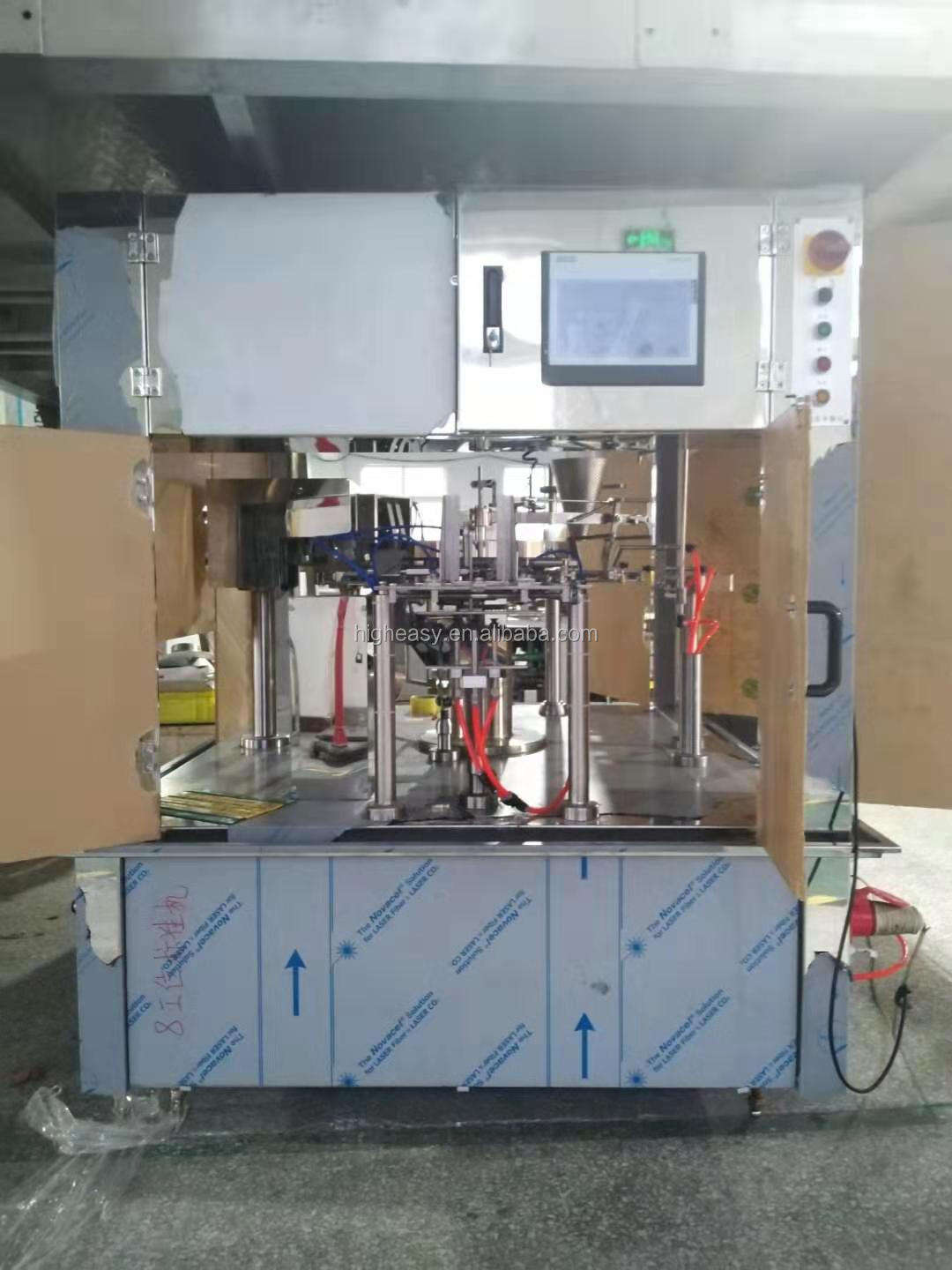
Modern premade pouch machines integrate all of these factors through automated jaw cleaning cycles, presure-regulated dual-seal jaws, and real-time thermal monitoring. For FDA-regulated settings, achieving less than one percent leak rates depends on three strict guidelines:
- Material-specific heat profile adjustments with thermal sensors.
- Vision inspection of every seal to check for continuity and uniformity.
- Random destructive testing in accordance with ASTM F88 and F1140.
When this method is optimized, seal failures are reduced by as much as 95% despite viscous or dusty fill materials. This method supports shelf-life claims and recall prevention in food, pharma, and nutraceutical applications.
Real World Evidence: Dual-Mode Functionality of Premade Pouch Filling Sealing Machines at FDA-Compliant Facilities
Case Study: Beverage & Sauce vs. Powder Packaging Lines (2023 Audit)
Three 2023 audits of FDA-compliant facilities examined the effectiveness of top dual-mode premade pouch filling and sealing machines at actual production runs. One of the machines, the piston filler, recorded 99.2% accuracy and zero seal failures during 120 hours of continuous operation. The machine also demonstrated 100% accuracy and ±0.5% weight stability while filling powdered supplements, even when the powder contained fine (<500 µm) particles. Moreover, what set the machine apart from the rest was the speed at which it changed from filling different types of powder (light) and liquids (heavy) in less than 30 minutes and with less than 0.01% residual products. This performance easily complied with FDA regulations and was attributed to the automatic cleaning cycle combined with complete compatibility with CIP systems, and a built-in dust and static control system that mitigated powder filtration.
Frequently Asked Questions
What issues are typically encountered with filling and sealing granular products?
Granular products have issues such as uneven filling caused by variances in particle size and clumping in storage bins. For flowability to be sustained, control moisture and static electricity.
What are the differences in systems used for filling liquids and filling granular materials?
Liquid filling requires proprietary systems based on the viscosity of the fluid to be filled. For example, gravity feed systems are appropriate for less viscous liquids while piston fillers are required for viscous liquids to ensure control of the fill and to minimize the exposure of the fill to the atmosphere.
Why is cross-contamination of products a major concern in a dual-product environment?
Cross-contamination is a concern because switching from powder to liquid and vice versa may result in the contamination of subsequent batches with the unintentional mixing of allergens. Contamination risks are lessened by using modular design, purge cycles, and sanitary design.
What techniques do premade pouch filling machines use to avoid filling defects?
Premade pouch filling machines employ created heat profiles for the type of material being sealed, inspection systems, and filling defects are rectified in real time to ensure leak rates of <1% are achieved. This provides justification for shelf-life assertion and reduces the potential for recalls.
Table of Contents
- Title: Risks of Cross-Contamination in Mixed-Product Environments: Why Residue Management is Important
- How Liquid, Sauces, and Gel Piston, Peristaltic, and Gravity Fillers Work
- Seal With Heat and Contents that are Moisture, Oil, or Dust Prone
- Case Study: Beverage & Sauce vs. Powder Packaging Lines (2023 Audit)
- Frequently Asked Questions