
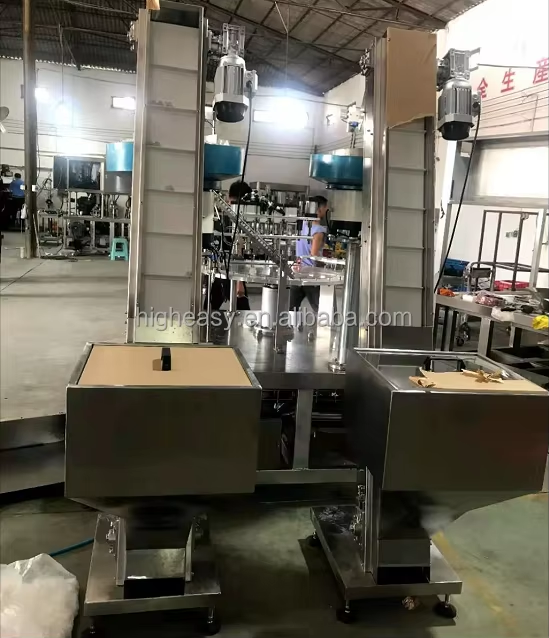
How Cup Filling Sealing Machines Manage Thermal Extremes
Material Temperature Ranges: Defining Safe Operating Limits for Hot and Cold Fill
Modern cup filling sealing machines must reliably handle liquids from near-freezing to near-boiling. Hot fill typically operates between 85°C and 95°C—high enough to achieve microbial reduction without compromising flavor or nutrients. Cold fill runs from 4°C to 10°C, especially critical for dairy and fresh juices where low temperatures inhibit spoilage. These ranges are constrained not just by product behavior but by machine construction: food-grade stainless steel (304 or 316) resists thermal shock, while elastomeric seals—silicone or EPDM—retain integrity across both extremes. Below 4°C, viscosity spikes challenge pump accuracy; above 95°C, steam buildup risks pressure differentials. Crucially, safe operating limits also depend on cup and film materials: PLA cups, for instance, require lower sealing temperatures (120–140°C) than polypropylene. Defining these boundaries ensures consistent fill weights, reliable seal integrity, and extended shelf life—without sacrificing safety.
Core Components at Risk: Pumps, Valves, Sealing Heads, and Sensors Under Thermal Stress
Four components bear the brunt of thermal cycling:
- Pumps – Positive displacement (e.g., piston or peristaltic) types suffer from thermal expansion of internal clearances, reducing volumetric efficiency. At cold temperatures, increased viscosity raises cavitation risk.
- Valves – High-precision diaphragm or ball valves must maintain tight shutoff across wide temperature swings; repeated cycling degrades seat materials, increasing drip potential and pressure loss.
- Sealing heads – Operating at 150–250°C, these elements face material fatigue: aluminum may warp, Teflon coatings degrade, and film adhesion weakens over time.
- Sensors – Thermocouples and pressure transducers drift when exposed to condensation or steam, compromising fill volume control and seal consistency.
Mitigation includes temperature compensation algorithms, low-expansion stainless steel construction, and interlocks like “No Cup – No Seal.” Regular thermal profiling ensures each component remains within its validated safe band—extending service life and maintaining performance.
Filling System Adaptations for Hot vs. Cold Materials
Cup filling sealing machines require distinct engineering responses to hot and cold materials. Hot-fill products (85–95°C) thin significantly, risking overfilling without precise volumetric control and thermal expansion compensation. Cold materials, conversely, exhibit sharp viscosity increases that strain pumping systems and raise the risk of incomplete fills.
Positive Displacement and Peristaltic Fillers: Viscosity Shifts and Thermal Expansion Effects
Positive displacement fillers excel with hot materials by delivering consistent volumes despite viscosity drops—sealed chambers prevent leakage during thermal expansion, a key advantage for sauces and syrups. Peristaltic systems offer similar reliability for sensitive products, isolating fluid from metal contact and accommodating tubing expansion. However, both require routine calibration: silicone tubing, for example, can expand up to 15% at 90°C versus ambient operation, demanding periodic flow rate adjustments to preserve accuracy.
Cold-Induced Challenges: Condensation, Viscosity Spikes, and Pump Cavitation
Cold filling introduces three interrelated challenges: ambient moisture condenses on chilled surfaces, risking fill zone contamination; viscosity in dairy emulsions can surge 200–400% below 10°C, straining hydraulic systems; and this combination frequently triggers cavitation—vapor bubble formation and collapse—that damages pumps and causes erratic fills. Effective countermeasures include insulated product pathways, progressive cavity pumps built for high-viscosity cold flow, vacuum degassing to remove entrapped air, and heated nozzle tips (≤40°C) to prevent freezing on cold lids. Together, these adaptations sustain ±1% fill accuracy from 5°C to 95°C without mechanical failure.
Sealing Performance Across Temperature Differentials
Hot-Seal/Cold-Fill Scenarios: Lid Adhesion, Film Shrinkage, and Seal Integrity Testing
When cold products meet hot sealing jaws, instantaneous condensation forms—reducing lid adhesion strength by up to 40%. Simultaneously, thermal contraction of cold film induces premature shrinkage and micro-wrinkles that create leak paths. To validate robustness, manufacturers conduct standardized tests:
- Burst testing (ASTM F1140) with minimum 15 psi thresholds
- Peel strength measurements (ASTM F88) requiring ≥25 N/15 mm resistance
- Dye penetration trials, which detect micro-channel leaks from thermal-induced folds
A 10°C differential alone can reduce seal strength by 30%, necessitating dwell time adjustments of 0.2–0.5 seconds per degree of variance to ensure full bond formation.
Thermal Zone Isolation: Preventing Cross-Contamination of Heat Between Filling and Sealing Stations
| Isolation Method | Temperature Gradient Reduction | Application Example |
|---|---|---|
| Air Curtain Systems | 8–12°C/mm air velocity | Dairy pudding lines |
| Chilled Conveyor Sections | 15°C cooling over 1.2m | Ice cream sandwich production |
| Insulating Barriers | 5°C differential maintenance | Ready-meal packaging |
| Localized Cooling Jets | 10°C/sec quenching rate | Gel-filled dessert cups |
Strategic thermal zoning maintains ≤3°C bleed between stations—essential when sealing exceeds 140°C while filling occurs at 4°C. This prevents viscosity shifts in temperature-sensitive sauces and eliminates condensation-related seal failures in frozen dessert applications.
Real-World Validation: Dairy, Sauce, and Ready-Meal Applications
Cup filling sealing machines deliver proven performance across demanding food manufacturing environments—particularly in dairy, sauce, and ready-meal production, where thermal extremes are routine. In dairy lines, machines maintain precise cold filling (4–7°C) to preserve microbiological stability and texture in yogurt or cream-based products, while achieving hermetic seals on delicate films. Sauce operations often require hot filling up to 85°C+ for viscosity control and thermal stabilization, demanding components resistant to caramelization and steam exposure. Ready-meal packaging presents hybrid complexity: multi-compartment cups may hold chilled vegetables alongside hot sauces or proteins—requiring advanced thermal zoning to prevent cross-contamination and ensure uniform seal quality. Industry data shows modern thermally optimized machines achieve >98% seal integrity across these applications. That reliability translates directly to reduced waste and line downtime, with processors reporting up to 23% higher throughput consistency after implementing material-specific thermal configurations.
FAQ
What temperature ranges do cup filling sealing machines handle?
These machines can handle hot fills from 85°C to 95°C and cold fills from 4°C to 10°C, depending on the product and packaging material.
What are common challenges for components under thermal stress?
Key challenges include thermal expansion of pumps and valves, material fatigue in sealing heads, and drift in sensors due to condensation or steam.
How do machines adapt to thermal extremes for different materials?
Adaptations include calibrated fillers, insulated pathways, progressive cavity pumps, vacuum degassing, and heated nozzle tips to manage viscosity spikes and prevent freezing or overfilling.
What methods ensure sealing integrity under hot-seal/cold-fill conditions?
Techniques include burst testing, peel strength measurements, dye penetration trials, and dwell time adjustments to counter condensation and thermal contraction.
How do thermal zones minimize cross-contamination?
Methods like air curtain systems, chilled conveyor sections, insulating barriers, and localized cooling jets maintain precise temperature gradients between filling and sealing stations.
Table of Contents
-
How Cup Filling Sealing Machines Manage Thermal Extremes
- Material Temperature Ranges: Defining Safe Operating Limits for Hot and Cold Fill
- Core Components at Risk: Pumps, Valves, Sealing Heads, and Sensors Under Thermal Stress
- Filling System Adaptations for Hot vs. Cold Materials
- Sealing Performance Across Temperature Differentials
- Real-World Validation: Dairy, Sauce, and Ready-Meal Applications
- FAQ