
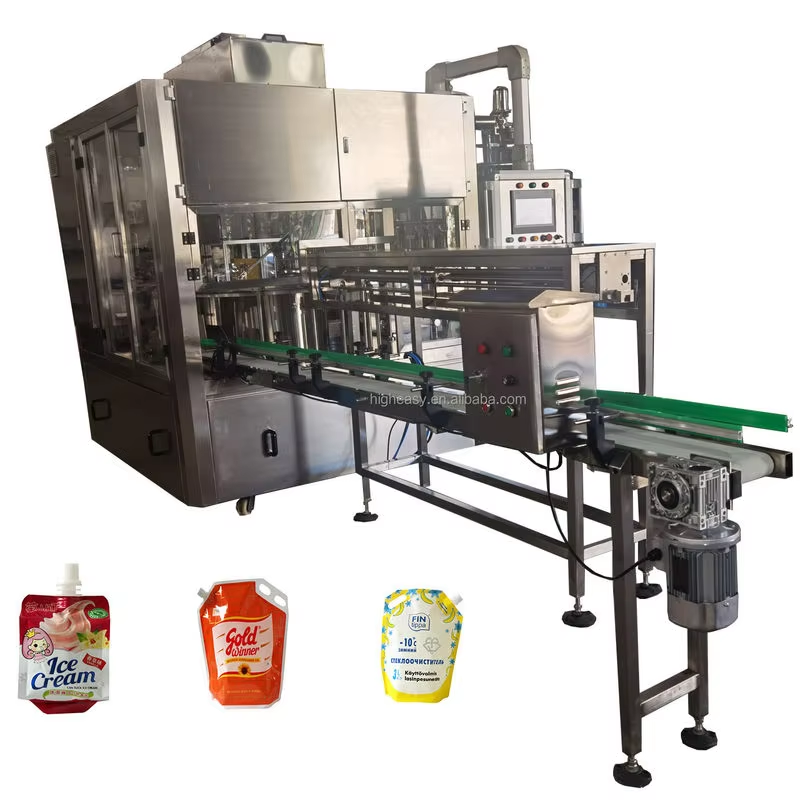
Daily Cleaning Protocols for Cup Filling Sealing Machines
Step-by-step disassembly, cleaning, and food-grade sanitization
Begin every cleaning cycle with a full power shutdown and lockout/tagout (LOTO) to ensure operator safety—this is non-negotiable per OSHA 29 CFR 1910.147 standards. Disassemble all product-contact components: filling nozzles, sealing dies, cup holders, and removable hoppers or tubes. Use a soft cloth or non-abrasive brush with warm water and a neutral, food-safe detergent (e.g., NSF-certified alkaline cleaner) to remove residues. Prioritize crevices where buildup accumulates—especially nozzle tips, piston seals, and die cavity edges. Rinse each part thoroughly with potable water to eliminate detergent traces. Then apply an approved food-grade sanitizer—such as peracetic acid (PAA) or quaternary ammonium compounds—at concentrations and contact times specified by the manufacturer and validated per FDA Food Code Annex 3. Allow all components to air-dry completely on a sanitized, lint-free surface before reassembly. This disciplined routine safeguards against microbial growth, prevents cross-contamination, and upholds hygiene benchmarks required for FDA-regulated food and beverage production.
Critical focus on sealing surface hygiene and residue removal
The sealing surface is the most sensitive functional zone of the machine: even sub-micron residue films can disrupt heat transfer, compromise film adhesion, and cause seal failures. After disassembly, inspect the sealing die and counterplate under bright, angled lighting for burnt-on sugars, protein deposits, or sticky polymer residues. Remove debris gently using a plastic or wooden scraper—or a soft nylon brush—never metal tools that risk micro-scratching the hardened stainless surface. Wipe with a lint-free cloth dampened in 70% isopropyl alcohol to dissolve oils and light organics. For stubborn thermal residue, apply a paste of food-grade baking soda and water, let sit for 2–3 minutes, then buff lightly with a non-abrasive pad. Verify final cleanliness by running a gloved finger across the surface—it must feel uniformly smooth and dry, with no drag or visible particulate. Consistent execution here directly sustains seal strength, minimizes product leakage (a key driver of waste), and preserves die surface integrity over thousands of cycles.
Preventive Maintenance Planning to Maximize Cup Filling Sealing Machine Uptime
Structured maintenance schedule: daily, weekly, and monthly tasks
A documented, tiered maintenance plan transforms reactive repairs into predictable performance. Daily tasks include visual inspection of seals and nozzles for swelling or discoloration, checking lubricant levels in gearboxes and linear guides, and wiping down exposed surfaces with a food-safe disinfectant wipe. Weekly duties expand to deep-cleaning fill valves using CIP-compatible solvents, verifying function of all safety interlocks (e.g., door switches, emergency stops), and confirming torque on sealing head fasteners per OEM specifications. Monthly procedures encompass flow meter calibration against NIST-traceable standards, replacing gaskets showing >30% compression set, and assessing belt tension, bearing play, and motor coupling alignment. Each action should be logged in a standardized checklist—paper or digital—to create a verifiable maintenance history. This structure not only reduces unplanned downtime by up to 45% (per PMMI’s 2022 Packaging Maintenance Benchmark Report) but also supports root-cause analysis when anomalies arise.
How consistent preventive maintenance extends machine lifespan and ensures seal integrity
Preventive maintenance isn’t just about avoiding breakdowns—it’s about preserving engineering intent. Lubricating slides and cams per OEM intervals reduces friction-induced wear by over 60%, while timely gasket replacement maintains the precise pressure differentials needed for hermetic seals. Motors, drives, and pneumatics operate within thermal and mechanical tolerances when bearings are inspected, belts tensioned, and filters changed on schedule—lowering stress-related fatigue and extending service life by 3–5 years in typical high-volume applications. Crucially, seal integrity—the linchpin of shelf-life assurance—remains consistent only when heating elements, pressure actuators, and sealing surfaces function as calibrated. That consistency translates directly to reduced customer complaints, fewer recalls, and lower total cost of ownership. In practice, this discipline shifts maintenance from a cost center to a strategic lever for quality, compliance, and uptime.
Key Component Inspection, Cleaning, and Replacement Guidelines
High-wear parts: seals, gaskets, nozzles, and hoses — when to clean vs. replace
Seals, gaskets, nozzles, and hoses demand proactive, criteria-driven oversight—not calendar-based assumptions. These components govern filling accuracy, seal strength, and sanitary containment, making them critical control points under FDA 21 CFR Part 117 (Preventive Controls for Human Food). A 2023 Packaging Machinery Report found that 78% of unplanned stoppages in cup fill-seal systems originated from undetected wear in these four areas.
- Visual Inspection: Assess seals and gaskets weekly for cracks, permanent deformation, or compression set—particularly at pinch points and mounting flanges
- Functional Testing: Measure nozzle flow rates post-shift using a calibrated catch vessel; compare against baseline specs
- Pressure Checks: Monitor hoses during operation for bulging, weeping, or abrasion—especially near clamps and bends
Action Thresholds:
| Component | Cleaning Protocol | Replacement Trigger |
|---|---|---|
| Seals | Wipe with food-grade solvent after shift | Visible cracks or >2mm permanent deformation |
| Gaskets | Ultrasonic cleaning monthly (using NSF-certified solution) | Compression exceeding 30% of original thickness |
| Nozzles | Soak 15 min in warm, pH-neutral detergent solution | Flow rate deviation >5% from nominal spec |
| Hoses | Daily flush via integrated CIP system | Surface abrasion exposing reinforcement layer |
Always source replacements from OEM-approved suppliers or certified equivalents—substitutes lacking FDA 21 CFR 177.2600 compliance risk leaching or premature failure. Adhering to these thresholds ensures continuous conformance with SQF Code Edition 9 and BRCGS Packaging Materials requirements.
Safety, Compliance, and Documentation Best Practices
Safety and compliance begin—not end—with cleaning and maintenance. Every cleaning cycle, inspection finding, lubrication event, and component replacement must be recorded in a centralized, time-stamped log. This documentation fulfills core requirements of FDA 21 CFR Part 117 (Preventive Controls), HACCP Principle 7 (Recordkeeping), and GMP §110.80(b)(11). Digital log systems—integrated with machine PLCs or CMMS platforms—reduce transcription errors, enable real-time alerts for overdue tasks, and support rapid audit response. Conduct quarterly internal audits of these records to detect trends: recurring seal failures may indicate upstream filtration issues; repeated nozzle clogs could point to raw material inconsistencies. Cultivate a safety-first culture through mandatory LOTO before any servicing, consistent use of cut-resistant gloves and splash goggles during cleaning, and immediate escalation of any observed seal breach—even if minor. When documentation, training, and procedure adherence are woven into daily workflow, they become the invisible infrastructure protecting both product safety and equipment longevity.
FAQs
Why is daily cleaning essential for cup filling sealing machines?
Daily cleaning is crucial to prevent microbial growth, cross-contamination, and residue build-up that can affect machine performance and product safety.
What are the primary focuses during sealing surface cleaning?
Special attention should be given to removing burnt-on sugars, protein deposits, and sticky polymers to ensure smooth operation and seal integrity.
How does preventive maintenance reduce downtime?
Routine maintenance schedules identify potential issues before they lead to breakdowns, reducing unplanned downtime by up to 45%.
When should high-wear parts like seals and gaskets be replaced?
Replace seals when visible cracks or >2mm permanent deformation are observed and gaskets when compression exceeds 30% of original thickness.
Why is documentation important in cleaning and maintenance?
Thorough documentation ensures compliance with regulatory standards, supports root-cause analysis, and enhances audit readiness.
Table of Contents
- Daily Cleaning Protocols for Cup Filling Sealing Machines
- Preventive Maintenance Planning to Maximize Cup Filling Sealing Machine Uptime
- Key Component Inspection, Cleaning, and Replacement Guidelines
- Safety, Compliance, and Documentation Best Practices
-
FAQs
- Why is daily cleaning essential for cup filling sealing machines?
- What are the primary focuses during sealing surface cleaning?
- How does preventive maintenance reduce downtime?
- When should high-wear parts like seals and gaskets be replaced?
- Why is documentation important in cleaning and maintenance?