
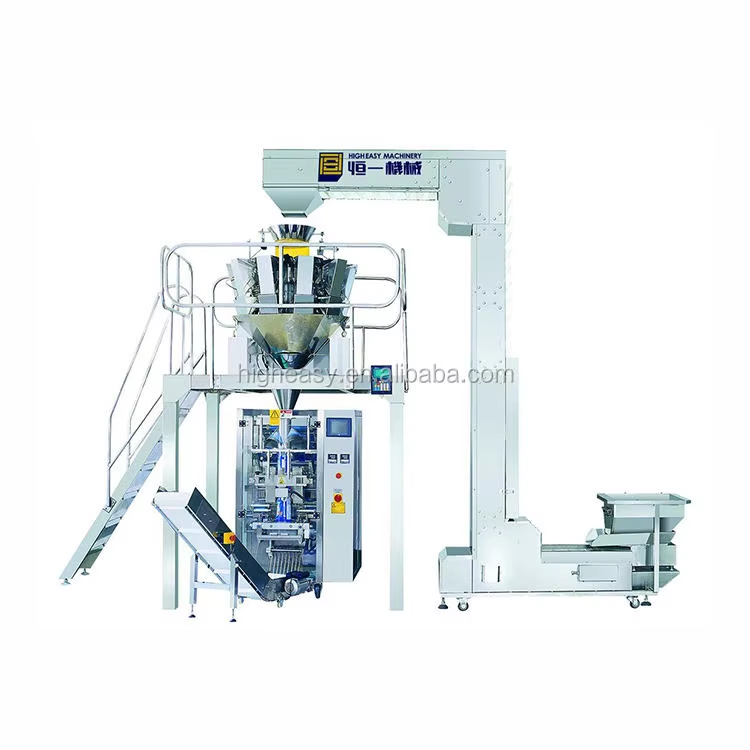
Match Filling Technology to Powder Flow Behavior
Auger, Volumetric, and Loss-in-Weight Fillers: Accuracy and Suitability for Free-Flowing vs. Cohesive Powders
Selecting the optimal filling technology for your premade pouch filling sealing machine is critical—accuracy depends fundamentally on powder flow behavior. Auger fillers deliver precise volumetric doses using screw mechanisms and perform best with free-flowing powders like salt or sugar, achieving 97–99% accuracy. Volumetric fillers (cup- or piston-based) offer moderate accuracy (±1–2%) for granular materials but struggle with cohesive powders prone to bridging or rat-holing. Loss-in-weight (LiW) systems provide superior gravimetric control (±0.3–0.5%), continuously weighing product during discharge—making them ideal for irregular, hygroscopic, or electrostatic powders such as protein blends or ground spices, where density fluctuations undermine volumetric methods.
For cohesive powders—including cocoa, flour, or agglomerated dairy powders—auger fillers benefit from design enhancements like variable-pitch screws or vibration-assisted hoppers to improve flow consistency. LiW systems inherently compensate for real-time flow variability, maintaining tighter tolerances without mechanical modifications. Without flow aids or process controls, auger accuracy drops to 90–92% for cohesive materials, underscoring the importance of matching filler type to powder rheology—not just application intent.
Real-World Filling Accuracy: ±0.5% for Dry, Free-Flowing Powders vs. ±2.5% for Hygroscopic or Electrostatic Powders
Filling accuracy directly affects regulatory compliance, cost control, and waste reduction. Under controlled conditions, dry, free-flowing powders achieve ±0.5% accuracy with loss-in-weight systems—validated by industry benchmarks and widely cited in packaging engineering guidelines. In contrast, hygroscopic powders like powdered milk absorb ambient moisture, introducing weight variability that pushes LiW accuracy to ±1.5–2.5%. Electrostatic powders—including titanium dioxide or certain silica-based additives—require ionization systems to neutralize charge-induced clumping; even then, volumetric fillers typically operate at ±2.2–2.5% accuracy without integrated mitigation.
Environmental and material controls significantly narrow this gap: humidity-controlled environments (±35% RH), stainless-steel contact surfaces, and inert gas purging during LiW filling (e.g., nitrogen for protein powders) help sustain ±1.0% accuracy. Production data shows electrostatic powders in non-optimized environments incur 12–15% higher giveaway than free-flowing equivalents—highlighting how process discipline amplifies equipment capability.
Select Sealing Technology for Pouch Integrity and Compliance
Optimizing Heat Sealing Parameters (Temperature, Dwell Time, Pressure) for Laminated, Foil, and High-Barrier Pouches
Seal integrity is non-negotiable for powder pouches—especially those containing hygroscopic or oxygen-sensitive ingredients. Temperature must align precisely with the melting point of the sealant layer: typically 250–350°F for laminated structures (e.g., PET/PE) and 300–400°F for foil-based barriers. Excessive heat degrades polymer layers and risks delamination; insufficient heat yields weak, leak-prone seals. Dwell time (0.5–3 seconds) and pressure (40–80 psi) must be balanced—too little dwell time prevents full polymer fusion; excessive pressure can crush fragile powders or distort pouch geometry.
High-barrier pouches demand special attention: extended dwell times (up to 2.5 seconds) counteract moisture interference at the seal interface, while consistent pressure ensures uniform seal width and strength. Industry studies confirm that optimized parameter sets reduce seal failures by 42%, directly extending shelf life and supporting compliance in premade pouch filling sealing machine operations.
Ensure Pouch Compatibility Across Formats and Sustainable Materials
Handling Stand-Up, Spouted, Zipper, and Resealable Pouches (50–500g) with Quick-Change Tooling
A versatile premade pouch filling sealing machine must reliably handle your full portfolio of formats—including stand-up, spouted, zipper-closure, and resealable pouches—across common weight ranges (50g to 500g). Quick-change tooling is essential for operational agility: modern systems enable operators to reconfigure guides, feed mechanisms, and sealing jaws in under 15 minutes without specialized tools. This minimizes downtime during line changeovers and supports co-packing or seasonal SKU shifts.
Crucially, the machine’s registration system must maintain ±1 mm pouch alignment at high speeds (40–60 pouches per minute) to prevent misfills, product spillage, or inconsistent seal placement—especially with asymmetric or feature-rich pouches like spouted or gusseted variants.
Sealing Performance on Conventional (PET/AL/PE) vs. Compostable (PLA-Based) Films
Heat sealing performance differs markedly between conventional multilayer films and compostable alternatives. Standard PET/AL/PE structures seal reliably at 130–150°C with dwell times of 1.0–1.5 seconds. PLA-based films, however, have lower melt points and narrower processing windows—requiring reduced temperatures (90–110°C) and longer dwell times (2.0–2.5 seconds) to achieve comparable seal strength.
Machines must offer fine-grained, independent control over temperature, dwell time, and pressure to accommodate these differences. Seal integrity testing is mandatory: ASTM F1921 evaluations show PLA pouches require ≥3.5 N/15mm seal strength to match conventional film performance. Because hygroscopic powders exacerbate PLA’s sensitivity to moisture absorption—and thus seal weakness—compatibility between the barrier layer and product formulation must be verified early in qualification.
Prioritize Hygienic Design and Regulatory Certification
FDA, CE, and GMP Compliance: IP65 Enclosures, Tool-Free Disassembly, and CIP-Ready Construction
Powder products in food, pharmaceutical, and nutraceutical applications demand rigorous hygiene standards to mitigate contamination risk. Your premade pouch filling sealing machine must meet core regulatory requirements—including FDA Current Good Manufacturing Practices (GMP), the European CE Marking Directive, and hygiene-specific frameworks like EHEDG.
Key hygienic design features include:
- IP65-rated enclosures, protecting electrical components from dust and low-pressure water jets during washdowns
- Tool-free disassembly of all product-contact parts (filling nozzles, sealing jaws, conveyor guides), enabling rapid, repeatable sanitation
- CIP-Ready construction, featuring polished stainless steel surfaces (Ra ≤ 0.8 μm), sloped frames, sealed joints, and drainable cavities to eliminate bacterial harborage
Validated cleaning protocols—supported by third-party certifications such as EHEDG Type EL Class 1 for dry-material contact surfaces—provide objective assurance of cleanability. Investing in certified machinery reduces recall risk by 63% compared to non-compliant alternatives, while ensuring consistent audit readiness across global markets.
FAQ
What is the main advantage of loss-in-weight (LiW) fillers?
LiW fillers offer superior gravimetric control (±0.3–0.5%), making them ideal for powders with density variations, such as hygroscopic or electrostatic materials.
How do auger fillers handle cohesive powders?
Auger fillers for cohesive powders often include design enhancements like variable-pitch screws or vibration-assisted hoppers to maintain consistent flow and accuracy.
Why is seal integrity crucial for powder pouches?
Seal integrity ensures product protection from moisture or oxygen ingress, facilitates regulatory compliance, and extends shelf life.
How do compostable films differ from PET/AL/PE in heat sealing requirements?
Compostable films, such as PLA-based alternatives, have a lower melting point and require reduced temperatures with longer dwell times for optimal sealing.
Why is FDA and GMP compliance necessary for pouch filling systems?
Compliance with FDA and GMP ensures hygienic design, minimizing contamination risks and enhancing audit readiness for food, pharmaceutical, and nutraceutical applications.