
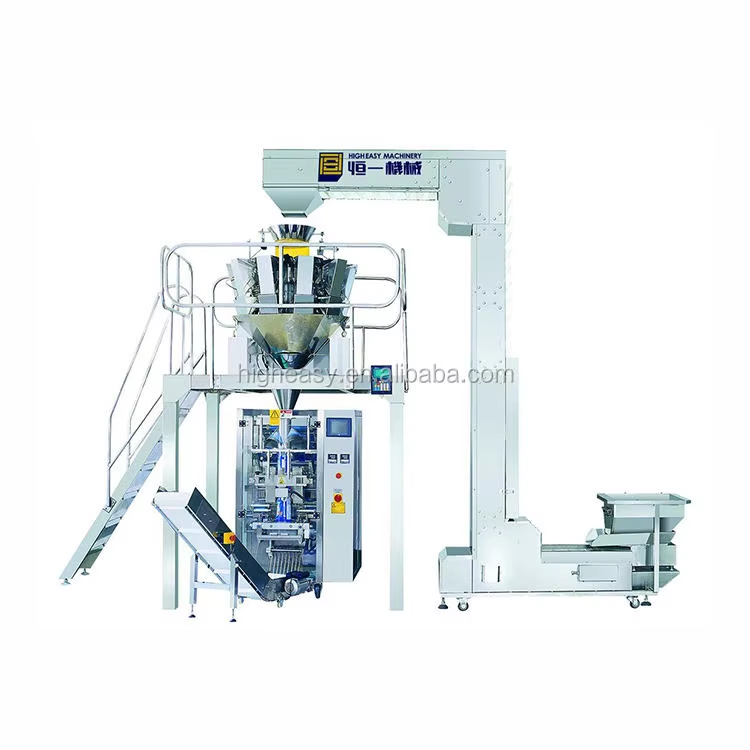
How Spout Pouch Filling and Capping Machines Work: Core Functional Differences
The main functional differences concerning manual and automatic systems would be refinement of processes and reliance or lack thereof on an operator. These design elements of a system can be vital for a business, as they tend to impact operational efficiency, accuracy, and scalability.
Manual Systems: All Filling, Sealing, and Capping Steps are done by Operators
Production is slowest here, as separate operators are needed for each step. One operator fills the pouches and another places the cap, and then a third applies the heat seal. All of these processes are disconnected and so workers have to disengage from their station and shift to a different task, which leads to slow production. Operators have to manually monitor the fill level, so the amount of liquid in the pouch can vary by 3 to 5 percent, and they have to verify that the cap is fastened. The end result is a lot of variability from operator to operator. These processes can be performed at a maximum of 5 pouches to 10 pouches a minute, yet sample testing showed a defect rate of 15% or greater. With operator cross contamination of the pouches also being a clear concern, the risk of repetitive strain injuries to the workers cannot be overlooked. Packaging Digest reported over the previous year that employee fatigue increases labor costs by 18 to 22%. These systems work best for micro production of under 1000 pouches a day.
Automatic Spout Pouch Filling and Capping Machine: Integrated PLC-Controlled Automation
NEW Fully automatic pouch packaging systems integrate pouch orienting, filling, capping, and sealing, all controlled by a single PLC. Servo-controlled filling nozzles achieve filling accuracy of ± 0.5%. Robotic cap tighteners are programmable to specific torque levels. Integrated vision systems detect pouch defects to maintain < 0.3% error rates. Speeds of 40 – 60 pouches / min are standard and most systems offer in HMI display self-calibration. Operator involvement is required for 1 - 2 periods / shift. For food grade applications, N2 gas is employed to replace O2 in the sterile processing area. OEE is routinely > 85%. Fully automated pouch packaging systems exceeding 15,000 pouches / day provide the highest quality standard compliance.
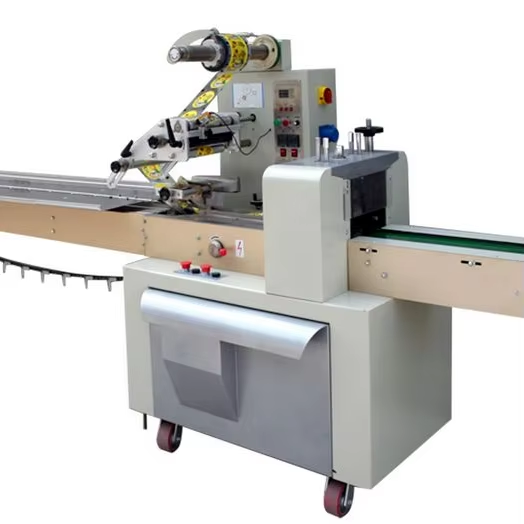
Impact Parameters: Speed, Accuracy, and Reliability in Actual Production
Selecting spout pouch filling and capping machines boils down to three daily operational pillars: product throughput, fill-volume precision, and process consistency. Typical manual systems achieve fill-and-cap throughput of 5 to 10 pouches per minute with frequent unders and overs of fill volume by 3 to 5%. While operating, all personnel must maintain a constant watch to achieve just a compactable daily throughput. In stark contrast, automation is a game changer. With servo-driven fillers and torque-controlled cappers that achieve 40 to >60 pouches per minute with fill volume deviations of <0.5%. Interfacing sensors with PLC control that react in real-time to viscosity and pouch position changes mitigate human interface measurement errors. Talk about consistency. Typical manual operations are plagued with >15% rejection rates due to operator errors like mis-capping and over-filling. That is in sharp contrast to fully-automated production systems that achieve <0.3% disposal rates due to self-regulating closed-loop control systems. In fully-automated production systems, highly repeatable production cycles are keys to optimal production in all production batches.
Unlike automatic systems, manual operation requires a spout pouch filling and capping machine user to control every step from filling to sealing to capping. Typically, production lines run without a hitch with two or three trained employees per line. The importance of training is amplified by the exorbitant levels of human error. According to last year’s edition of Packaging Digest, human error is responsible for 23% to 30% of unplanned packaging line shutdowns. Heat sealing, in particular, requires people to apply the seal at specific intervals, and adjust the torque settings. Operators have to be precise and adjust the settings to be within 0.2 Newton meters for a 12% chance of pouch leakage. Precision sealing is a craft.
Automated spout pouch filling and capping machines lessen the need for personnel on an entire production line by 60 to 80 percent, thanks to process automation through a programmable logic controller (PLC). Machine operation on an entire production line requires staff training primarily focused on handling the human machine interface (HMI) and emergency protocol, which limits the training available for other required operational roles. Automatic capping machines use advanced technology, including sensors and servos, to maintain a consistent capping torque within a tight range of +/- 0.05 Newton meters, reducing sealing defects to under 1.5%. Furthermore, automated systems eliminate human errors that lead to product loss and variation previously causing 4.7% product waste, while the same study reveals that automated systems virtually eliminate the same waste (Food Manufacturing, 2023).
Operational Factor Manual Systems Automatic Systems
Staff per line 2–3 operators 0.5–1 supervisor
Training duration 25–40 hours 8–12 hours
Error-induced waste rate 4.7% <1.5%
Downtime from human factors 23–30% of total downtime <5% of total downtime
Automation of manual systems reduces skill gaps by creating standardized processes through programmable logic controllers (PLCs) which rely less on operator experience to control critical filling and capping parameters like fill volume (±0.5% variance) and cap placement accuracy (99.8% consistency).
Total Cost of Ownership: Initial Cost, Flexibility, and Return on Investment by Scale of Production
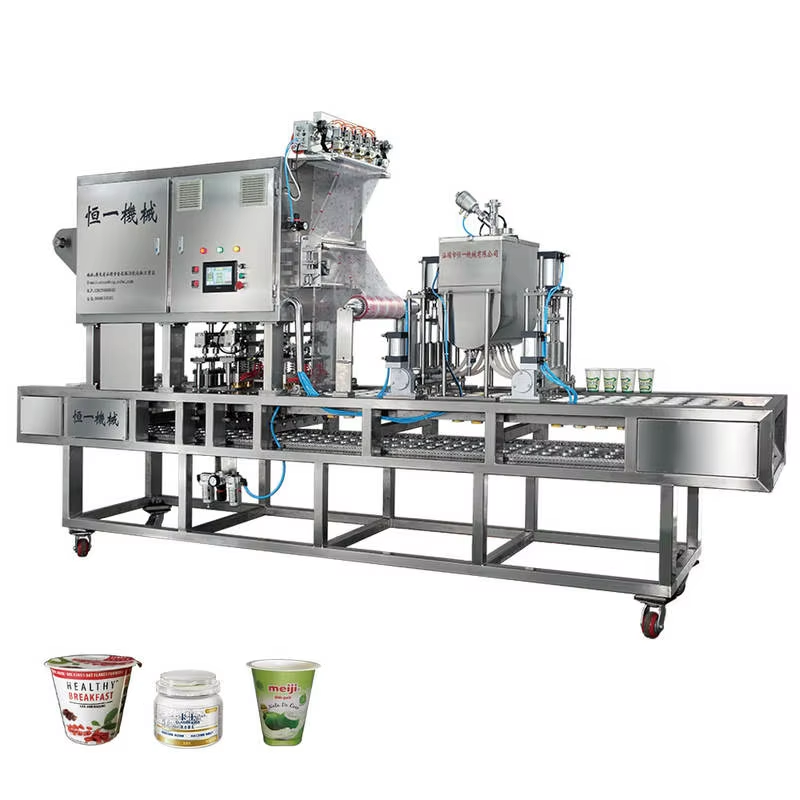
When Manual or Semi-Automatic is Suitable for Low-Volume or Pilot Runs
Manual and Semi-Automatic systems tend to be the first systems that most companies look at for monthly production levels below 10,000 units. More than 10,000 units per month is usually when companies look at fully automated systems. Companies are typically spending about $50,000 or less for these types of systems, and they are less of a cash outflow for companies that are still testing the market for their products and allow for some convenient manual adjustments at the expense of their production efficiency. With these systems, about 70% of their operational costs are attributed to labor, and for production runs of less than 5,000 pouches, operational costs are of less significance than the ability to make manual adjustments to the process.
Justification for Fully Automating Spout Pouch Filling and Capping Machine
With a fully automated spout pouch filling and capping machine, your best cost value is when your production is 50,000 units a month. This is because your machine will provide return on investment in 18 to 24 months, given a 200k price tag. Savings is substantial (approximately two thirds) in manual labor, and, the machine virtually eliminates leaking because automated filling systems adjust to fill measurements within +/- 0.5% (leak free due to a controlled +/0.5% measurement) and each cap gets control adjusted torgue to a set cap measurement. For larger companies that run over 0.5 million units monthly, the need to hire temporary workers to increase production is eliminated. Big operations start to run profitably and smoothly within the 18 to 24 month timeframe.
Frequently Asked Questions (FAQ)
What is the principal difference between manual and automatic spout pouch filling and capping machines?
The principal difference is the interdependence of the workflows and the reliance on persons. Manual systems place people in each step of the process and this brings about many variations. Automated systems, on the other hand, use integrated subsystems governed by PLCs to provide streamlined and unimpeded processes.
In what ways do automatic systems enhance the achievement of parameters of performance above those of manual systems?
The performance of manual systems suffers because of the interlacing of people within the process. A good example is the variation that may occur at the end of the process because of the input of a person who is filling the pouch. Because of the servo-driven fillers and the plc control of the capping systems, the systems that control the filling and capping processes are able to do away with the manual processes and assure a consistent and better performance than the manual systems. Automated systems have greater fill volume accuracy, increase production (i.e., production rate) and, yield more units (including less wasted units).
How does automation help with labor and error issues?
Due to process standardization with PLCs, automation eliminates the need for workers and reduces the need for worker qualification. In addition, the elimination of mistakes and inefficiencies means better production efficiency and lower operational costs.
Is automation applicable to every scale of production?
For production processes that are up to 50,000 units per month, automation is the most inexpensive option. For volumes smaller than that, the initial cost of a manual production process is lower. Semi-automatic systems are more flexible for variations of the finished product.