
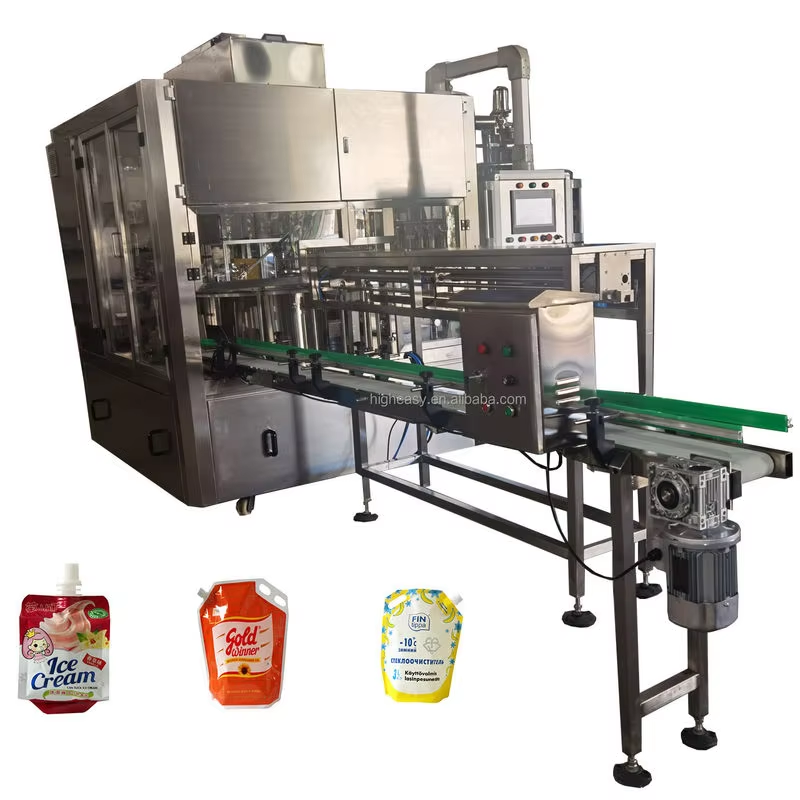
Why Control Panels Have Gone Digital on Cup Filling Sealing Machines
Cup filling and sealing machines now have digital control panels instead of mechanical knobs and switches. While mechanical controls provide some flexibility and compliance digitally controlled panels offer significantly increased flexibility, compliance and control. With digital control panels (or Human Machine Interfaces), users can store multiple product recipes, monitor and control processes, and establish controls to minimize or eliminate errors. These features are what drive the increasing use of digital control panels on machines in the food and pharmaceutical industries. Customers in these industries are driven by the need for quality and product batch traceability.
Accuracy and Consistency: The Role of Digital Control Technology in Achieving ±0.5 ml Filling Accuracy
With the introduction of digital servo controls, it is no longer necessary to be manually adjusted for every cycle in the filling. This results in extremely tight filling tolerances of about ±0.5 milliliters which is critical for filling viscous products like yogurt, sauce, and gel products because even a minor overfilling can result in a loss of significant profit. The digital controls have a closed loop feedback system that automatically compensates for varying thickness of products. The Packaging Efficiency Benchmark Data report of 2023 estimates this system reduces material waste by 8 to 12 percent. This means that every single fill is precise, even after thousands of fills in each work shift. And because operators can make adjustments via a touchscreen at the machine, there is no need to stop the line for adjustments which saves money and time.
Attributing Compliance with Auditable HMI Logs for the FDA and GMP
Digital HMIs integrate with tamper-proof audit trails that track batch parameters, operator actions, and alerts for out-of-spec deviations. This type of audit trail addresses minimum requirements for FDA 21 CFR Part 11 and Good Manufacturing Practices. The digitized, time-stamped, and easily accessible logs supersede the paper logs that are notoriously victimized by human error. In the event of non-conformances, the data helps companies quickly determine the non-conformance, and allows for thorough tracking of the data in the event of product recalls. This is critical for the production of baby food, probiotics, and vaccines. Digital systems provide role-based access control to prevent users from altering system parameters. Hygiene Compliance Review published a study last year that stated companies migrating to these systems reportedly pass surprise audits from regulators 40% faster.
User-Focused Software Development for Cup Filling Sealing Machines
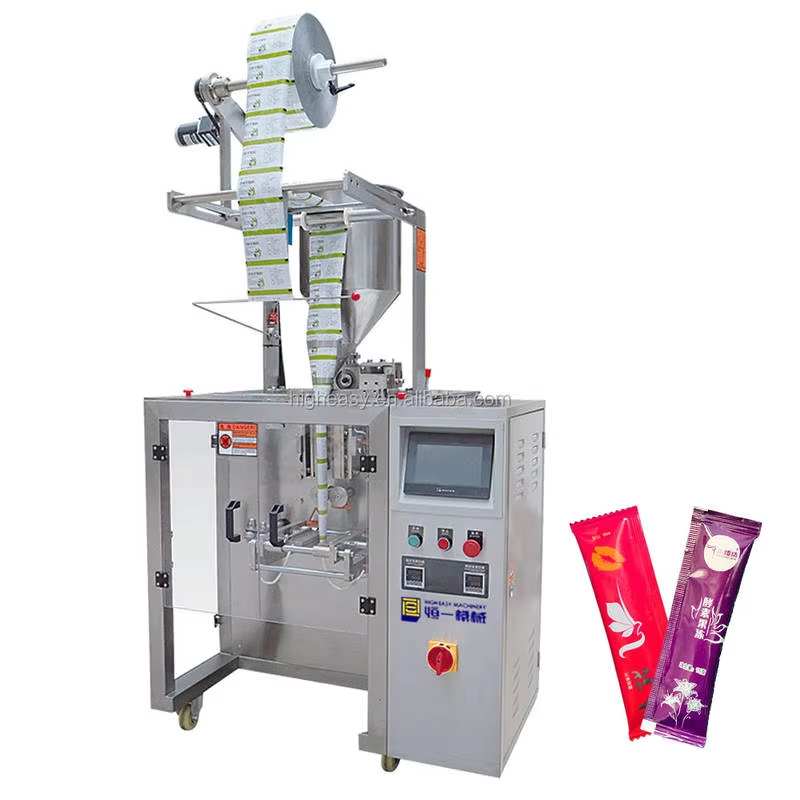
Touchscreen Features: Simplistic Operation and Operator Support in Multiple Languages
Cup filling and sealing machines have touch screen interfaces for easy and efficient operation. Users can change the filling volume and inspect or resolve sealing mechanisms by touch. According to the previous year’s Packaging Digest, training time in numerous food processing and pharma factories has decreased by 40%. Furthermore, the ability to operate the machine in Spanish, Mandarin, French, and Portuguese makes communication among multi-lingual factory workers more efficient. Additionally, managers can control access to critical machine settings.
Smart System Presets: Switch Between Cup Sizes, Viscosities, and Seal Profiles With One Touch
The digital presets, which are already programmed, allow for instantaneous changing between various formats, which is great for co-packers and companies who have a diverse range of SKUs for products ranging from yogurt cups to cosmetic gels and even medical swab kits. When operators have to switch products, they can conveniently access saved settings for the viscosity, container profile, and sealing profile. On average, product changes take 90 seconds or less. This removes the frustration of manual adjustments that create a backlog that, according to Process Automation Journal 2022, results in one hour of downtime every six hours. Additionally, smart technology can maintain a filling accuracy within a half percent range of the target, regardless of viscosity of the filled product.
Automation Level and Digital Control System Compatibility
Automated systems and digital controls function best when designed for the same automation level. Simple controls that allow for batching and product changeovers are preferred for semi-automatic cup filling and sealing equipment. However, fully automated lines with higher speeds require advanced controls. These include real time cloud analytics, OEE monitoring and control, and MES and ERP integration through APIs. For semi and fully automated lines, controls and systems that are designed for higher speeds often result in unutilized capacity, or excessive system downtime. Many middle-range hybrid lines begin with simple HMI upgrades, and as the volume and complexity of the products manufactured increase, add controls that provide early warning for unutilized system capacity. Industry studies indicate that improper control system design and automation level compatibility can result in 17% unutilized capacity in a packaging line. This makes operationally targeted, effective technology investment critical.
Choosing Your Automation Level Features Impacts:
- Semi Automatic - recipe presets and manual overrides allow for quick changeover for small batch and pilot line production
- Hybrid - basic OEE and alarm history gives insights for mid-volume mixed sku production
- Full Automation - integrates MES/ERP and remote diagnostics for predictive analytics and reduces unplanned downtime.
Choosing the Right Cup Filling Sealing Machine with Digital Controls for Your Production Needs
Capacity vs complexity: Considering ROI for Semi Automatic Vs Fully Automatic Models.
Choosing a semi-automatic vs a fully automatic cup filling sealing machine comes down to how much volume you plan to run and how much control you want to have. Fully automatic systems dominate the market with about 42% market share generating more than 1500 cups per hour. They also have low operator intervention requirements. Fully automatic systems can reduce labor costs by 30%. Fully automatic systems do come with higher capital costs and more specialized maintenance. Semi automatic systems service about 38% of the market and are ideal for less than 500 cups per hour. They give operators control, and are ideal for pilot runs, packaging companies with multiple clients, and seasonal runs.
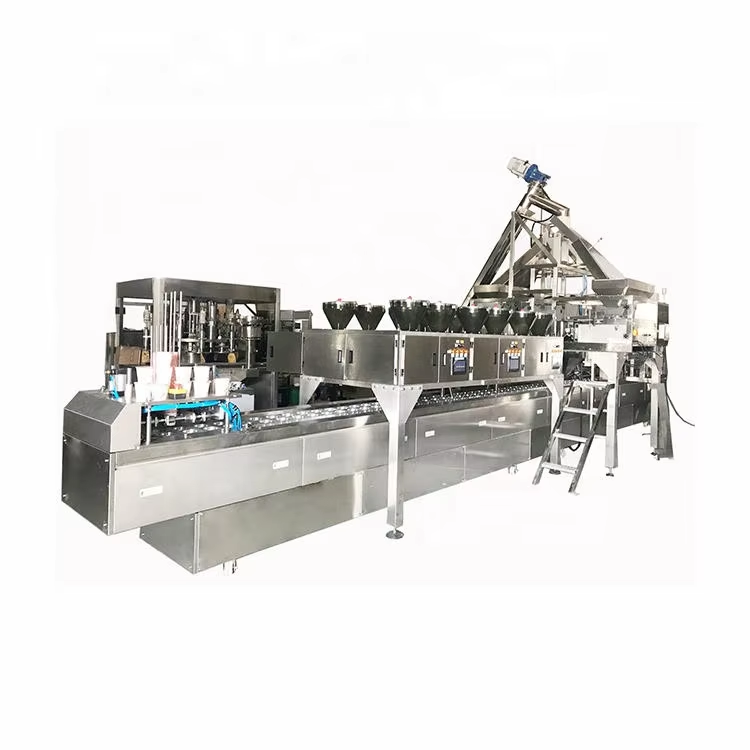
Throughput Requirements: Automatic is superior in large batch stable runs while semi-automatic is better for small batch variable runs.
Labor Strategy: Increased automation leads to decreased need for staff while increasing need for specialized technical skills.
Adjustment Interval: Semi-automatic systems can be adapted to different cup shapes or varied liquid viscosities without the need for coding or the validation of new software.
Anticipation: Cloud-based HMIs will be able to Remote Monitor Predictive Maintenance.
The latest generation of digital control panels is changing the way we maintain our equipment. They are allowing us to shift our thinking from reactive maintenance to predictive maintenance. These Advanced Cloud-Based HMIs can be interconnected to distribute digital data and monitor an assortment of metrics including: filling accuracy (which is typically within a +/- 0.5 mL variance), seal integrity, motor load, and temperature variations over the course of a production run. These systems utilize advanced statistical algorithms to predict the point of wear on critical components (pumps, heaters, and servos) before a catastrophic failure and promote a reduction of 45% in unplanned production downtime. The use of these systems promotes a reduction in maintenance costs of approximately 25% due to the ability of certified technicians to remote troubleshoot software issues, recalibrate sensors, and update software. Future Ready to Grow? Any new equipment should be OPC-UA enabled to allow for seamless integration to the IIoT and comprehensive manufacturing data analytics at the entire factory floor.
FQ
Why are digital control panels preferred over mechanical knobs in new machines?
For a number of reasons, among which are greater accuracy, enhanced flexibility, and greater compliance with critical regulations.
In what manners do digital systems enhance precision in filling and sealing of cups?
Digital controls incorporate servo systems which keep the precision within ±0.5 ml and adjust automatically for variations in the products.
What are the regulatory advantages of digital HMIs?
Digital HMIs provide audit trails which satisfy the FDA and GMP guidelines. This also lessens the risks associated to regulatory compliance.
What factors need to be considered when deciding to use semi-automatic and fully automatic machines?
Factors such as production volume, labor costs, and how often there are product changes need to be considered. Fully automatic systems are designed for larger and more stable production runs while semi-automatic systems are more suitable for smaller and more flexible production runs.