
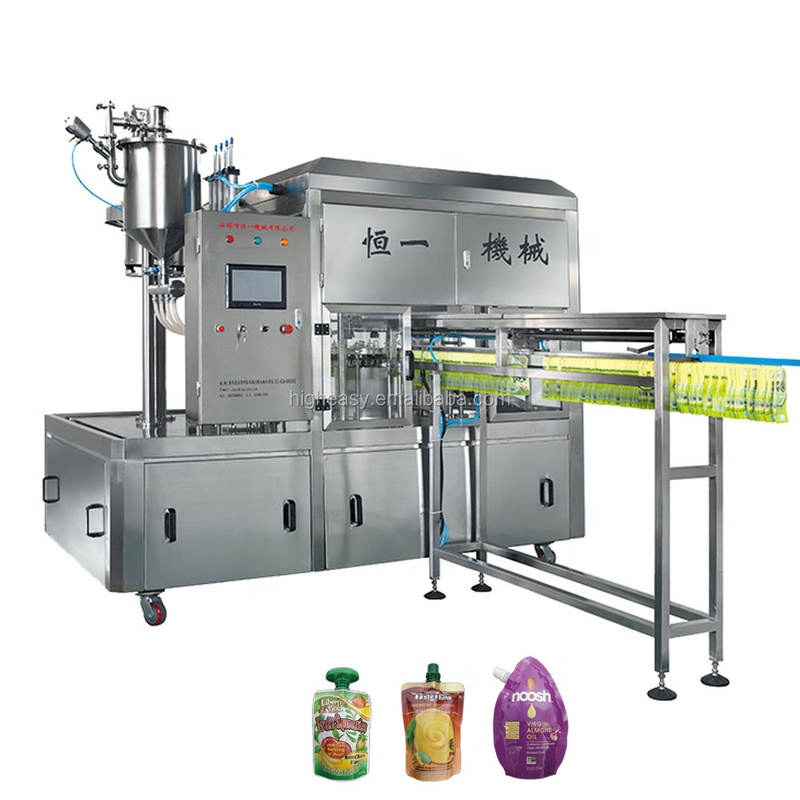
Core Filling and Capping Accuracy
Filling Volume Consistency: Analysis Across 30+ Pouches
Filling volume precision is a statistically driven measurement taken with consecutive pouch counts of 30 or more at a target operational speed. Factors that influence liquid filling volume consistency are liquid viscosity and temperature, pouch material heat or pressure induced expansion, and the filling system's design precision (whether gravity, volumetric, and/or piston based).
Data compiled across the industry clearly defines the operational differences based on filling system design:
Filling System Approximate Accuracy Operational Speed (pouches/min)
Gravity Filling 1%-3% Accuracy 100 to 400
Volumetric System 0.1%-0.5% Accuracy 50 to 200
Piston Based System 0.1%-0.5% Accuracy 30 to 120
Newer high-end piston filling systems are designed to fill with a precision of 0.5%. This design is of particular importance to filling of products of high viscosity (i.e. sauces) where even a 1% overfill can result in giveaway costs (loss) of $740k per year at a high-volume manufacturing facility.
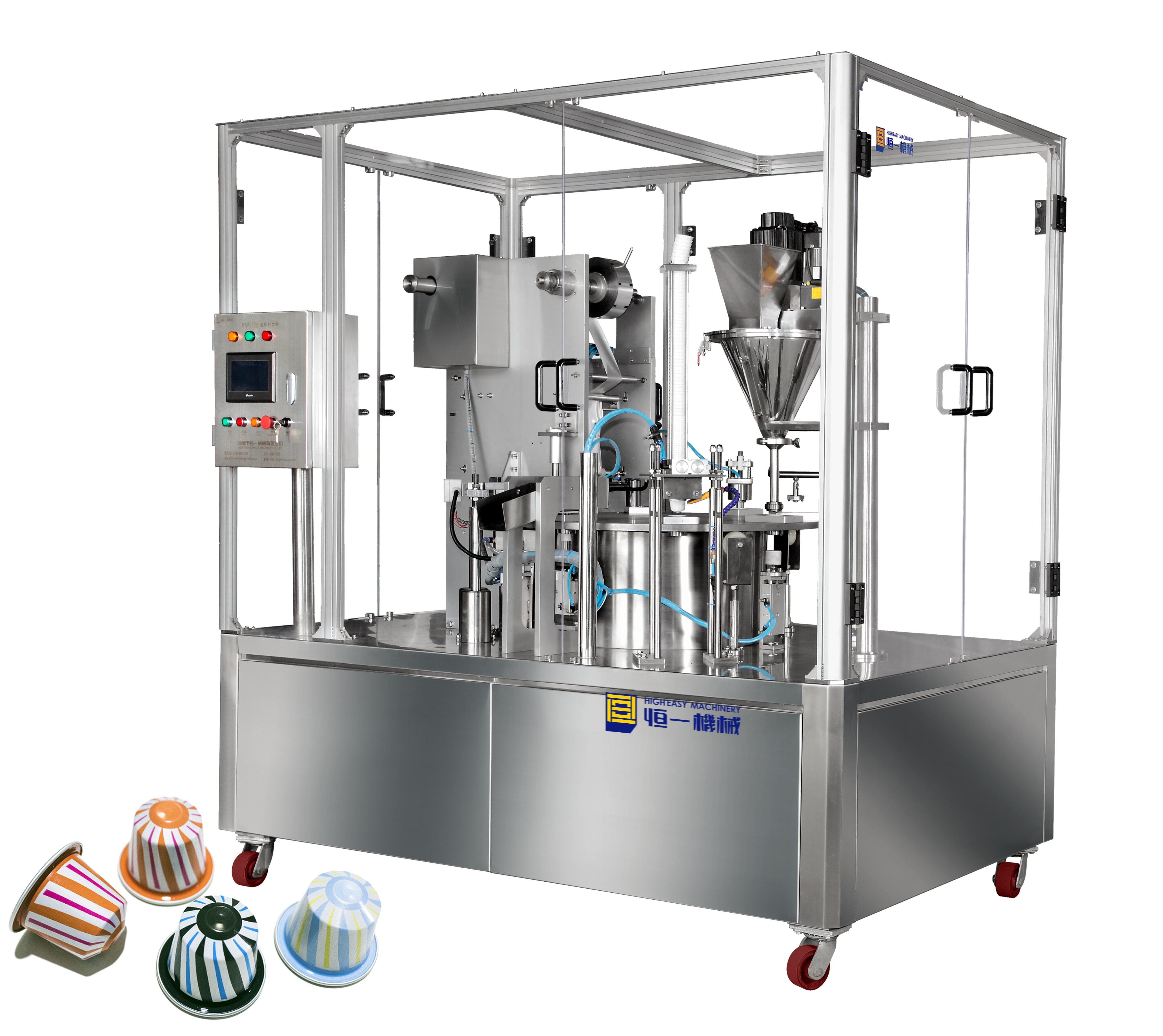
Cap Misalignment and Seal Failure Testing
Following dynamic testing, misalignment of the cap exceeding 0.5 mm has been attributed to 78 % of all seal failures. Tests to determine cap and seal integrity should include:
1. An 8-hour run at the maximum rated throughput
2. Consistency of cap torque should be in a target range, with a variance not exceeding ± 5%.
3. Use of laser alignment sensors to record real time alignment deviations.
4. Burst pressure testing at 35 psi or greater for carbonated soft drinks.
5. The seal quality directly related to machine throughput (i.e. machine rated at 100% throughput will have a greater number of seals <3% leakage than machine running at 85% throughput).
Capping heads should place and seal caps at a target low tolerance of ± 0.3 mm to achieve hermetic seals.
The Importance of Testing Seal Strength and Leak Integrity
With spout pouch filling and capping machines, testing seal strength and leak testing is non-negotiable. Even the smallest defects in pouch seals can lead to product recalls. Research done by the Ponemon Institute in 2023 estimated these types of incidences can cost a company on average $740,000. Testing is done to evaluate all the seal will endure during transport and to hold sterility and shelf life. Consider the pressure, temperature and vibrations the pouches endure during shipping and the time in the distribution cylce. Keeping the product safe and uncontaminated is the most important food safety issue.
Digital Peel Force and Quantitative Seal Strength Testing per ASTM F88
The ASTM F88 standard offers concrete numbers and values to manufacturers when assessing and comparing the seal strength of flexible barrier materials. With digital peel force testers, one can take the seal and peel it to one side, and, with a controlled-applied tension, measure the force required to break the seal. This force measurement is expressed in Newtons per 15 mm of seal width. Based on our experience, most clients who deal with industrial liquids are looking for a seal strength of no less than 8 Newtons per 15mm. In the case of testing seal strength, no guesswork is tolerated, and all equipment must be properly calibrated. This is very critical for quality testing of machines that function and are tested at different shifts of the same production cycle, and even, at the same time, at different locations in the same industrial unit.
Vacuum decay testing involves putting sealed and filled spout pouches in negative pressure conditions to determine rate of decay with respect to pressure drop due to micro-leaks greater than five microns. This method is highly effective in lab environments and offline quality inspections, especially for some of the smaller defects that matter most. Unlike vacuum decay testing, airborne ultrasound is effective for larger gaps, those that are greater than fifty microns, by detecting high frequency sound waves that reflect off of seals that are broken and are therefore better suited for high speed production environments where inspections and defects are identified in rapid order. When used in tandem, these methods provide manufacturers with the best potential for defect coverage. Based on ASTM Packaging Standards, vacuum decay testing detects 99.2% of critical leaks, while airborne ultrasound detects 92%.
Operational Reliability and Workflow Integration Evaluation
Consistency in Bag Feeding Stability, Filling-Capping Timing, and Cycle Timing
For reliable operation, it is crucial to achieve a good operational triad of filling, bagging and capping. The bagging system needs to be operationally precise, less than a half millimeter tolerance in order to avoid sticking and misaligned spouts. In operational timing, filling and capping should have an operational goal of a 0.2 second delay to avoid flooding or premature seals. The entire system should be operable and consistent over a cycle time of 300 to 400 even to avoid more than 2% deviation. Overall, plants that automate laser sensors and PLC systems improve their operational rate between 18 to 22 percent while operational SPC and control charts checks ensure that most of the operational related issues avoid the operational system post audit stage, and significantly reduces operational downtime.
Root-Cause Troubleshooting of Common Failures: Uneven Filling, Cap Misalignment, and Bag Jams
Troubleshooting is most effective at identifying and solving a problem's core cause rather than addressing symptoms. If products are filling unevenly, the problem could relate to the viscosity of the filling material or blockages in the nozzles. In these cases, inline viscometers and ultrasonic cleaners can help. Caps may not line up, which could be caused by worn or mismatched gripper jaws. In these situations, laser alignment and anti-vibration mount positioning tools can help. Jams can be caused by crooked guide rails and asynchronous conveyor belt speeds, which can be adjusted by VFDs to help keep things in line. Many plants have reduced the amount of time spent on troubleshooting by keeping thorough logs of the events. They analyze the logs to determine what issues are recurring, how frequently they happened, how the issue was fixed, and how they can minimize the impact of the issue are more efficient than plants that do not.
FAQ
Why is it important to assess filling volume consistency in pouch filling?
Filling volume consistency is important because any under filling or over filling can negatively impact the quality of the products and adversely impact the company's revenue stream.
How can product recalls be avoided through seal strength testing?
Testing seal strength shows which seals are at risk of leaking or being compromised, which are a big reason of product recalls. When companies make sure that seals are strong, they prevent losses from accidents.
What do you gain by combining vacuum decay and airborne ultrasound for leak detection?
The combination of these two techniques means that both small and large leak defects are found in a timely manner, and this improves the reliability of the product.
How do production rates depend on operational reliability?
When operational reliability is good, all the systems in the production go together and equally as planned. Because of this, there is little production downtime and production AND operational costs are very low.