
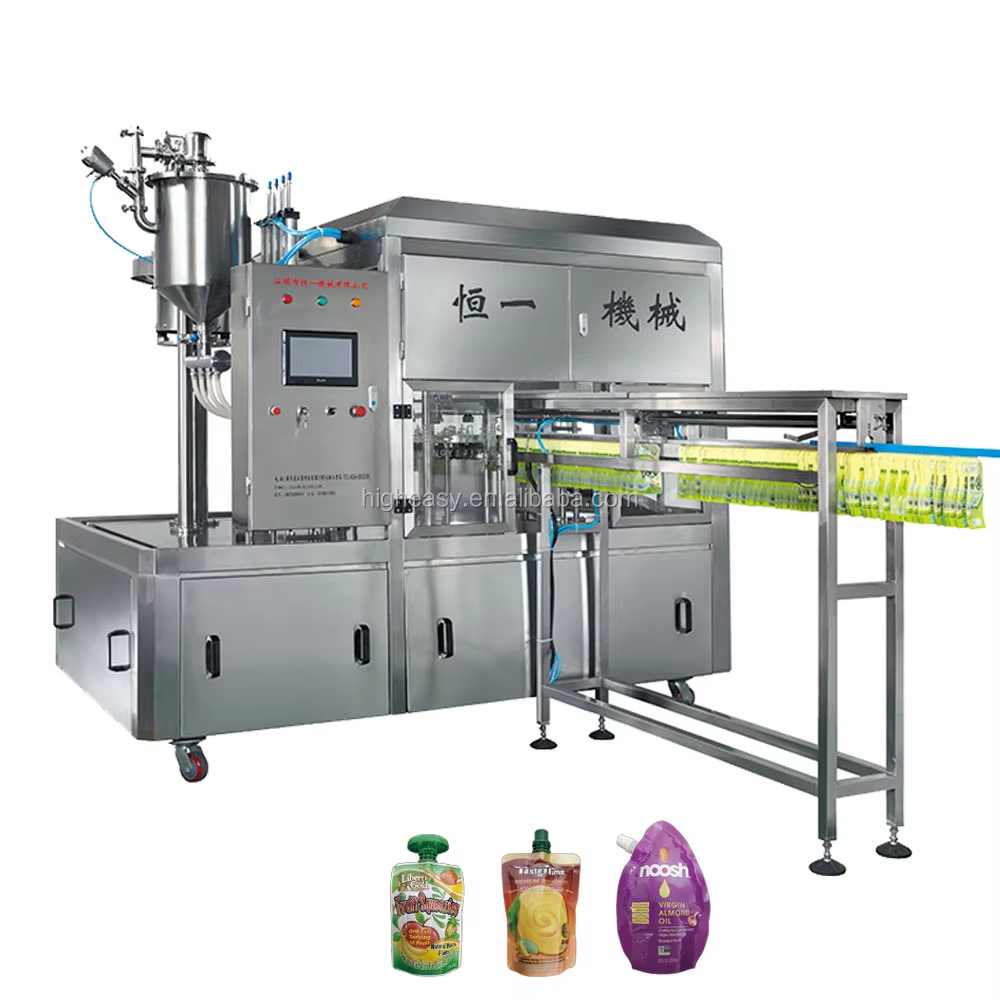
Filling Accuracy and Adaptability Regarding Viscosity
Matching filling technology to the product types: liquids, gels, and free-flowing powders
Selecting the correct filling method is about balancing the equipment specifications to the flow properties of the product. For thin liquids between 1 to 50 cP, like water or fruit juices, gravity feed systems are excellent. These systems maintain an accuracy of about 1% filling over 100 pouches per minute. For thick products within a range of 500 to 5,000 cP (ketchup, other similar gels) manufacturers need to utilize piston fillers. because the controlled strokes of the machine are better for accuracy and better for filling so that less than 5% of product in the run is wasted due to underfills. Free-flowing powders pose a different challenge and require special auger systems that are designed to prevent clogging and to help maintain consistent flows during filling. The above drawbacks can result in wasted material due to over or under filling, costly recalls due to noncompliance to filling regulations. Modern spout pouch fillers have a lot of built in flexibility so that different products can be filled by varying spout and fill rate adjustments, and adjustments to the volume of product that is displaced in each fill cycle.
Volumetric vs. gravimetric filling systems—and the role of real-time weight verification in spout pouch filling and capping machine accuracy
Volumetric filling systems have a piston or similar mechanism that dispenses a set volume of liquid. These types of systems are usually less expensive and are used for filling liquids that have a consistent density. Problems begin to arise with these types of systems when the liquid being filled has varying viscosities, as this can result in a 2% over or under fill without the liquid being changed. In contrast, gravimetric systems use a fill mechanism that measures the weight of the liquid as it dispenses and makes instantaneous adjustments in real-time via load cells. These systems are able to provide much greater accuracy (around 0.1 to 0.5% accuracy) and are better suited for filling products that are temperature-sensitive, or that have variable viscosities such as emulsions and suspensions. \nFrom a legal and financial standpoint, it is more valuable for the manufacturer to opt for systems that maintain better accuracy. Regulatory compliance associated with filling systems is a critical part of protecting a company from being overly penalized from underfilled packages.
Filling System Type Accuracy Range Ideal For Limitations
Volumetric ±1–2% Consistent liquids (oils, water) Viscosity/density sensitivity
Gravimetric ±0.1–0.5% Non-newtonian products (creams, nut butters) Higher upfront cost
Gravimetric technology significantly decreases giveaway insurance for spout pouch fillings, making it 3–7% better annually. This is due to the real-time weight monitoring of continuous fills. Integrated sensors also immediately stop production as soon as a fill is determined to be out of specification, saving valuable products from being wasted in batch rejections due to quality control audits. This is a significant improvement from the limited real-time monitoring from previous systems that relied only on manual monitoring.
Sealing and Capping that are Reliable and Effective Against Leakage
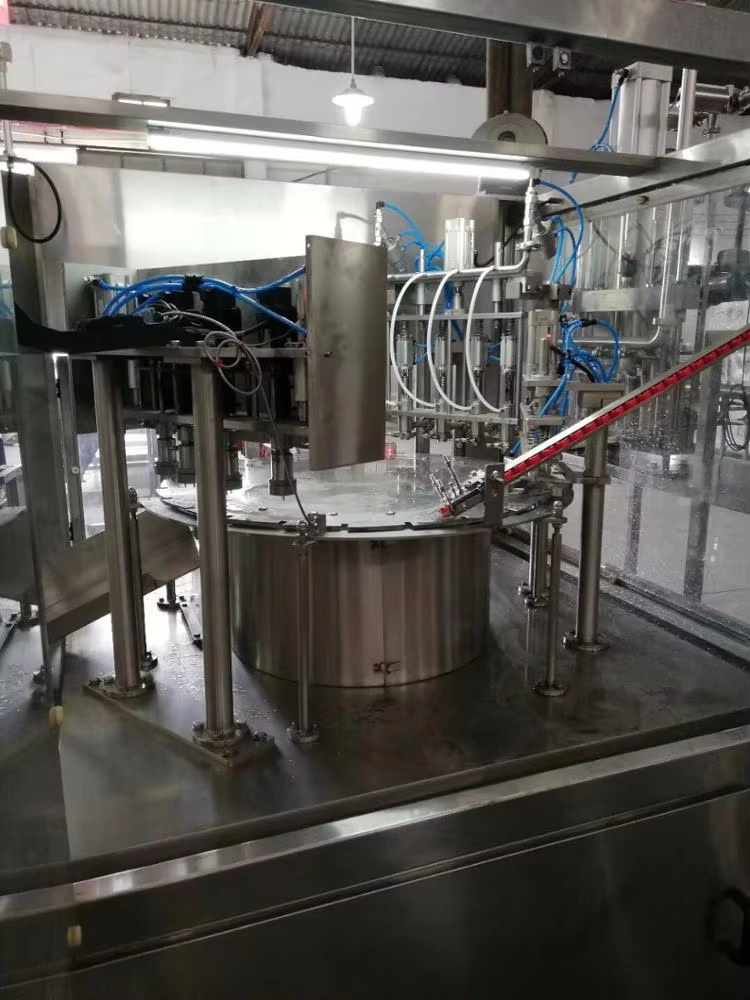
Sealing and capping that are torque controlled and provide consistent compliance with regulations (e.g., child-resistance)
The torque control system helps to balance and maintain closure pressure during sealing and helps to provide an even and adequate closure pressure that won’t damage the pouch. There are various ways to cuase closure pressure and capture the resultant torque; however, the most common way is to use a motor that provides a consistent amount of closure pressure between 5 and 25 Newton-meters (Nm.) typically depending on the size of the cap. A cap that is torque controlled will not be too loose (leading to leakage) or too tight (leading to stripped threads on the cap). Special child-resistance torque controlled caps and/pouches are designed to comply with the 1970 PPPA regulations. These caps are intentionally designed to provide a torque limit of 22 lbs to be opened and will provide signs of tampering prior to purchase. Modern technology is leading the way with smart detectors. Smart detectors are able to reject portions of the cap/pouch system that are not within the specified torque standards. Therefore, compliance is an inherent feature of the cap/pouch system.
Sealing technology must be compatible with the composition of the pouch material as well as the sensitivity of the product.
Method Best For Cycle Time Material Compatibility
Heat Sealing Standard laminates (PET/AL/PE) 1.5–2.5 sec High-temperature films
Ultrasonic Sensitive products, thin films 0.8–1.2 sec Multi-layer barrier pouches
Impulse Foil-lined pouches, thick seals 2.0–3.5 sec Heat-sensitive composites
Ultrasonic sealing uses high-frequency vibrations to create molecular bonds without the use of outside heat, making it ideal for products that are sensitive to oxygen or temperature changes. Impulse sealing uses short, strong energy pulses which makes it good for thicker materials that have foil layers. Heat sealing is usually the most affordable option, which is why it is so commonly used for standard laminates. Most modern spout pouch fillers and cappers have interchangable sealing modules that can be switched for different types of sealing. This is usually done between production runs when manufacturers need to change the pouch specifications during production.
Quality Assurance Integrated into Every Pouch
The necessity of robust quality assurance in spout pouch filling and capping operations is evidenced by the value it adds to the safety and reliability of the product for the customer. The Automated Vision Systems identify and flag obstructions on pouches to identify pouches with unsealed pour spouts, spouts that are sealed, or those that are contaminated during the filling or capping process. Other check X-ray inspections identify and flag inconsistent volume fill and any other obstructions that the Automated Vision Systems may have missed. There are also tests for the pressure and torque of the caps sealed onto the pouches to ensure that the child-proof and tamper-evidence features are adequately secure. All of these help ensure compliance and avoid product recalls. The value of quality is compounded by the Automated Vision Systems and X-ray inspections. The FDA found that in the first half of 2023, nearly 25% of product recalls are from the packaging. High quality recalls. Investing in quality assurance is also investing in the confidence of an item that can be consumed.
Inspection Type Defects Found Effect
Automated Vision Systems Spout misalignment, surface imperfections, seal gaps Leakage and aesthetic issues
X-ray Inspection Overlaying foreign materials, under/over-filling Unsafe product and inaccurate volume
Pressure Decay Testing Seal micro-leaks Defective pouches for transit
Cap Torque Verification Cap not torqued or torqued too much Function and compliance
Product, Size, and Cap Flexibility
Modular design for quick changeover
Flexibility for production is essential for spout pouch filling and capping machines as manufacturers deal with different product ranges and packaging changes. Three features have been designed for less than optimal line downtime during changes of formats:
Standardized quick change tooling allows swapping of capping heads and filling nozzles in less than three minutes.
Spout alignment which compensates for variations of ± 5 mm.
Modular nozzle banks which allows the handling of different viscosities without the need for recalibration of the system.
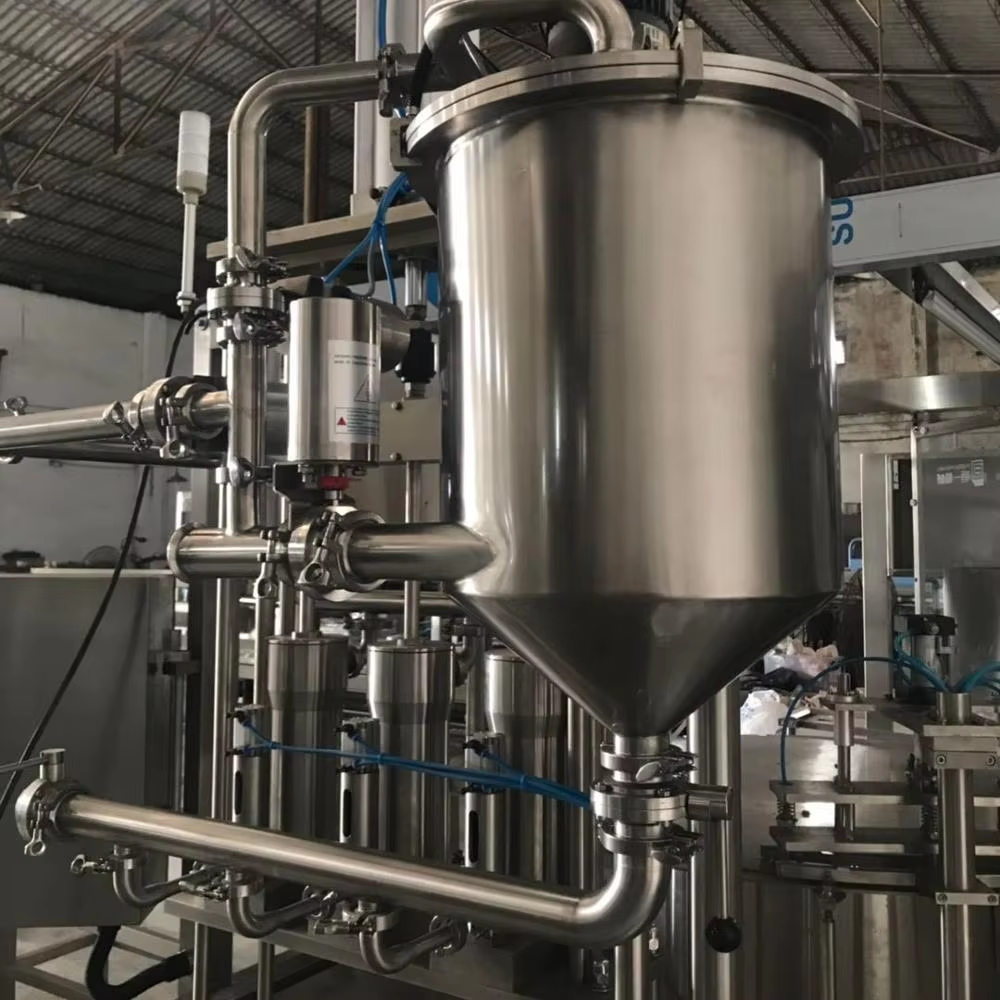
The latest data from the Packaging Operations Benchmark show that integrated systems cut changeover times by 40 to 70 percent compared to traditional inflexible systems. This allows manufacturers to change production lines to meet seasonal demands or create special edition products without going below 30 parts per minute. Further still, the advantage of this type of system goes beyond the physical infrastructure. Modern systems include changeover software that stores the system configuration, eliminating the need for operative configuration. In fact, operators can easily transition to different pouch sizes such as 100 mL to 1-liter and switch to different child-resistant and sports caps without configurational changes. As a result, integrated systems cause a factory to spend 19 fewer hours each year idly. Ultimately, instead of relying on batch processing old methods, integrated systems allow plants to operate closer to real-time customer demand.
Adjustable Output and Intelligent Operational Features
Streamage Standards (30–120 PPM) and Multi-Head Design’s Potential for Capacity Increment
Currently available pouch filling and capping machinery are capable of filling and capping between 30 and approximately 120 pouches per minute. This is made possible by a multi-head system. The design is excellent, as with other machines, manufacturers do not have to buy a new machine to upgrade to higher capacity. With business growth, it is possible to just add more filling heads or capping head units. This flexibility is vital for businesses that are seasonal or are branching out to other markets. They can easily adjust for different product runs. Most machines are designed to easily switch out product runs. Machines are designed to switch product runs easily. The machines are capable of constant change product runs, and are equipped with real time monitoring and reporting to monitor and report operational performance. This way, operators can adjust, operational issues, prior to them becoming a large operational issue. The machines maintain operational performance, regardless of increased production and operational demand. This type of operational techno invests business operational performance to better cope with demand operational performance flexibility. The overall trade-off is techno operational costs, product quality, and meeting the demands of packaging safety operational standards / regulations.
Frequently Asked Questions
What is the best way to seal spout pouches?
What is best to sealing spout pouches is determined by the sensitivity of the product and material making the pouch. With normal laminates, pouches can easily be heat sealed. Sensitive products and thin films are best sealed with ultrasonic sealing. Impulse sealing is best for thicker and more heat-sensitive products.
What is the benefit of using gravimetric filling technology with regard to product waste?
Gravimetric systems rely on real-time feedback from the scale to make adjustments on the fly. This self-correcting mechanism is more accurate than the manual checking process and is predictive of a reduction in waste of 3 to 7% year-over-year.
Are spout pouch machines versatile with respect to the products and sizes being packaged?
Certainly! The latest technology in spout pouch filling and capping machines is versatile in production. The machines have Quick-change tooling and spout alignment that is adjustable to various products and different sizes of pouches.
Why is torque-controlled capping important for spout pouches?
It is important to the process because it protects the capping equipment from damage by ensuring that the caps are not too loosely or too tightly applied to the spout pouches. This sort of regulated control of capping systems is also required in order to satisfy some legal and child-safe regulations regarding spout pouches.