
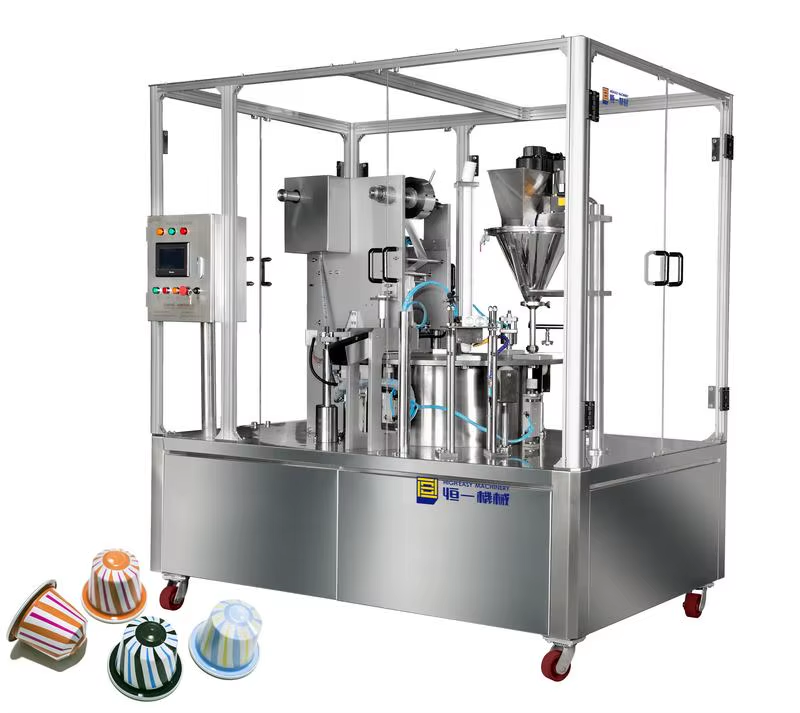
A production manager at a Southeast Asian yogurt factory watched an entire shift's output — 12,000 cups — get rejected by a retail chain because inconsistent seal pressure had allowed microscopic leaks during refrigerated transport. The root cause was not operator error. The aging cup filling sealing machine lacked automatic seal pressure monitoring, a function now considered standard on modern equipment. That single rejection event cost more than upgrading to a machine with the right capabilities. For procurement teams evaluating packaging line investments, understanding which functions are genuinely indispensable separates machines that run profitably from those that generate hidden costs.
Core Functions That Define Performance
Precision Filling: Accuracy That Protects Margins
Filling accuracy in a cup filling sealing machine directly impacts profitability in ways that compound across production volumes. A deviation of just 2 milliliters per cup on a line producing 4,000 cups per hour translates to 8 liters of product loss every 60 minutes — roughly 64 liters across an 8-hour shift. Modern piston-filling and flow-meter systems maintain accuracy within ±1 percent of target volume, even when handling products with varying viscosities such as yogurt, juice with pulp, or sauces with particulate matter. Anti-foaming controls represent another essential filling feature. Products that foam during dispensing — dairy-based beverages, protein drinks, tea with milk — can cause fill-level inconsistency and seal contamination if foam reaches the cup rim. Machines equipped with bottom-up filling nozzles that dispense product from below the liquid surface reduce foam generation by minimizing splashing and air incorporation during the fill cycle. For operations running multiple product SKUs on the same line, quick-change filling heads that swap without tools reduce changeover downtime from 45 minutes to under 10.
Sealing Technology: The Difference Between Shelf-Stable and Recall
The sealing station on a cup filling sealing machine performs a deceptively complex task: bonding a film membrane to a cup rim with enough integrity to survive temperature fluctuations, pressure changes during transport, and consumer handling — all at production speeds approaching 80 cups per minute. Heat sealing remains the dominant technology, using precisely controlled temperature platens and timed pressure dwell to fuse BOPP, PE, or aluminum laminate films to cup rims made from PET, PP, or paper-based materials. Adjustable temperature control matters because different film materials require different activation temperatures — PE films seal reliably at 130 to 150°C, while aluminum laminates need 160 to 180°C. Independent temperature zones for each sealing head allow fine-tuning for multi-lane machines. Photoelectric film alignment sensors ensure that pre-printed film patterns register correctly on each cup, preventing branding misalignment that leads to retail rejection. Nitrogen flushing, available as an option on many cup filling sealing machine models, displaces oxygen from the headspace before sealing to extend shelf life for oxygen-sensitive products — a critical function for fresh dairy, cut fruit, and ready-to-drink tea products.
Automation and Control Systems
PLC-based control with touchscreen interface has become the baseline for modern equipment. The PLC coordinates filling volume, sealing temperature, conveyor speed, and film indexing in a synchronized sequence that maintains consistent output. Fault detection and automatic shutdown when parameters drift outside tolerance — a seal temperature dropping 5 degrees below target, for instance — prevents mass production of defective units. CIP compatibility allows cleaning-in-place without disassembling product-contact components, reducing sanitation downtime and cross-contamination risk between production runs. Cup detection sensors prevent the machine from dispensing product when a cup position is empty and reject stations automatically remove cups with incomplete seals before they enter downstream packaging.
Frequently Asked Questions
What filling accuracy should a modern cup filling sealing machine deliver?
Modern piston-filling and flow-meter systems maintain accuracy within ±1 percent of target volume across varying product viscosities. For a 200-milliliter fill target, this means actual volume ranges between 198 and 202 milliliters — a tolerance that protects both regulatory compliance and profit margins.
How does nitrogen flushing extend product shelf life?
Nitrogen flushing displaces oxygen from the cup headspace immediately before sealing, reducing oxidation that degrades flavor, color, and nutritional content. For oxygen-sensitive products such as fresh dairy and fruit preparations, nitrogen flushing can extend refrigerated shelf life by 30 to 50 percent compared to ambient-air sealing.
Why is photoelectric film alignment important for branded products?
Pre-printed film with brand graphics, nutritional information, and date codes must align precisely on each cup. Photoelectric sensors detect registration marks on the film and adjust indexing to maintain alignment within 0.5 millimeters, preventing the branding errors that trigger retail rejection.
What distinguishes bottom-up filling from top-down dispensing?
Bottom-up filling nozzles descend into the cup and dispense product from below the liquid surface as they rise, minimizing splashing and air incorporation that causes foaming. This is particularly important for dairy beverages, protein drinks, and tea products where foam can contaminate the seal area.
How does automatic seal pressure monitoring prevent packaging failures?
Sensors continuously measure the force applied by each sealing head and alert operators or trigger automatic shutdown when pressure deviates from the set range. This prevents the inconsistent seals that cause micro-leaks during transport — a leading cause of product rejection at retail receiving docks.
Can a single cup filling sealing machine handle multiple cup sizes?
Most modern machines accommodate multiple cup sizes through quick-change guide rails, filling head adjustments, and film indexing recalibration. Changeover between cup formats typically takes 10 to 30 minutes depending on the number of adjustments required and whether tool-free change parts are installed.