
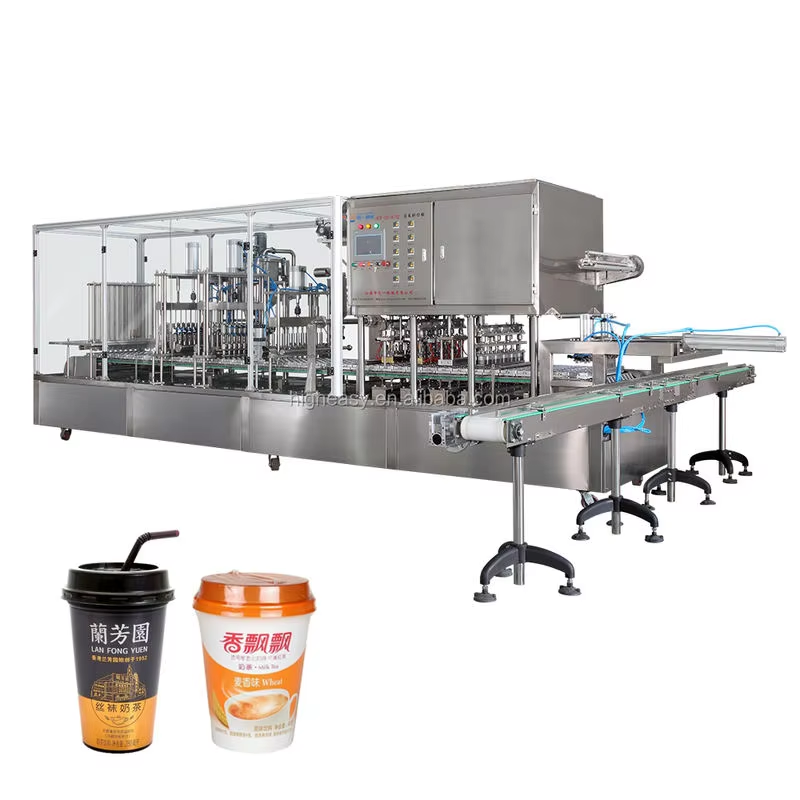
A juice brand in West Africa was manually filling and sealing 800 cups per day with a team of six workers using handheld heat sealers. Labor costs consumed 22 percent of revenue, seal consistency varied by operator, and the brand lost a supermarket contract because the manual process could not meet the retailer's lot-traceability requirements. After installing an automatic cup filling sealing machine rated at 3,600 cups per hour, the same six workers were redeployed to quality inspection, packaging, and warehouse roles. Output tripled within the first month, seal failure rates dropped below 0.3 percent, and the traceability data generated by the PLC satisfied the retailer's audit within a single meeting. That transformation from bottleneck to competitive advantage captures why automated filling and sealing equipment has become non-negotiable for serious beverage producers.
Production Economics and Throughput
Labor Efficiency and Scale
A single cup filling sealing machine operating at 3,600 cups per hour replaces the output of 12 to 15 workers on a manual filling line. The labor savings alone typically recover the machine investment within 18 to 24 months for operations producing more than 5,000 cups daily. Beyond headcount reduction, automation eliminates variability between workers — a morning shift operator filling cups by hand might dispense 195 milliliters while an afternoon operator dispenses 205, creating inconsistency that consumers notice and retailers track. Automated filling maintains volume within ±1 percent regardless of who is supervising the machine, shift after shift. For beverage brands selling through retail channels where consistent fill levels affect shelf presentation and regulatory compliance, this uniformity is as valuable as the labor savings.
Speed and Scalability
Beverage demand is seasonal and promotional. A brand running a summer promotion that doubles order volume needs production capacity that scales without hiring and training temporary workers. A cup filling sealing machine with variable speed control allows production rate adjustments from 2,400 to 4,800 cups per hour by modifying conveyor speed, filling stroke timing, and sealing dwell time — changes implemented through PLC parameter adjustments rather than mechanical modifications. This scalability allows producers to maintain lean staffing during normal periods while meeting peak demand without quality compromises. For co-packers serving multiple beverage brands, quick-change tooling that accommodates different cup diameters, heights, and film materials on the same machine enables service to diverse clients without dedicated lines for each customer.
Quality, Hygiene, and Compliance
Food Safety as a Competitive Requirement
Food-grade 304 stainless steel construction on all product-contact surfaces is the minimum standard for beverage packaging equipment. The material resists corrosion from acidic products — citrus juices with pH below 3.5, fermented tea beverages, and vinegar-based health drinks — and withstands daily sanitation with chemical cleaning agents without surface degradation. CIP compatibility allows the product pathway to be cleaned and sanitized without disassembly, reducing the sanitation window between production runs from 90 minutes to under 30. For beverage producers supplying retail chains that conduct unannounced food safety audits, documented PLC data logs showing filling temperatures, seal verification counts, and cleaning cycle timestamps provide the traceability evidence auditors require. Machines that lack this data logging capability force producers to maintain manual records that are both labor-intensive and less credible during audit reviews.
Consistency That Builds Brand Trust
Consumers who purchase a 200-milliliter cup of mango lassi expect the same volume, the same seal integrity, and the same product experience every time. A single leaking cup in a multi-pack at retail creates negative perception that affects the entire brand. The seal verification inherent in automated cup filling sealing machine operation — temperature monitoring, pressure sensing, and visual alignment checks — catches defects before they leave the production line. This front-end quality control is significantly more cost-effective than processing customer returns, issuing credits to retailers, and managing the reputational damage of product recalls. Production tracking data also supports continuous improvement: when a production manager can review seal temperature trends over 30 days and identify the gradual drift that preceded a quality incident, maintenance can be scheduled proactively rather than reactively.
Frequently Asked Questions
What production volume justifies investing in an automatic cup filling sealing machine?
Operations producing more than 5,000 cups per day typically achieve payback within 18 to 24 months through labor savings alone. Below 3,000 cups daily, semi-automatic machines may offer better economics. The crossover point also depends on local labor costs — in higher-wage markets, automation payback occurs at lower daily volumes.
How quickly can a cup filling sealing machine switch between different beverage products?
With quick-change filling heads and tool-free guide rail adjustments, product changeover takes 10 to 30 minutes. CIP systems reduce the sanitation time between products from 90 minutes to under 30, making same-day production of multiple SKUs operationally feasible.
What food safety standards apply to beverage filling equipment?
CE compliance covers machine safety for European markets. FDA food-contact material requirements apply for equipment exporting to North America. ISO 22000 provides a food safety management framework that many retail chains reference in supplier audits. Equipment built with 304 stainless steel product-contact surfaces meets the material requirements across all major standards.
How does automated filling improve product shelf life consistency?
Consistent fill levels eliminate the headspace variation that affects oxygen exposure and seal integrity. Nitrogen flushing, integrated into the sealing sequence, displaces oxygen from the headspace with controlled timing that manual processes cannot replicate. These factors combine to deliver the predictable shelf life that retailers require for inventory management.
Can a single machine handle both hot-fill and cold-fill beverages?
Machines designed for dual hot-fill and cold-fill operation include temperature-resistant sealing components rated for product temperatures up to 90°C and filling systems that accommodate the viscosity changes that occur when hot products cool. Verify the manufacturer's hot-fill specification before processing products above 70°C.
What maintenance schedule supports uninterrupted beverage production?
Daily cleaning of product-contact surfaces and sealing head inspection, weekly pneumatic system checks and film alignment sensor verification, and monthly sealing head temperature calibration form the core maintenance schedule. Annual shutdown maintenance should include complete sealing station rebuild and conveyor drive system inspection to prevent the unexpected downtime that disrupts seasonal production peaks.