
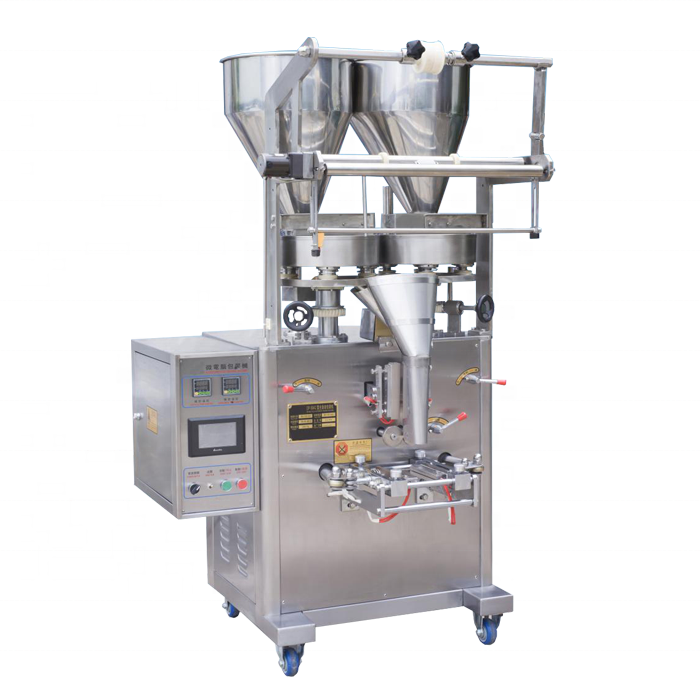
Why Troubleshooting Vertical FFS Equipment Matters
The Real Cost of Unplanned Packaging Line Stoppages
A production supervisor at a powdered drink mix facility watches the shift output counter stall at 60% of target. The vertical ffs machine on line three — a workhorse that had been running smoothly during the morning shift has begun producing bags with incomplete seals, and the downstream case packer is stacking rejects faster than the line crew can inspect them. After two hours of trial-and-error — adjusting jaw temperature, increasing dwell time, swapping the film roll — the maintenance technician isolates the fault to a worn PTFE sealing belt that had been flagged for replacement two weeks earlier but deferred to avoid stopping production. Those two hours cost roughly 16,000 units of lost output. The deferred maintenance decision, intended to save time, cost far more than a planned 20-minute belt change would have.
Production environments running vertical form-fill-seal equipment share a common reality: troubleshooting happens under pressure, with every minute of downtime directly eating into shift targets. The ability to diagnose faults quickly and accurately depends less on memorizing error code tables and more on understanding how each subsystem behaves when it degrades. A machine that produces good bags 99% of the time but drifts out of tolerance unpredictably creates more operational friction than a machine that fails completely — because complete failures demand immediate resolution, while intermittent faults invite cycles of adjustment, hope, and creeping quality risk.
How Minor Faults Escalate into Major Production Losses
The degradation pattern on packaging machinery follows a predictable arc. A sealing jaw heater element begins drawing slightly more current than its rating, pulling the temperature controller into compensation mode. The controller holds setpoint, but the heater is now cycling at 95% duty cycle instead of the typical 60–70%. Over weeks, the heater burns out. Before failure, however, it produces intermittent cold spots on seals that pass visual inspection but fail integrity testing at the customer's facility. By the time the root cause is identified, the vertical ffs machine may have shipped three production runs of marginally sealed product — and the cost of a recall dwarfs the cost of a heater replacement by orders of magnitude.
The same arc applies to film tracking misalignment, filling accuracy drift, and bag length inconsistency. Each fault begins as a subtle deviation from nominal — a 0.5mm shift in film edge position, a 2% increase in fill weight variation, a 1mm change in bag cutoff length. Left undiagnosed, these small shifts compound. Film tracking errors evolve into wrinkled seals and jams. Fill weight drift triggers regulatory non-compliance in net-weight-labeled products. Bag length inconsistency disrupts secondary packaging automation downstream. The operators who catch these shifts early — before they become line-stopping events — are the ones who maintain a troubleshooting mindset during routine production, not just when alarms sound.
How Key Subsystems Work and Where They Typically Fail
Film Transport and Sealing — The Two Biggest Failure Points
The film transport system on a vertical ffs machine performs a mechanically demanding task: pulling packaging film from a roll, guiding it around a forming collar that shapes it into a tube, and advancing it with precise repeatability — typically within ±0.5mm of target bag length — at speeds that can exceed 80 cycles per minute. On any vertical ffs machine operating in a multi-shift production environment, this level of precision must be maintained across millions of cycles, making film transport reliability the single biggest factor in overall equipment effectiveness. Three components govern this precision. The film unwind assembly controls back tension through a dancer arm or load cell feedback loop, preventing slack that causes misregistration. The forming collar, machined to a specific geometry for each bag width, must maintain a mirror-smooth surface finish — any scratch or gouge creates drag points that distort film tracking. The pull belts or friction rollers that advance the film operate under servo motor control with position feedback, and belt wear directly translates into bag length drift.
When troubleshooting film transport faults, the diagnostic sequence matters. Start at the unwind: check for consistent back tension and smooth film payoff. A jerky unwind creates cyclical bag length variation that mimics servo faults. Move to the forming collar: check for film residue buildup, particularly with coated or laminated films that shed material onto the collar surface. Inspect pull belts for glazing — a shiny, hardened surface condition caused by heat and friction that reduces grip coefficient. A glazed belt may look intact but slip intermittently, producing random short bags that no amount of parameter adjustment can fix. The sealing system presents a different set of failure modes. Horizontal and vertical sealing jaws operate at 120–180°C for most polyethylene and polypropylene laminate films, with temperature uniformity across the jaw face being more important than absolute setpoint. A temperature differential of even 5°C between the center and edges of a sealing jaw produces inconsistent seal strength — strong in the middle, weak at the edges — that leads to leakers in distribution. Jaw alignment, measured as parallelism across the full seal width, must stay within 0.05mm. Thermal expansion during warmup can shift alignment if the jaw mounting structure lacks proper thermal isolation, creating a fault that appears only after the machine has been running for 20–30 minutes.
Filling Accuracy and Temperature Control Fundamentals
Filling systems on vertical packaging equipment fall into two broad categories: volumetric — using piston fillers, auger fillers, or cup fillers that dispense a fixed volume per cycle — and gravimetric, which use load cells to weigh each dose in real time. The choice between these two approaches for a vertical ffs machine depends on product characteristics Volumetric systems are mechanically simpler but susceptible to density variation in the product. A powdered product that settles during storage will pack more mass into the same volume, producing overweight bags that eat into margin. Auger filler wear — specifically, clearance increase between the auger flight and housing — is the most common cause of gradual fill weight drift. An auger that started life with 0.15mm clearance may open to 0.3mm after 2,000 operating hours, allowing product blow-by that reduces per-cycle fill by 3–5%.
Temperature control on the sealing system is equally critical and equally prone to subtle degradation. The thermocouple or RTD sensor embedded in the sealing jaw provides feedback to a PID temperature controller, but the sensor tip measures its own temperature — not necessarily the jaw surface temperature at the seal interface. A thermocouple that has loosened in its mounting well reads a few degrees lower than actual jaw temperature, causing the controller to overdrive the heater. Overheating burns the seal surface and creates weak welds. Conversely, a thermocouple with corrosion or oxide buildup on the sensing junction reads high, causing under-temperature seals that fail peel testing. A quarterly check with a calibrated contact thermometer at the jaw surface, compared against the controller display value, catches these sensor drift problems before they affect product quality.
Common Faults, Real-World Diagnosis, and Preventive Maintenance
A Snack Producer's Battle with Intermittent Seal Failures
A savory snack manufacturer in Mexico, running two vertical packaging lines for 50g and 100g foil-laminated pillow bags, began logging seal failure complaints from a retail chain customer. The reported failure rate was 2–3%, but the production team could not reproduce the problem during in-line quality checks. Seal strength tested within specification on samples pulled every 30 minutes. The maintenance team replaced sealing jaws, jaw heaters, and thermocouples on both machines — the problem persisted.
A systematic diagnostic approach uncovered the root cause over three days. Day one: data logging on the temperature controller output revealed periodic 8–12°C dips in jaw temperature lasting 3–4 seconds, coinciding with machine cycle acceleration. The controller was responding correctly, but the heater could not deliver enough wattage during the brief high-speed phase of each cycle. Day two: thermal imaging showed that the jaw mounting plate was conducting heat away faster than anticipated when ambient factory temperature dropped below 18°C during the night shift. Day three: the engineering team installed higher-wattage cartridge heaters with faster response time and added insulation backing to the jaw mounting plates to reduce thermal mass. Seal failure rate dropped to zero over the following four weeks of production. The fault had nothing to do with the sealing jaws themselves — it was a system-level thermal management problem that component-level replacement could never have solved.
Step-by-Step Diagnostic Approach for Five Frequent Problems
A structured troubleshooting sequence for a vertical ffs machine starts with the simplest possible cause and escalates methodically, never jumping to component replacement before verifying the fundamentals.
Bag length inconsistency: check pull belt condition first — glazing or wear on the belt surface causes slippage that mimics servo positioning errors. Measure bag length variation with a sample of 30 consecutive bags and calculate the standard deviation. A random pattern suggests belt slip; a cyclical pattern repeating every few bags points to unwind tension issues or an out-of-round film roll. Only after ruling out mechanical causes should encoder feedback or servo drive parameters be adjusted.
Seal strength variation: verify jaw temperature with an independent contact thermometer — never trust the controller display alone. Check jaw parallelism with feeler gauges at both cold and operating temperatures. Inspect the PTFE or Teflon belt covering the sealing jaw for cuts, wear-through, or contamination. A small particle of product trapped between the belt and the film creates a localized leak path that repeats at the same position on every bag.
Fill weight drift: for auger fillers, stop the machine and measure the auger-to-housing clearance with a feeler gauge. Compare against the manufacturer's specification. Check product density with a simple fill-and-weigh test using a calibrated cylinder — if product density has changed since the filler was last calibrated, either the auger speed or the fill time needs adjustment to compensate.
Film tracking and wrinkle formation: clean the forming collar thoroughly with a non-abrasive solvent and inspect under raking light for surface damage. Check that the film roll is centered on the unwind shaft and that the unwind brake or motor applies consistent tension. A film roll that is telescoped — wound with layers offset — will track erratically regardless of machine condition.
Intermittent faults that resist diagnosis: install a data logger on the suspect subsystem — temperature, pressure, motor current, or position feedback — and record continuously through multiple production shifts. The pattern that reveals the fault often appears only under specific combinations of speed, ambient temperature, and product characteristics that no manual inspection can capture.
Maintenance Routines and Smarter Equipment Decisions
A disciplined inspection routine replaces reactive troubleshooting with predictable uptime. Daily checks, performed during the first 15 minutes of each shift while the machine warms up, should verify jaw temperature readings against a handheld thermometer at three points across each sealing jaw, confirm film tracking alignment by running five test bags, and visually inspect pull belts for glazing or debris. A daily log of these readings creates a trend record that signals developing problems weeks before they become failures.
Weekly maintenance allocates 30–45 minutes per machine. Remove forming collars and clean thoroughly — polymer film residue accumulates invisibly but affects tracking within days. Inspect PTFE sealing belts for cuts and measure thickness with a micrometer; replace when thickness drops below 0.2mm in the seal contact zone. Check jaw parallelism with feeler gauges at cold condition. Verify auger clearance on volumetric fillers and record the measurement. Lubricate all linear bearing rails and ball screws per the manufacturer's specification, using only food-grade lubricants in production areas.
Monthly deep inspections address components that degrade gradually. Perform a full thermal audit of the sealing system: record jaw temperature uniformity across the full seal length, check heater cartridge resistance values against nameplate ratings, and inspect all electrical connections in the heater circuit for discoloration that indicates high-resistance connections. Calibrate load cells on gravimetric fillers with certified test weights. Inspect forming tubes for concentricity — an out-of-round tube causes film drag that manifests as random tracking errors. Replace air filters on electrical cabinet cooling fans and verify that cabinet seals are intact, as fine product dust infiltration into servo drives and PLC components is a leading cause of intermittent electronic faults.
Procurement teams evaluating new vertical form-fill-seal equipment should look beyond cycle speed and bag size range. The features that determine long-term reliability are often invisible in a sales brochure. Servo-driven jaw motion with independent temperature zones — typically three per jaw — allows fine-tuning of heat distribution across the seal width, directly reducing leaker rates on laminate films. Tool-free film path components — forming collars, pull belt assemblies, and sealing jaw cassettes — reduce changeover time from 20–30 minutes to under five, and make the difference between a machine that gets cleaned properly between product runs and one where corners get cut under production pressure.
Control system architecture matters equally. A vertical ffs machine with a PLC that stores recipe parameters for each product — film tension, jaw temperature, dwell time, fill volume, bag length — eliminates the operator variability that causes setup drift between shifts. Remote diagnostic capability, whether through Ethernet/IP or OPC-UA connectivity, allows the manufacturer's support engineers to access fault logs and controller data without waiting for an on-site visit. Request documentation showing mean time between failure data for critical components — sealing jaw heaters, servo drives, pull belt assemblies — based on actual field performance rather than laboratory endurance testing. Suppliers that track and share this data demonstrate engineering maturity beyond those that offer only specification sheets.
Frequently Asked Questions
What causes intermittent seal failures on a vertical packaging machine?
Intermittent seal failures typically stem from jaw temperature fluctuation, worn PTFE sealing belts, or film tension variation. A data logger monitoring jaw temperature through multiple production cycles often reveals periodic dips that correspond to machine acceleration phases, indicating insufficient heater wattage rather than a failed heater element.
How often should forming collars be cleaned on vertical form-fill-seal equipment?
Forming collars require cleaning at minimum weekly, or daily when running coated or laminated films that shed more residue. A mirror-smooth surface finish is essential for consistent film tracking — even invisible polymer buildup creates drag points that distort film alignment and produce wrinkled bags.
Why does bag length drift during a production run on an FFS system?
Bag length drift most commonly results from pull belt wear or glazing that reduces grip on the film surface. Before adjusting servo parameters, inspect belts for a shiny, hardened surface condition. A simple pull-belt replacement resolves approximately 70% of bag length consistency issues without any electronic adjustment needed.
Can temperature variation across a sealing jaw cause leakers?
Yes. A temperature difference of just 5°C between the center and edges of a sealing jaw produces uneven seal strength — strong where the temperature is correct, weak where it deviates. Thermal imaging during machine warmup reveals cool zones that indicate failing heater cartridges or poor thermal transfer through the jaw mounting plate.
What is the most overlooked cause of fill weight drift on auger fillers?
Auger-to-housing clearance increase due to normal wear is the most overlooked cause of gradual fill weight drift. As clearance opens from approximately 0.15mm to 0.30mm or more, product blow-by reduces per-cycle dispense volume. A quarterly feeler gauge check catches this drift before it exceeds fill weight tolerance limits.
How can a maintenance team quickly distinguish between a mechanical fault and a control system fault?
Run the suspect axis in manual jog mode at low speed. Smooth, consistent motion points toward a control system issue — encoder feedback, drive parameters, or PLC logic. Jerky or inconsistent motion at low speed strongly indicates a mechanical problem — bearing wear, belt damage, or misalignment — regardless of what the controller display suggests.
What ambient conditions affect vertical packaging machine performance the most?
Factory temperature below 18°C increases sealing jaw heat loss and can cause intermittent cold seals, particularly on machines without insulated jaw mounting plates. High humidity accelerates film roll moisture absorption, which changes film slip characteristics and causes tracking errors. Both conditions are most problematic during shift changes or seasonal transitions.
When should a company consider upgrading rather than repairing an older packaging machine?
Consider upgrading when replacement parts for the control system become obsolete, when mechanical wear on the main frame or forming tube assembly exceeds the manufacturer's acceptable tolerance, or when the machine's maximum cycle speed no longer supports production targets even with optimized parameters. A machine that requires more than 15% of scheduled production time for unplanned maintenance is costing more in lost output than the capital for a replacement.