
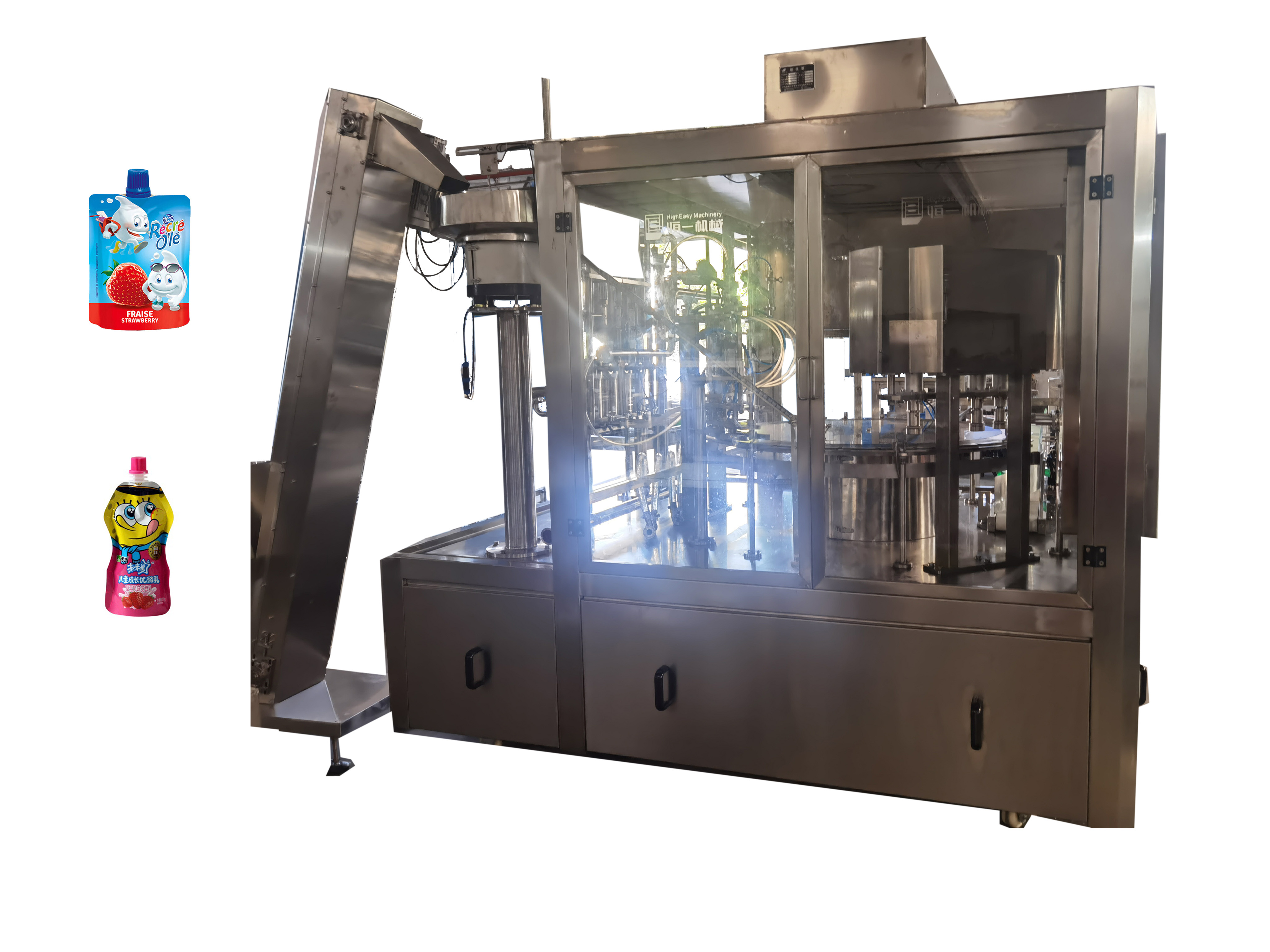
Optimize Filling Method Selection and Calibration for Spout Pouch Filling and Capping Machine
Comparing accuracy and repeatability in gravity, piston, and pump-based filling methods
Achieving ±1% fill-weight consistency begins with correctly selecting the filling method. Gravity filling systems are less effective for products with higher viscosity or particulates like sauces, which can result in 2–3% deviation due to poor flow. Piston filling, due to the accuracy of positive displacement, is better with something like basic homogeneous liquids. Pump-based systems can handle those shear-sensitive formulations with something like cosmetic emulsions, and maintain at most a 1% variance. Compared to gravity filling of fluids under 500 cPs viscosity, piston filling can reduce product giveaway by 18%, providing a tangible return on investment in high volume applications.
The system failure is based on the accuracy of fill volume verification: gravimetric checks, statistical sampling, and inline load cells
In the modern systems, failure verification is done utilizing three techniques in order to verify the system against the overfills and the underfills.
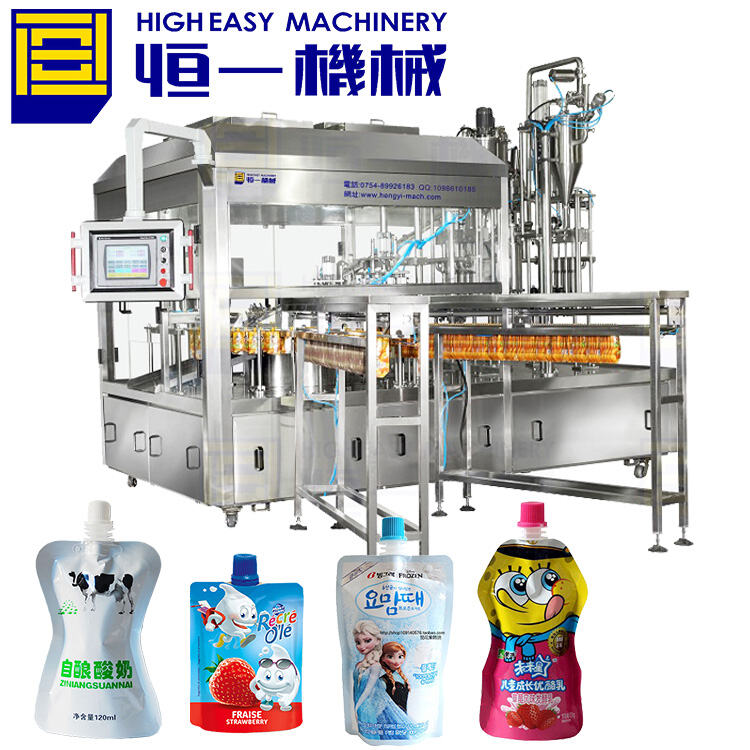
Meeting FDA 21 CFR Part 11 for audit trail recording, inline load cells change servo motors in under 0.3 seconds, and gravimetric checks every 250 cycles provide a critical failsafe for product giveaway. Implementing automated weight rejectors in combination with gravimetric checks can provide significant savings of 5kg (11lbs) in less than 10,000 pouches.
Real-time automated calibration vs. scheduled manual recalibration: evidence-based accuracy trade-offs
Continuous sensor driven calibration achieves ±0.8% fill accuracy. This is done by correcting drive errors due to temperature drift, pump wear, and environmental conditions. It reduces operator intervention needs after implementation, by 40%, compared to manual recalibrations. The trade, in this case, is 15 to 20% higher initial costs. Manual recalibrations scheduled every 4 to 8 hours is feasible, as long as ±1.5% tolerance is allowed. However, an alarming 23% of inspected plants admitted drift beyond ±1.5% and exceeded calibration specifications within 3 hours post calibration. Real-time systems achieve 99.2% Overall Equipment Effectiveness as downtime related to adjustments and recalibration is zero.
Maintain Critical Components to Sustain Long-Term Accuracy on Spout Pouch Filling and Capping Machine
Taking into account Accuracy Drift due to Nozzle Wear, Seal Change, and Pump Drift
Wear from components directly impacts filling accuracy. An abrasive fill product can erode nozzles and cause flow errors of ±0.5% to ±1.2%, and deteriorating seals can cause air to be ingested into the fill and cause errors upwards of ±1.8% (PMR 2024). Pump drift without a recalibration is set at 0.3% and only exacerbates these. Spill Fill Pack Nozzles are designed with high fill accuracy in mind, however, the ±1% threshold is exceeded by 74% of fill error tolerances. Real-time monitoring of the system is key to mitigating these errors, but the system is designed to allow periodic manual inspections that are in fact critical.
OEM-Validated Preventive Maintenance Intervals and Their Impact on ±0.8% Accuracy Thresholds
To sustain ±0.8% fill accuracy, clients are required to comply with the OEM’s maintenance intervals. Machines experiencing OEM intervals sustain 68% less accuracy failures. A few strategies with evidence to support are shown below.
Maintenance Approach Accuracy Compliance Rate Downtime Impact
Reactive, post failure 42% 15 to 40 hours monthly
Preventive, OEM schedule 89% 4 to 8 hours monthly
Predictive, IoT sensor 96% less than 2 hours monthly
Packaging Efficiency Journal 2023
Predictive maintenance using vibration sensors and flow analytics slashes seal replacements costs by 30% and accuracy remains within a target 0.5%. For capping integrity, a sensor remains unchanged and capped caliper replacements remain at 500 cycles.
Ensure Precise Pouch Alignment and Spout Registration for Reliable Capping Integration
Tolerances of ±0.3 mm Spout Registration
Vision-Guided Feeding Systems (VGFS) eliminate misalignment VLW (Vision Guided Feeding) by utilizing high resolution vision sensors, adaptive algorithms, and advanced control systems to continuously determine the position of the spout. VGFS can offer +/- 0.3 mm spout registration with a variety of materials, geometries, and shapes. VGFS offer 99.2% capping success. VGFS are capable of compensating for material stretch, conveyor slip, small pouch deformation, and material containment slippage. Accurate and consistent detection of translucent spouts (and materials in general) contributes to reduced product loss by 18% in comparison to fixed mechanical alignment guides.
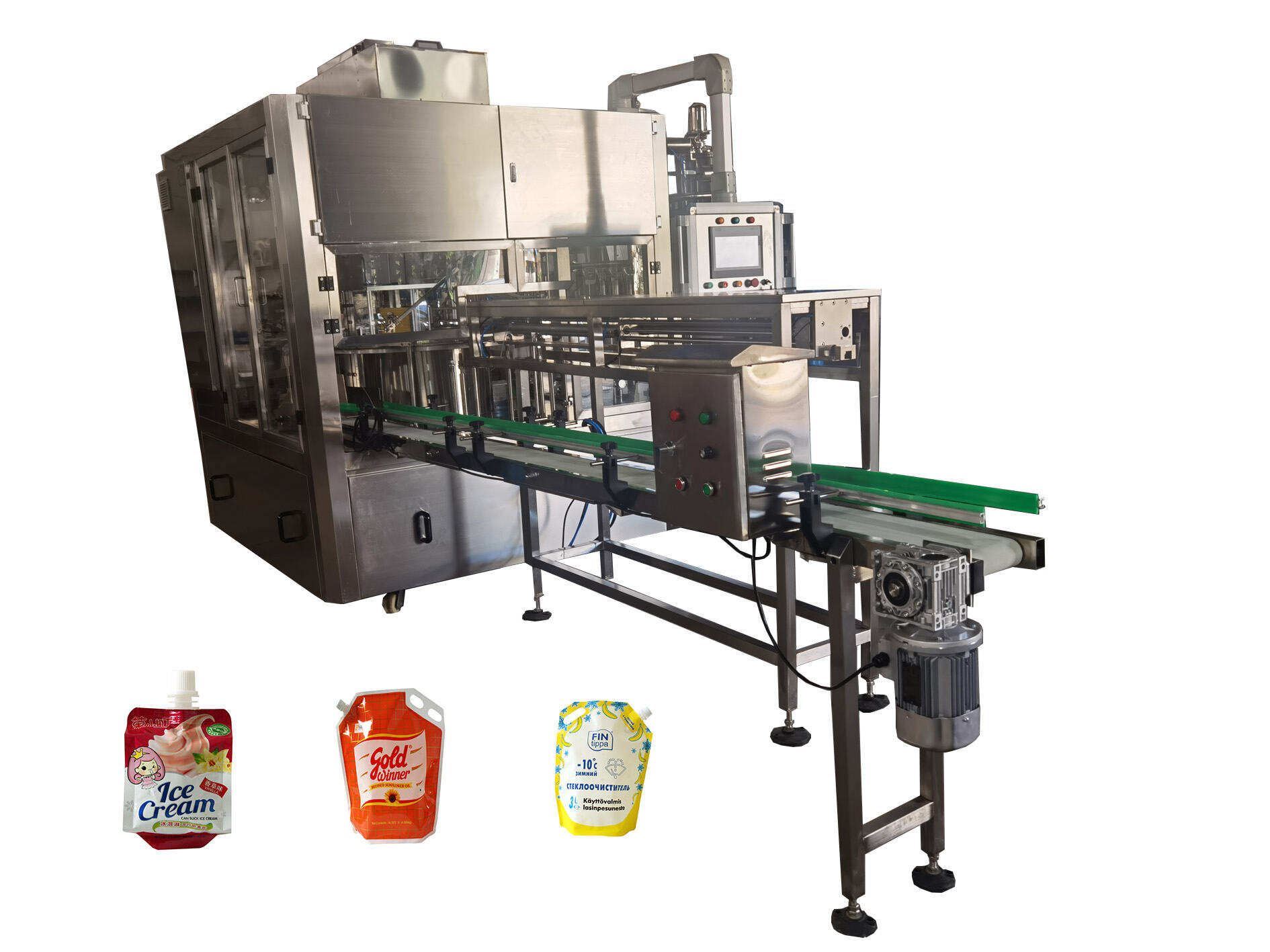
Fine-Tuning Product-Specific Parameters on the Spout Pouch Filling and Capping Machine
Viscosity-Derived Parameter Adjustments: Temperature, Backpressure, and Dwell Time
The viscosity of the products helps to determine the best parameter adjustments. To achieve optimal fill consistency when working with highly viscous products such as honey and ketchup, the filling machine is designed to achieve specific target temperatures, as opposed to highly viscous liquids. To avoid foam and overflow from the filling machine, it is important to prevent the formation of foam. Backpressure adjustments lead to the horizontal flow and regulation across batches, and also greatly aid achieving ±1.5% industry tolerances. Dwell time is also important as it prevents the filling machine from dripping. Examples of dwell time parameters are:
Thin liquids (<200 cP): Dwell time of 300–500 ms should be used to prevent post fill dripping.
Thick pastes (>5,000 cP): Dwell time of 1,200–1,500 ms will lead to optimal material separation.
Together, changes in these parameters resulted in 32% across the filling machine to achieve optimal yield and repeatability.
Elimination of Air, Spillage, and Contamination
Top manufacturers have developed targeted solutions to eliminate three of the most common filling machine outlier errors:
Air: Nozzles equipped with vacuum systems eliminate foam during filling and subsequent underfills.
Spillage: Non-contact capacitive sensors will shut down the filling machine in the event droplet deviation is detected.
Seal Contamination: Two-stage systems clear spillage from the capping area.
With these systems in place, rejection rates have been reduced. Cap seal integrity is also maintained below 0.3% leakage, achieving the necessary parameters for member s shelf-stable, leak-proof packaging.
A Few Common Questions:
What are the major differences of Piston Fillers versus Gravity Fillers?
Piston fillers achieve ±0.5% fill accuracy as opposed to gravity fillers. Piston fillers also achieve 18% reduced product giveaway for liquid products of viscosity <500 cP as compared to Gravity systems.
How does real-time automated calibration enhance filling precision?
Real-time calibration adjusts to changes and irregularities including environmental factors, different degrees of pump wear, temperature changes, and deviations in accuracy in order to maintain filling accuracy to ±0.8% and reduce the downtime that comes with manual calibration.
What makes predictive maintenance best for sustaining accuracy?
With predictive maintenance and the use of IoT for minimal downtime of less than 2 hours a month, accuracy of filling to within ±0.5% of a target is achieved.
What technology is employed by vision-guided feeding systems to guarantee precise pouch alignment?
High resolution cameras with real-time spout positioning and adaptive algorithms allow for integration of real-time spout position and adjustment of ±0.3 mm spout registration to spouts.
What options are out there for addressing common filling errors?
Filling errors are effectively mediated by the use of nozzle-mounted blow-out systems to clear air and prevent air entrapment, capacitive sensors to clear spill over, and two stage blow-off to clear seal contamination.