
Operational Fit: Space, Labor, and Output Requirements for Small Factories
Footprint and Integration: How Tabletop Semi-Automatic Spout Pouch Filling and Capping Machines Fit in Limited Facilities
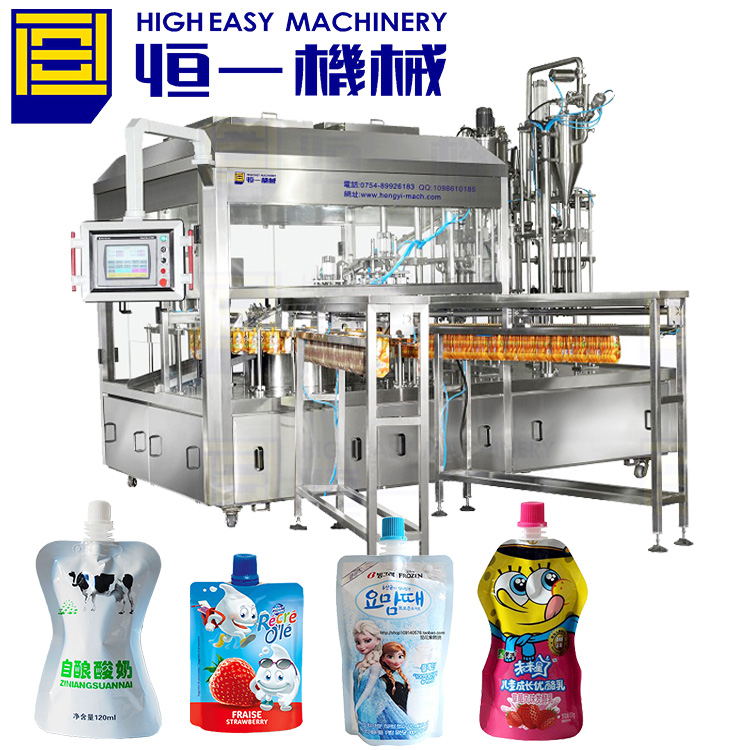
With a footprint of 1.5–2.5 m², compact semi-automatic spout pouch filling and capping machines occupy less space than a typical industrial workbench. Their tabletop equipment design allows easy integration in workshop areas less than 100 m² without interfering with material staging and workflow path. Available with 220V rotary fillers that require reinforced floors and 220V utilities, they work with 110V outlets and can be safely placed on existing work tops. Modular during manual construction and pouch loading with mixing stations. Initial pouch loading with a conveyor was added as demand warranted. With less than 1.8 meters of vertical clearance, they can be placed in workshops with low ceilings. Spout adjustments require no tools and format changes for pouches can be accomplished in minutes.
The Machines: Flexible Operations and Reducing Manual Handling
Compared to the typical dispensing and filling of liquid products, the filling systems reduce manual handling by 50-70% without losing small batch flexibility. For filling and capping, the operator controls the pouch by loading it, triggering the volumetric fill from a foot pedal, and placing the pouch for the controlled torque capping. The systems respond to changes in production recipe and pouch while eliminating the necessity for a production sealing crew. The systems are designed with consideration to production stove, wave, and gravity cap, and to some terms, protect against repetitive strain injuries. The systems are designed to handle a production output of 200 - 1,200 pouches in 8 hours using the same personnel to fill each production.
Cost-Effective Investment Pathways for Small-Scale Producers
Entry-Level Spout Pouch Filling and Capping Machine Pricing and ROI Benchmarks ($8,500–$22,000; <12-Month Payback)
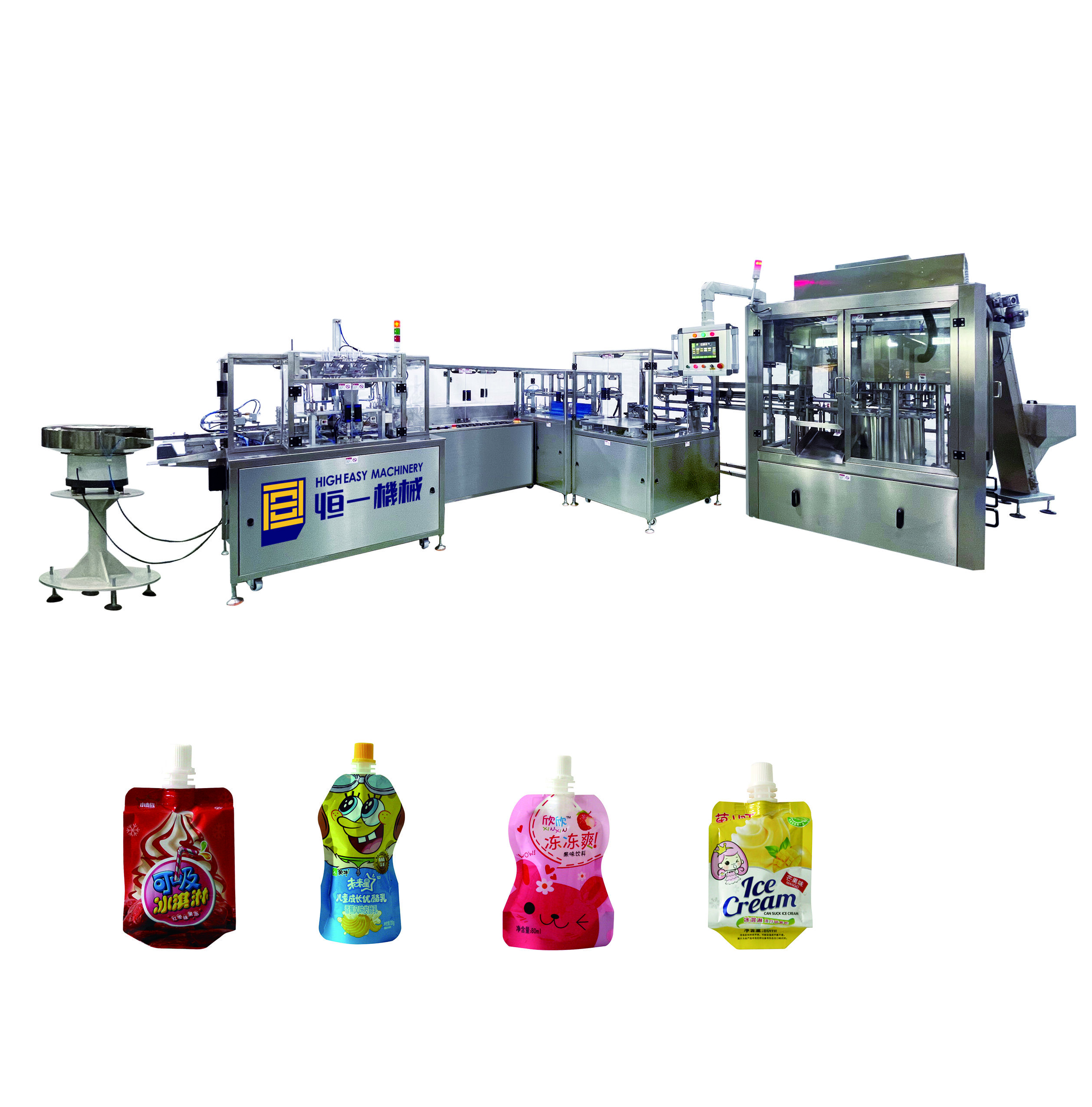
Filling and capping machines start at $8,500 and can fill up to 12–30 bags per minute. ROI within 12 months is common for small factories, primarily due to savings in labor that offsets 60–80% of the costs. Compared to more rigid systems, changeover waste is typically reduced by 45%, and training for operators is less than four hours. The average yearly maintenance cost is 3–5% of the purchase cost, which aids the pursuit of efficient long-term cost savings.
Scalable Adoption Strategy: Start with Manual Bag Loading, Then Upgrade to Auto-Feed and Integrated Sealing
Manual pouch loading with a tabletop unit allows for piloting the workflow process to ensure that capital is not invested until the baseline is reached. After core operations are stabilized, full-auto feed conveyors ($2,200–$5,500) can be used, resulting in a ~40% increase in throughput. When the daily target is 3,000 bags, integrated sealing modules can be used to relieve the bottleneck caused by the seal for the shift. This method of incremental solution rollout ensures that the throughput is matched with corresponding incremental investments, and that operators are kept in control of product quality. Most operations become fully automized in less than 18–24 months using this technique.
Throughput Realities: Matching BPM Capabilities to Growth Stages
Decoding the 12–80 BPM Range: What ‘Semi-Automatic’ Really Means for Small-Batch Production
Machines of the semi-automatic spout pouch type can work at a rate of 12–80 BPM. The term “semi-automatic” means that pouch loading is manual while filling and capping are both automated. At that speed, 1,200 bags are produced at the rate of 1,200 bags/hour. These systems are designed for a daily production of less than 5,000 units. These systems can be operated with a single operator, can be easily adapted to changes, and have a small footprint. These systems are also unable to be operated with a full automated line, which results in fully automated overcapacity. These systems are best for brands that are just beginning to scale.
Beyond Filling Speed: Identifying True Bottlenecks—Sealing, Labeling, and Logistics at 3,000–5,000 Bags/Day
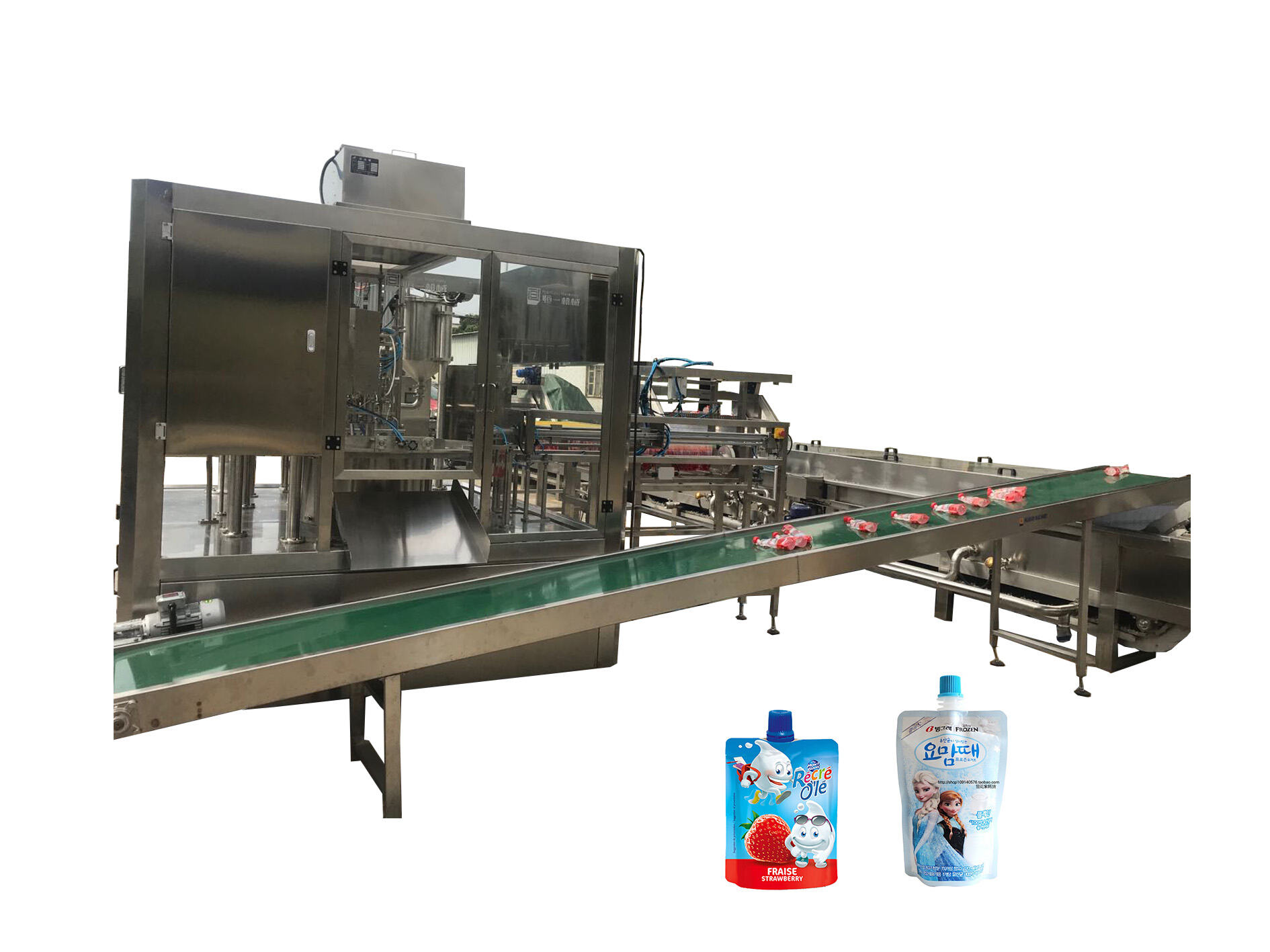
When the bags produced daily reach the 3,000–5,000 range, sealing speed is no longer determined by filling speed. Because there is a backlog if filling speed is higher than sealing speed, sealing is limited at 15-20 units per minute. Each label will consume 3–5 sec, while a lack of systems to handle filled bags will consume as much as 30% of production. The design of the system and the use of digital systems have significant implications for production.
Process Manual Speed Automated Solution Impact
Sealing 15–20 BPM Doubles throughput
Labeling 12–15 BPM Enables 25+ BPM consistency
Bag Transport ~1,000 bags/hr Conveyors triple capacity
Logistics optimization is also more critical at 3,000 bags per day than at 4,000 bags. The cost of this system is hidden labor.
FAQ Section
What are the space requirements for semi-automatic spout pouch machines?
The machines take up approximately 1.5–2.5 m². Hence, they are a good fit for small facilities (less than 100 m²).
In what ways does productivity rise with these machines?
They allow for 50-70% less manual labor, requiring only one person to control both the filling and capping, which touches on efficiency.
What is the average ROI with these machines?
The majority of smaller factories see ROI within the first 12 months, mainly due to labor savings that fund 60-80% of the initial investment.
What is the adoption strategy for smaller producers?
It commences with manual bag loading, followed by the addition of auto-feed systems with integrated sealing. This approach balances the costs against quality assurance as they scale operations.