
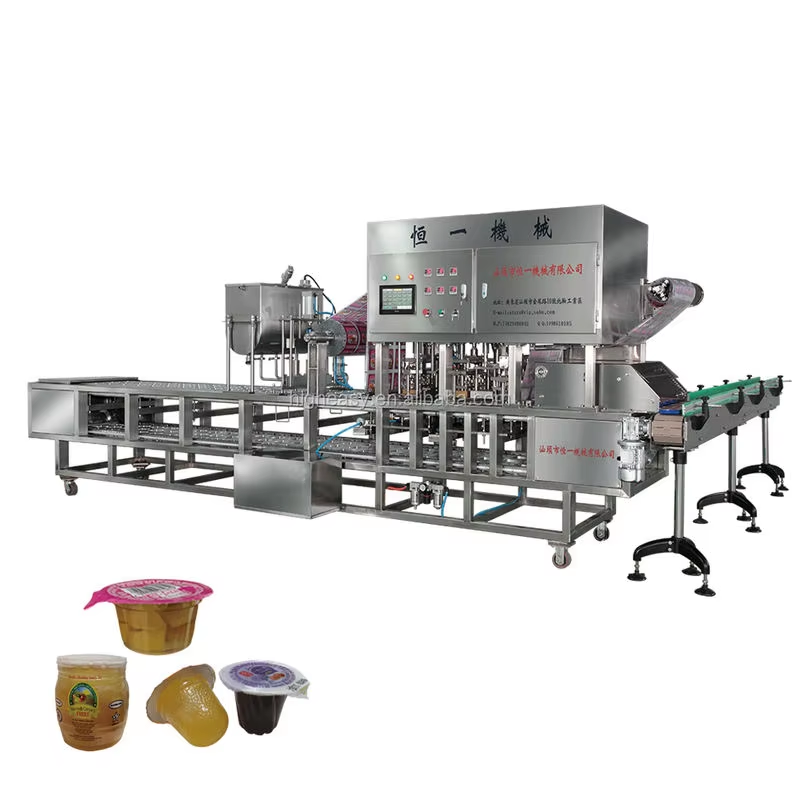
Hygienic Design of Spout Pouch Design Filling and Capping Machine
Sterile Zone Engineering and FDA-Compliant Materials Contact Surfaces
The latest model of spout pouch filling and capping machines are designed with engineered sterile zones. These are filling zones and area of cap placement that are sealed zones. These zones are positively zoned and HEPA filtered. All surfaces that come into contact with the product are made of FDA-compliant stainless steel 316L or equivalent alloys for corrosion resistance and compliance with the food-grade surface finish requirement, Ra ≤ 0.8 μm. A surface finish with smooth and non-porous nature will not be conducive to the formation of bacteria and will be helpful for the cleaning and maintenance of the machine. Critical sealing interfaces, such as gaskets and spout coupling, are made from FDA listed elastomers that pass repeated sterilization protocols and are validated for this use.
Advanced CIP/SIP Technologies and Constant Microbial Control
The CIP/SIP systems in this design automate processes that were previously manual validated. Integrated procedures are taken control of Beagle bone with automation that is completely manual and validated. The cleaning steps are controlled to take place with the use of turbulent flow rates greater than 1.5 m/s by caustic and acid fluids. This is followed by a 121°C condensing steam for a period greater than 20 minutes, achieving the stringent sterility assurance level of 10-6. The system is monitored and validated through the use of condensing steam that evenly distributes and maintains moisture. The addition of cleaning and sterilizing control eliminates significant variability to cross contamination and assures a safe level of microbial control is maintained for the protection and safety of the system and maintenance personnel.

Precision Sealing and Real-Time Quality Assurance
Vision-Guided Cap Alignment and Seal Integrity Verification
High-speed vision technologies inspect individual pouches at over 500 frames per second and detect misalignments of just 0.5 mm, as well as subvisible, seal defects. With calibrated, real-time applied strains of up to 50 N, and under the constraints of the ASTM F88, pockets that are determined to be substandard are automatically ejected. Digital imaging performs real time analysis on the presence of micro-leakage, which is critical due to compromised seals accounting for 23% of packaging failures. Rapid, and objective, seal integrity analysis assures units do not pass to the next stage of production.
Pressure Decay and Vacuum Integrity Testing for Leak-Proof Packaging
Through the use of voids developed in advanced testing, post-sealing integrity is assured. For example, the presence of seal weaknesses is determined by exposing pouches to −0.8 bars, and pressure decay sensors, which inject 1.5 psi of air and detect drops of ≥0.01 psi. The presence of exceedingly rigorous and dual-protocol testing poses a 99.98% defect detection accuracy. In addition to addressing the issue of micro-leaks that can advance the spoilage of food by as much as 300%, the line speed is not a concern and the assurance of leak-proof integrity is provided during the complete cycle time of less than 3 seconds.
Automated Food Safety Management and Regulatory Compliance
HACCP Integration and Dynamic Control Point Monitoring
These machines incorporate the principles of Hazard Analysis of Critical Control Points (HACCP) into their control system and continuously perform automated monitoring for seal integrity, cap torque, and sterilization temperature. When a deviation is detected, the system dynamically reverts the parameters or takes the necessary corrective action prior to the nonconforming products being transported to the next step in the process. Real-time monitoring sensors for microbial ingress or sealing failure perform the role of manual checks, which are often error-prone. Digitized Critical Control Point (CCP) tracking minimizes the recording inaccuracies which amounted to 18% of the historic compliance failures (FDA, 2023), introduces a 94% lower risk of infection compared to the manual method, and ensures compliance with all current and emerging standards, including FSSC 22000. Full traceability and legal compliance is automated and documented, reducing the time consumed during regulatory audits by 60%.
FAQ
What materials are used in the spout pouch filling and capping machine to ensure hygienic design?
All surfaces in direct contact with the product are made of non-corrosive FDA compliant 316L stainless steel and other alloy materials that are easy to clean. Critical sealing surfaces use FDA-listed elastomers which are suitable for repeated sterilization.
What role does CIP and SIP play in microbial control?
CIP and SIP systems eliminate human error in the cleaning and sterilization process. These systems use high-velocity cleaning solutions and high-temperature steam for the sterilization to achieve sterility assurance levels, reducing risk of cross-contamination in production.
How does the machine ensure seal and cap integrity?
What solutions ensure defection during processing?
Provide me with a quote for the box packaging of the products.
In what ways do vacuum and pressure decay tests strengthen leak-proof assurance?
As vacuum chambers and pressure decay testing pinpoint failure in seals and micro-leaks, they offer defect detection with 99.98% accuracy. These tests are essential in food safety and improve product longevity.
In what ways does HACCP integration improve food safety and meet requirements?
The system has incorporated HACCP to allow for automation in real time and the system takes corrective action by itself. More digitized information allows for accurate recording, better compliance, and simplified regulatory audits.