
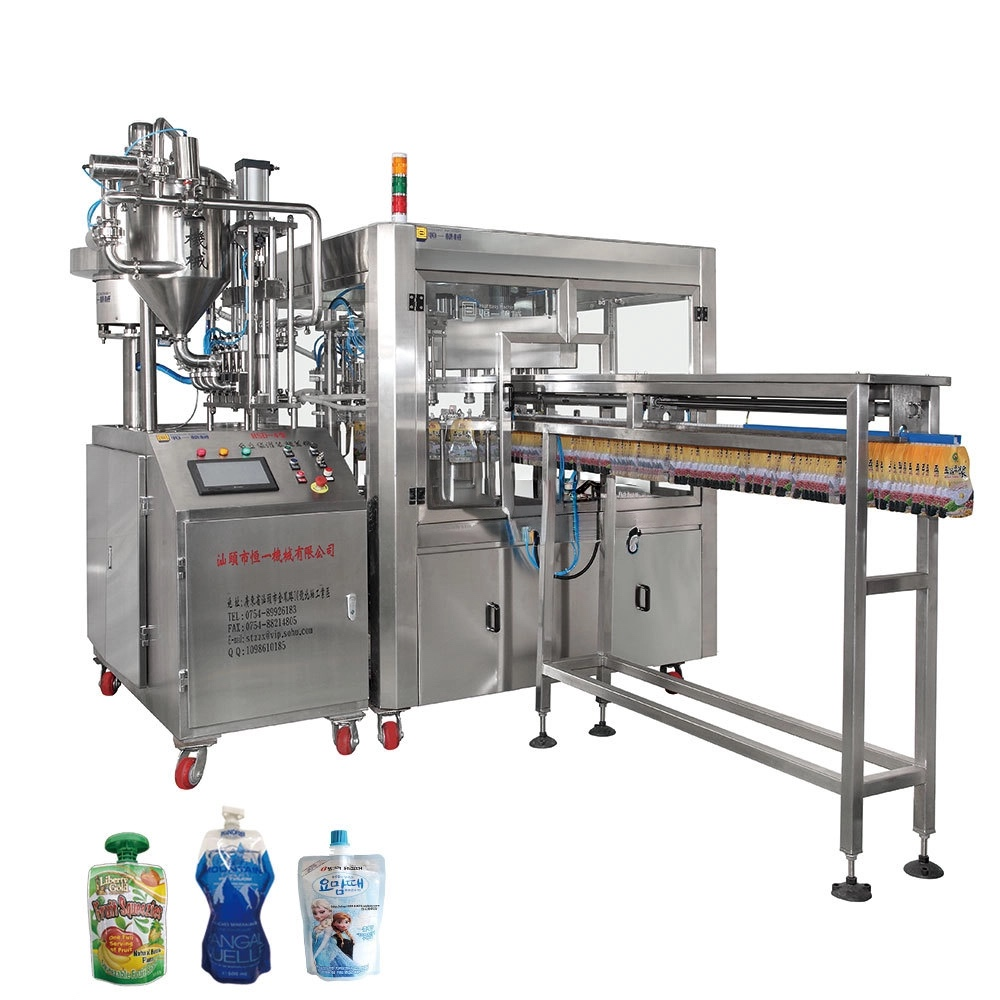
Adopt a Tiered Preventive Maintenance Program for Your Premade Pouch Filling Sealing Machine
A tiered preventive maintenance program splits service into daily/weekly operator checks, monthly deep maintenance, and cycle-based replacements. This layered approach aligns effort with actual wear patterns—reducing both early failures and unnecessary calendar-based interventions. Industry benchmarks show tiered programs cut unplanned packaging line stoppages by up to 28% compared with reactive maintenance (2026).
Daily and Weekly Checks: Belt Tension, Seal Jaw Alignment, and Control Panel Diagnostics
Daily checks target the fastest-drift variables on a pouching line. Start by verifying drive and sealing belt tension using a calibrated tension gauge where specified: loose belts cause inconsistent film transport; overtightened belts accelerate bearing wear. At shift start, confirm seal jaw alignment—the jaws must close parallel and apply uniform pressure across the full seal length. Use a feeler gauge or carbon-paper impression test to validate contact. On the control panel, review fault history, actual versus setpoint temperature, and trends in the cycle counter. Weekly, inspect belt edges for fraying, clean optical sensors and cooling fans, and verify that temperature setpoints still match the current recipe.
- Daily: belt tension, seal jaw parallel contact, control panel fault review
- Weekly: belt edge wear, sensor lens cleaning, temperature setpoint verification
Packagers who consistently perform these checks report 20–30% fewer sealing-related line stops (2023).
Monthly Deep Maintenance: Lubrication Mapping, Sensor Calibration, and Wear-Part Replacement (e.g., Heating Elements, Sealing Belts)
Monthly service must follow a written lubrication map—not ad-hoc greasing. Identify each grease fitting, oil point, and linear guide from the OEM manual. Apply only food-grade lubricants in product-contact zones, and wipe away excess to prevent film contamination. Calibrate temperature sensors, pressure transducers, and position sensors against certified references at operating temperature. Then systematically inspect wear parts: heating elements for resistance drift and surface cracks; sealing belts for fraying, glazing, and thickness loss. Replace any part showing visible cracks, delamination, or dimensional loss beyond 10–15% of specification. Scheduled replacement of heating elements before failure prevents 40–60% of seal quality drift (2024).
| Component | Monthly Check | Replacement Trigger |
|---|---|---|
| Heating elements | Resistance, visual cracks | >10% resistance drift or surface cracks |
| Sealing belts | Tension, edge fraying, thickness | Fraying or >15% thickness loss |
| Temperature sensors | Dry-block calibration | Deviation > ±2 °C from reference |
| Lubrication points | Grease level, contamination | Clean and re-lubricate |
Cycle-Based Interventions: Triggering Maintenance by Fill/Seal Cycles Rather Than Calendar Time
Calendar-only schedules ignore real mechanical loading. A high-speed line may reach one million fill/seal cycles in months, while a low-volume line takes years. Use the HMI cycle counter to trigger interventions: inspect seal jaw bushings and linear guides at 500,000 cycles; replace heating elements and thermocouples at 1,000,000–1,500,000 cycles; inspect vacuum cups and knife blades at 250,000 cycles. Record the actual cycle count at every intervention—and adjust thresholds based on film type, product residue, and observed wear. Cycle-based scheduling avoids premature part replacement during idle periods and reduces sealing component cost by 15–30% compared to time-only plans (2023).
Ensure Consistent Sealing System Performance Across All Premade Pouch Filling Sealing Machine Operations
Real-Time Monitoring of Sealing Parameters: Temperature Uniformity, Pressure Stability, and Dwell Time Accuracy
Real-time sealing data transforms unpredictable failures into controlled adjustments. Operators should monitor three critical variables per cycle. Temperature uniformity across the full seal jaw width must stay within ±3°C of the setpoint—edge cooling often creates weak zones. Pressure stability at the seal interface is equally vital: pneumatic fluctuations below 0.4 MPa can reduce film fusion without visible marks. Dwell time accuracy must be verified through servo feedback or sensor timestamps—not just the HMI setting. While PLCs with recipe storage support consistency, they cannot compensate for a drifting thermocouple or clogged air filter. Engineering teams should therefore define high/low alarm limits for each parameter. Trend screens reveal slow deviations before alarms trip—and when a parameter drifts outside its control band, the machine should reject the pouch or pause rather than produce defective output. Baseline values should be logged after each jaw change, material lot change, or maintenance event. Alert thresholds should be reviewed monthly against actual reject data to maintain a closed-loop response that protects seal integrity.
Seal Quality Validation Protocols: Peel Strength Testing, Visual Inspection Standards, and Root-Cause Analysis of Seal Failures
Seal quality validation extends beyond parameter monitoring. Begin each shift with peel strength testing on a minimum of five pouches per sealing lane, following ASTM F88. Record force in newtons per 15 mm and compare against validated product limits—a sudden drop below the lower limit signals potential issues with film, jaw wear, or contamination. Visual inspection standards must define acceptable seal width, edge alignment, and absence of wrinkles, charring, or product residue in the seal zone. Use a backlit station for transparent films. When a seal fails, root-cause analysis should distinguish between material, machine, and process causes: swab the seal area for oils, recheck jaw parallelism, and verify dwell time before adjusting temperature. A structured one-page failure record prevents trial-and-error tuning. Correlating peel data with visual findings builds an evidence-based early warning system—reducing recurring defects and unnecessary parameter changes. Document all actions for audit readiness.
Maintain Hygiene and Mechanical Integrity Through Precision Cleaning and OEM-Approved Component Management
Targeted Cleaning of Product-Contact Zones: Nozzles, Forming Molds, Sealing Plates, and Vacuum Channels
A structured cleaning routine for product-contact areas safeguards both food safety and long-term reliability. After each product run, purge nozzles and forming molds of residual powder or liquid, then wipe with manufacturer-approved detergents to prevent buildup that compromises fill accuracy. For sealing plates, allow them to cool before removing polymer film—and use non-metallic scrapers to avoid scratching surfaces. Vacuum channels require dry, filtered compressed air to dislodge fine particles without introducing moisture. These steps reduce microbial risk, prevent seal contamination, and preserve mechanical tolerances. Document cleaning intervals and replace worn OEM parts promptly.
Stabilize Auxiliary Systems to Reduce Stress on the Premade Pouch Filling Sealing Machine Core
Compressed Air Filtration, Dryness, and Pressure Regulation for Pneumatic Actuators and Vacuum Generators
Clean, dry, and stable compressed air is essential for protecting pneumatic actuators and vacuum generators. Install coalescing filters to remove oil and particulates, and air dryers to maintain dew point below 3°C (37°F). Regulate pressure to 0.6–0.8 MPa (87–116 psi) to prevent seal jaw drift and vacuum loss. Check filters weekly and drain moisture traps regularly to avoid erratic pouch handling. This reduces cumulative stress on the machine core and supports consistent sealing performance.
FAQ
What is a tiered preventive maintenance program?
A tiered preventive maintenance program organizes maintenance tasks into daily/weekly operator checks, monthly deep maintenance, and cycle-based interventions. This approach reduces failures by aligning effort with wear patterns and minimizes unnecessary replacements.
Why are daily checks vital for pouch filling sealing machines?
Daily checks focus on variables like belt tension and seal jaw alignment that drift quickly. Regular verification helps reduce inconsistent film transport and sealing-related stoppages.
How do cycle-based maintenance interventions differ from calendar-based ones?
Cycle-based interventions trigger maintenance tasks based on the machine's fill/seal cycle count rather than elapsed time. This mitigates premature replacement during idle periods and lowers component costs.
Why is real-time monitoring of sealing parameters essential?
Real-time monitoring of temperature, pressure, and dwell time ensures immediate adjustments when deviations occur, preventing defective output and safeguarding seal integrity.
What cleaning protocols maintain hygiene and mechanical integrity?
Precision cleaning includes purging nozzles of residue, wiping forming molds with approved detergents, and using non-metallic scrapers for sealing plates to preserve hygiene and machine reliability.
Table of Contents
-
Adopt a Tiered Preventive Maintenance Program for Your Premade Pouch Filling Sealing Machine
- Daily and Weekly Checks: Belt Tension, Seal Jaw Alignment, and Control Panel Diagnostics
- Monthly Deep Maintenance: Lubrication Mapping, Sensor Calibration, and Wear-Part Replacement (e.g., Heating Elements, Sealing Belts)
- Cycle-Based Interventions: Triggering Maintenance by Fill/Seal Cycles Rather Than Calendar Time
- Ensure Consistent Sealing System Performance Across All Premade Pouch Filling Sealing Machine Operations
- Maintain Hygiene and Mechanical Integrity Through Precision Cleaning and OEM-Approved Component Management
- Stabilize Auxiliary Systems to Reduce Stress on the Premade Pouch Filling Sealing Machine Core
-
FAQ
- What is a tiered preventive maintenance program?
- Why are daily checks vital for pouch filling sealing machines?
- How do cycle-based maintenance interventions differ from calendar-based ones?
- Why is real-time monitoring of sealing parameters essential?
- What cleaning protocols maintain hygiene and mechanical integrity?