
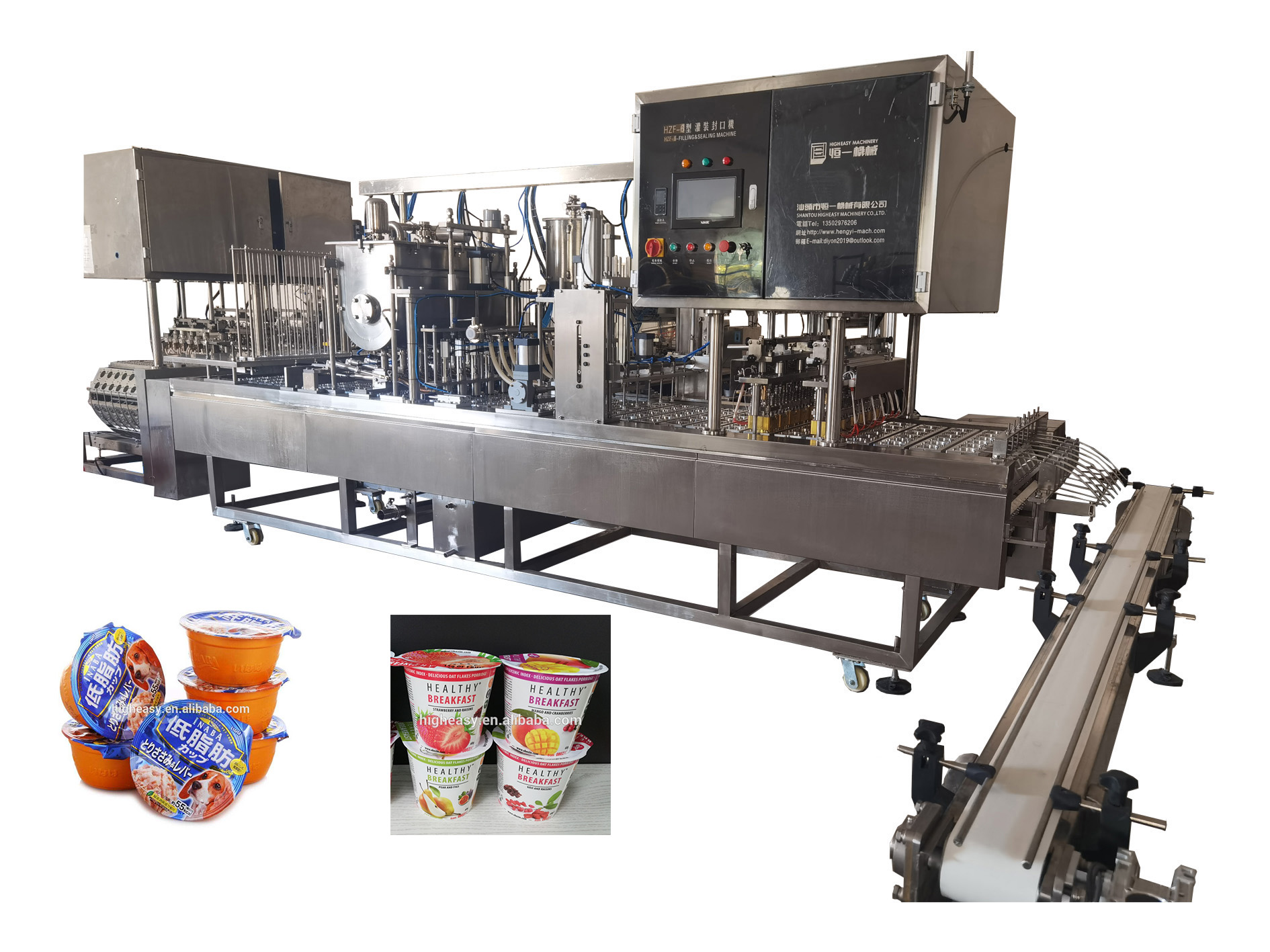
How Cup Filling Sealing Machines Achieve Flexible Filling Volume Adjustment
A modern cup filling sealing machine must handle frequent SKU switches, density differences, and short production runs without retooling the filler. Flexible volume adjustment relies on two complementary mechanisms—volumetric displacement and gravimetric feedback—supported by programmable logic controller (PLC) recipe control and quick-change hardware.
Volumetric vs. Gravimetric Dosing: Core Mechanisms for Adaptive Control
Volumetric dosing sets fill volume by piston stroke, servo pump rotation, or timed flow. It suits low-viscosity liquids and semi-liquids with stable density. When product changes, the system adjusts stroke length or pulse count. Gravimetric dosing places load cells at the fill station to weigh the cup in real time and stop the fill at a target mass. This automatically compensates for temperature shift, viscosity variation, and foam.
In high-value dairy or viscous desserts, gravimetric systems often maintain ±0.1% to ±0.25% of target weight, while well-tuned volumetric fillers typically hold ±0.5% to ±1%—a benchmark confirmed in 2024 packaging automation performance data. Hybrid lines combine a fast volumetric pre-fill with a gravimetric trim step to balance speed and accuracy.
| Dosing mechanism | Adjustment method | Typical accuracy | Strongest fit |
|---|---|---|---|
| Volumetric | PLC-set piston stroke, pump rotation, or timed flow | ±0.5–1.0% | Stable-density liquids, high speed |
| Gravimetric | Load-cell feedback closes fill valve at target weight | ±0.1–0.25% | Variable density, high-value products |
Real-Time PLC Integration Enables ±0.5% Accuracy Across Batch Changes
The PLC integrates dosing selection, servo motion, fill valves, and conveyor synchronization. Operators select a SKU, and the system automatically loads parameters such as fill volume, seal temperature, sealing dwell time, and cup diameter. This eliminates manual recalibration and reduces batch-to-batch drift to ±0.5% or better.
A 2024 case report from a dairy co-packer documented a 42% reduction in changeover time—from 45 minutes to 26 minutes—after implementing tool-free format change and storing over 200 validated recipes. The same line auto-adjusted fill volumes between 50 and 500 mL and integrated vision inspection, lowering rejection rates by 18%. Real-time PLC feedback also adapts to in-run viscosity shifts, maintaining target weight without operator intervention.
Hardware and Software Synergy for Operational Flexibility
Tool-Less Format Change Kits Cut Changeover Time by Up to 70%
Flexible filling volume adjustment relies on hardware that allows rapid physical reconfiguration without specialized tools. Tool-less format change kits replace traditional bolt-on parts with quick-release guides, adjustable cup holders, and snap-in dosing nozzles. Operators can swap cup diameters, fill nozzles, and sealing dies in minutes. Industry benchmarks show tool-less systems reduce changeover time by up to 70% compared with manual retooling—a figure cited in 2024 packaging equipment performance reports.
This reduction is critical for facilities running multiple cup sizes on a single machine. Faster changeovers reduce downtime, lower labor exposure to repetitive tasks, and support smaller batch runs. The hardware design must also maintain alignment tolerances after repeated changes. Precision-machined components and spring-loaded locking mechanisms help preserve consistent fill levels. Quick-change kits also minimize spare parts inventories because fewer bespoke tools are required. Maintenance teams can standardize procedures, reducing human error during high-pressure production windows. This approach is particularly important for co-packers and private-label producers that switch formats multiple times per shift. Without this hardware flexibility, even advanced software cannot deliver true production agility. The synergy between mechanical quick-change parts and control systems creates a responsive line that adapts to seasonal demand, promotional SKUs, and short-notice orders.
HMI-Driven Recipe Presets Streamline SKU Transitions on the Same Cup Filling Sealing Machine
Modern human-machine interfaces (HMIs) store filling volume, pump speed, seal temperature, and cup height as named recipes. Operators select a recipe from the touchscreen, and the machine adjusts servo-driven dosing and sealing parameters automatically. This eliminates manual entry errors and reduces transition time between product types. Recipe presets are especially valuable when the same line handles dairy cups, sauces, and dessert portions with different viscosities and fill targets. The PLC recalls validated parameters, so every SKU transition meets the same fill accuracy without trial runs. HMI logs also support traceability and operator training. Because recipe changes are software-driven, the machine can shift from 150 mL to 200 mL cups in seconds. Recipe libraries can store hundreds of validated parameter sets, enabling rapid recall for repeat orders. Version control prevents unauthorized changes, ensuring every run follows the same approved settings. This agility matches the hardware flexibility of tool-less change kits. Together, they allow a single machine to run multiple formats without sacrificing accuracy or throughput. The result is a production system that remains profitable across high-mix, low-volume schedules.
Ensuring Long-Term Filling Volume Accuracy Through Calibration and Compliance
Auto-Calibration Limitations vs. ISO 8549 Manual Verification Requirements
Auto-calibration on a cup filling sealing machine adjusts fill parameters from sensor feedback, but sensor drift, product viscosity shifts, and ambient temperature changes can push real output beyond software correction. Auto-calibration also cannot account for cup weight variation or residual air pockets. Manual verification aligned with ISO 8549 protocols remains necessary. Operators should confirm actual dispensed volume using precision weight balances or fill volume probes at shift start, after batch changes, and during high-rate production. Daily quick checks catch minor mechanical wear before it creates costly reject batches; weekly or monthly in-depth checks match production volume; annual full calibration by a certified technician ensures regulatory compliance. Combining automated correction with scheduled manual checks prevents long-term drift, reduces product giveaway, and helps the machine stay accurate across continuous cup filling and sealing operations. This routine supports traceability and repeatable fill volume over time.
FAQ
What is the difference between volumetric and gravimetric dosing?
Volumetric dosing uses piston stroke or timed flow to set the fill volume, suitable for stable-density liquids. Gravimetric dosing measures the cup's weight and stops filling at a target mass, ideal for variable-density or high-value products.
How do PLC integrations improve accuracy?
PLC integrations enable automatic adjustment of parameters like fill volume and seal temperature across batch changes, ensuring ±0.5% or better accuracy.
Why are tool-less format change kits important?
Tool-less kits reduce changeover time by up to 70% and allow rapid reconfiguration of hardware for different cup sizes without specialized tools.
How do recipe presets streamline SKU transitions?
Recipe presets store validated machine parameters for different filling and sealing requirements, reducing manual entry errors and transition times between products.
Why is manual calibration required alongside auto-calibration?
Manual calibration ensures long-term accuracy by compensating for sensor drift, product viscosity shifts, and variations that automated systems cannot detect.