
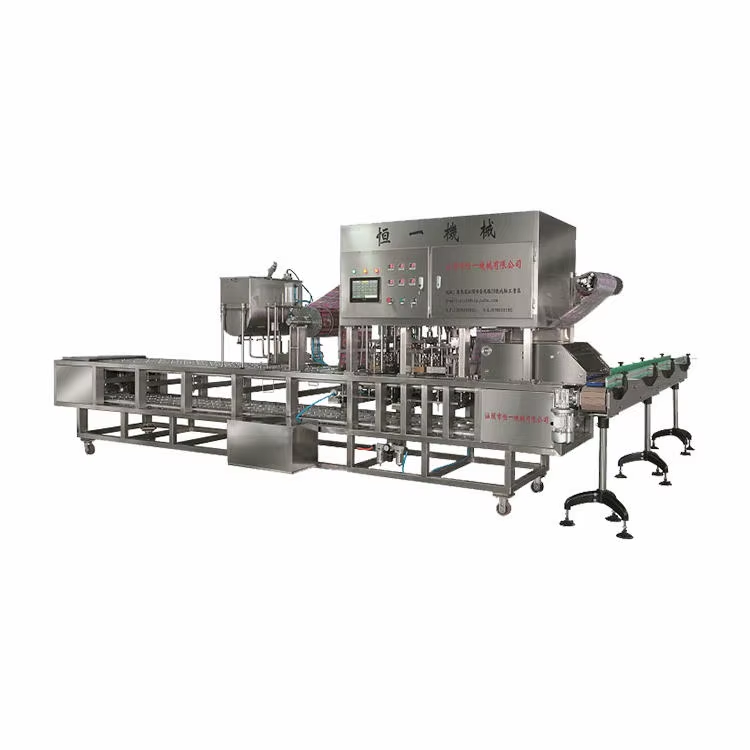
Cup Filling Sealing Machine: Choosing Equipment with High Sealing Precision and Consistent Output
A juice cup that leaks during shipping damages retailer confidence, triggers chargebacks, and generates waste across the supply chain. Selecting a cup filling sealing machine with high sealing precision is not about finding the fastest model. It is about identifying equipment that maintains consistent seal quality hour after hour, across every cup position, under real production conditions.
What Defines Sealing Precision in a Cup Filling Sealing Machine
The Physics of Heat Seal Formation
Sealing precision depends on three variables controlled simultaneously: temperature, pressure, and dwell time. The sealing film must reach its softening point without exceeding its degradation threshold. Too little heat produces weak bonds; too much scorches the film. The heating plate must apply uniform pressure across the full sealing surface, compensating for height variations in cup rims. Dwell time must be long enough to transfer sufficient thermal energy but short enough to maintain throughput on a cup filling sealing machine.
Why Multi-Position Sealing Heads Affect Uniformity
A multi-station cup filling sealing machine presents a specific challenge: each position may drift to different temperatures due to wiring resistance or uneven airflow. Systems using independent PID controllers per sealing head compensate automatically. A 2°C gap between inner and outer positions becomes noticeable within minutes of startup.
A Real-World Case: Juice Brand's Leakage Crisis
How Inconsistent Sealing Drove Customer Complaints
A bottled juice brand in the Middle East launched a PET cup line for school catering. Within a month, the distributor reported 3% leakage — cups arriving with partially peeled seals after stacking three layers high. Investigation revealed the existing cup filling sealing machine was calibrated for 75mm cups, but the new product used 80mm cups with thicker rims. Center positions sealed adequately; outer positions delivered 5-8°C lower temperatures, creating weak bonds.
The Precision Upgrade Solution
The manufacturer upgraded to a cup filling sealing machine with independent temperature control per head and automatic cup height detection, using photoelectric sensors to verify film alignment. Leakage complaints fell below 0.1%, and the brand extended its contract by two years. Equipment from Shantou Higheasy Machinery Co., Ltd. also supported quick-change tooling for cup-diameter switches under 15 minutes.
Key Technical Features That Drive Sealing Accuracy
Photoelectric Film Registration and Tension Control
Film tracking errors are a common cause of seal failure yet receive less attention than temperature settings. A precision cup filling sealing machine uses photoelectric sensors to detect registration marks on the film, adjusting feed incrementally to keep the printed lid design centered over each cup. Servo-driven unwind and rewind stations maintain constant tension regardless of roll diameter, preventing the film from stretching or wrinkling as the roll depletes. Wrinkled film cannot form a flat seal regardless of temperature accuracy. Multi-lane machines that seal four or more cups simultaneously are particularly sensitive to film tracking because a 1mm misalignment at the feed station becomes a 4mm error by the time film reaches the outer lane positions.
Temperature Feedback Loops and Data Logging
Beyond PID control, advanced cup filling sealing machine systems log temperature data for every seal cycle — creating auditable records for trend analysis. ISO 22000 compliance increasingly requires documented evidence of critical control point monitoring. A machine that logs and timestamps sealing parameters provides that evidence automatically.
Practical Selection and Inspection Guidance
When evaluating a cup filling sealing machine, request a capability study on your actual cup and film combination. Ask the supplier to run 500 consecutive seals and measure peel strength from every position. Verify thermocouple probes are within 5mm of the seal surface. For existing lines, replace sealing gaskets every six months and recalibrate thermocouples quarterly.
Frequently Asked Questions
How is sealing precision measured on a cup filling sealing machine?
Sealing precision is quantified through peel strength testing using a tensile tester. Values are compared across sealing head positions to evaluate uniformity. Higheasy Machinery's HZF-series cup filling sealing machine systems use independent PID control per head.
What film types work best for high-precision cup sealing?
BOPP film with heat-seal coating works well for ambient products; aluminum laminate offers superior barrier properties. The optimal film depends on product acidity, shelf life, and distribution temperature. A cup filling sealing machine should support multiple film types through adjustable parameters.
Can sealing precision degrade over time?
Yes. Heating element aging, thermocouple drift, and mechanical wear reduce precision gradually. Quarterly inspection and recalibration are recommended. Machines from Shantou Higheasy Machinery incorporate data logging to identify drift early on their cup filling sealing machine systems.
What role does cup material play in sealing precision?
Cup rim flatness and material composition directly affect seal formation. PET requires specific temperature ranges; PP needs higher temperatures. A well-designed cup filling sealing machine provides adjustable parameters for various materials.
How fast can a high-precision cup filling sealing machine run?
Speed and precision involve a trade-off — shorter dwell times reduce thermal energy transfer. HZF-series machines balance this through multi-head configurations maintaining individual dwell time while increasing throughput, reaching up to 16,300 cups per hour on higher-capacity cup filling sealing machine models.
What causes film misalignment during cup sealing?
Film tension fluctuations during unwinding and worn sensor lenses are the most common causes. A cup filling sealing machine addresses this through servo-driven tension control and automatic photoelectric registration, features standard on Higheasy Machinery's HZF equipment.
Table of Contents
- Cup Filling Sealing Machine: Choosing Equipment with High Sealing Precision and Consistent Output
- What Defines Sealing Precision in a Cup Filling Sealing Machine
- A Real-World Case: Juice Brand's Leakage Crisis
- Key Technical Features That Drive Sealing Accuracy
- Practical Selection and Inspection Guidance