
Dynamics of Pressure Calibration to Ensure Seal Integrity Across Fill Levels
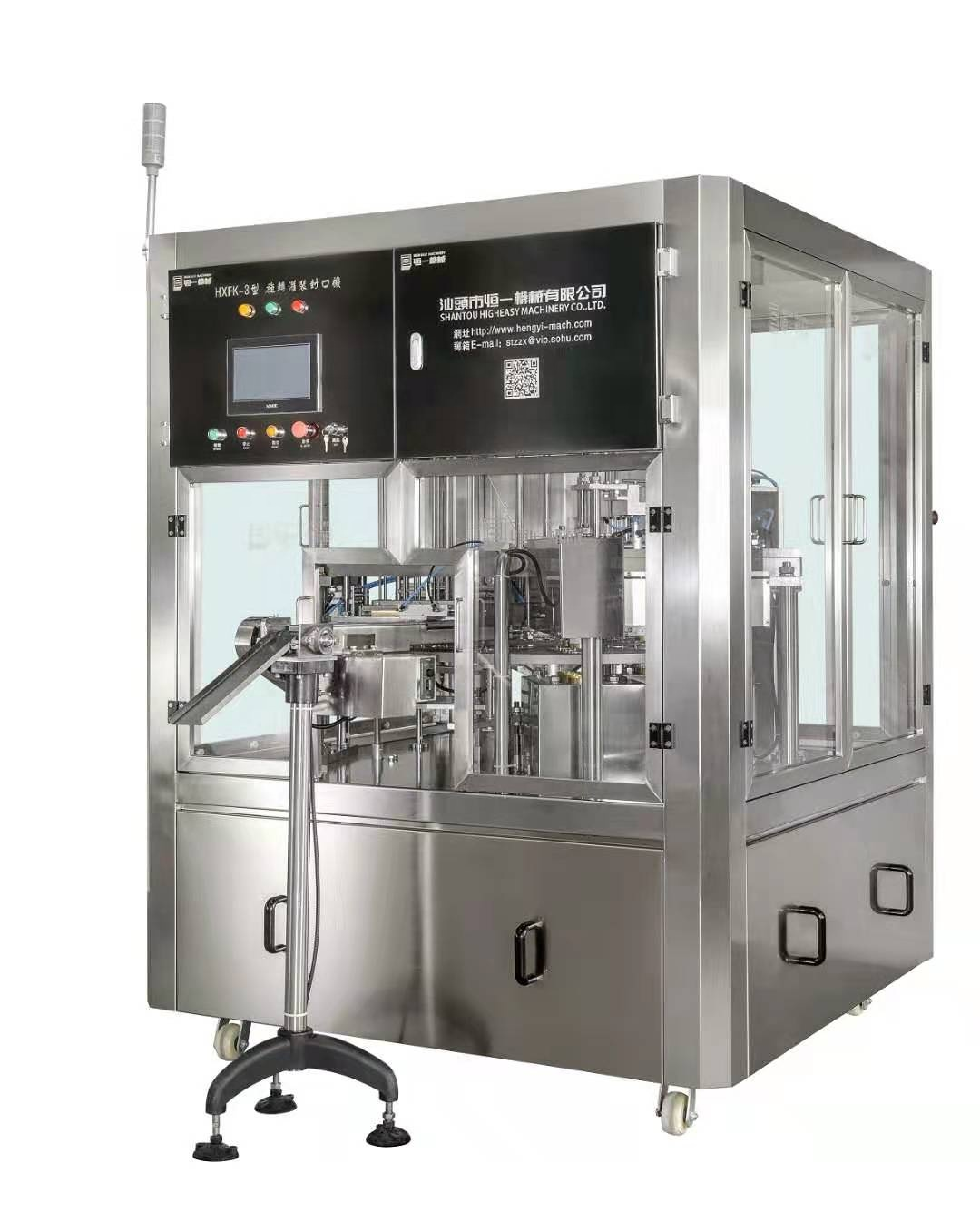
The newest models of drivers of cup filling and sealing technology for food packaging use dynamic pressure sealing to prevent leakage, even at different fill levels. This technology is adjustable and is able to be set to fill levels of each individual cup. This is achieved through the use of real time dynamic pressure of around 3 to 5 bars, which allows the sealing material to form a complete seal around the cup rim. This technology allows the user to even control fill levels within cup of plus or minus 1.5 milliliters. Too much pressure may cause the cup to warp or the sealing film to be damaged, whereas, too little pressure may cause gaps that may cause the contents of the cup to leakage. Over the last few years, a number of manufacturers have tested this dynamic pressure sealing technology, with some manufacturers reporting a 95% reduction of leakage. This sealing technology is especially important for manufacturers that produce high amounts of cup units, as it greatly reduces the number of complaints received.
Common Cup Films (PP, PET, Laminated Foil) Thermal Profile Optimization
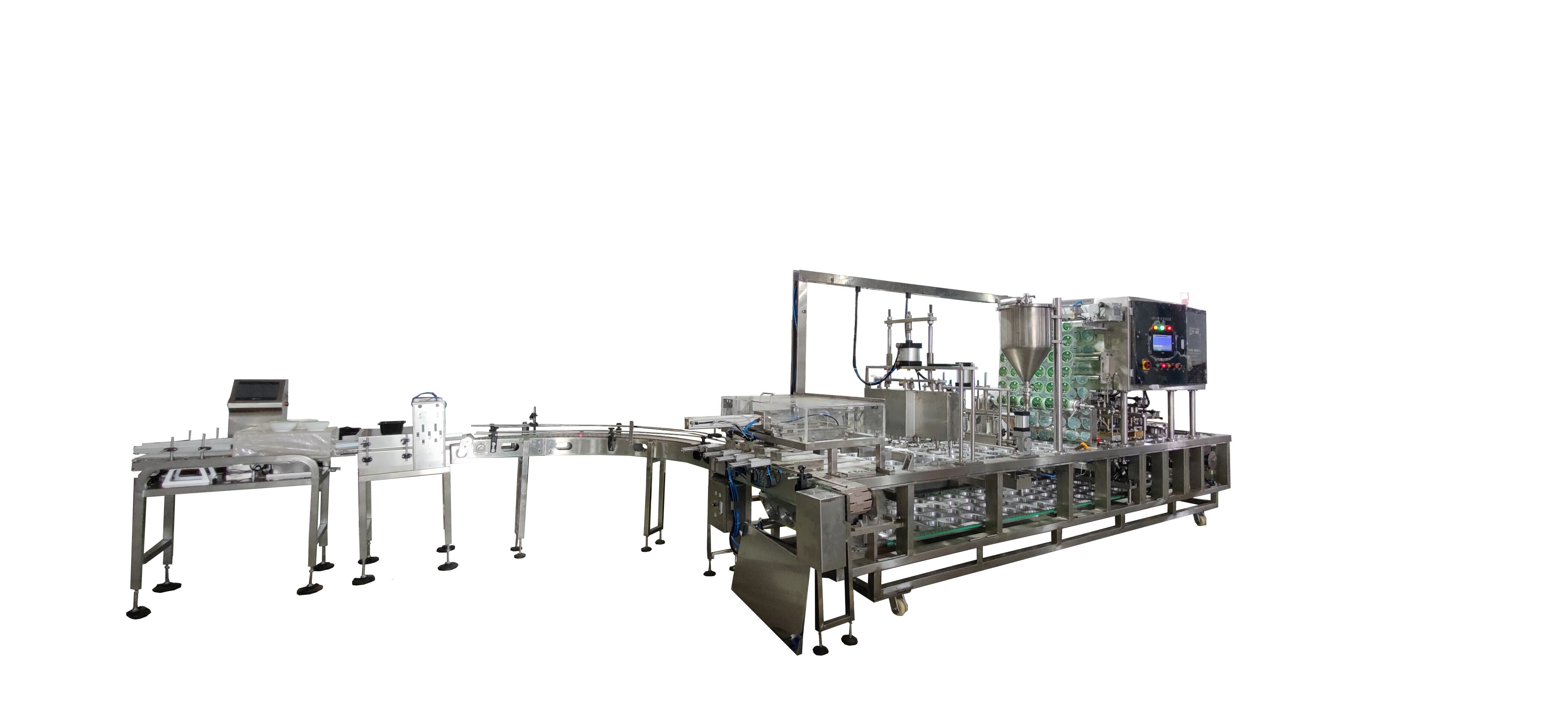
For optimal sealing on various types of materials, the thermal profile must be perfectly set. Polypropylene (PP) sealing requires thermal profiling set between 130-150 degrees Celsius, while PET sealing requires profiling set between 160-180 degrees. Laminated foils require temperature settings between 140-170 degrees. Other thermal settings must be carefully set to melt the sealing material without damaging the base material. Sealing systems are now Smart systems which means self-correcting via Artificial Intelligence. They self-correct by room temperature, thermal profile settings, thickness of the film, and time under the thermal profile. Because PET film sealing requires more time to melt and profile compared to PP which requires a quicker thermal profile adjustment. Therefore, these systems are set to speed up the profile setting for PP film and slow down the profile setting for PET film to self-correct profile settings for each. Therefore, the self-correcting systems have been designed to minimize or eliminate failure at bonding areas to prevent excessive material wastage. Over 99% of factories have success seals on 99% of their seals.
The Threshold Effect: Why Too Much Heat Or Pressure Weakens The Bond
When seals are pushed past certain limits, their strength drops off dramatically. An increase in pressure over 5 bar can crush the cup rims or create micro fractures in the film. With temperatures over 180 degrees celsius, the PET polymers break down, reducing the bond strength by 30-40 percent. What occurs at these threshold points? In simple terms, too much pressure pushes the molten sealing material away creating a gap. Too much heat causes the seals to start carbonizing which leads to less cohesive sealing layers. Industry studies suggest optimal conditions to achieve maximum tensile strength in polypropylene materials to be 4 bar pressure with 150 degrees celsius temperature. Most modern sealing machines are equipped with smart feedback systems to track parameters and automatically readjust seals to achieve less than 0.1% leak rate.
Cup Filling and Film Placement: Important Elements Before Sealing for Leak Protection
Impact of Fill Volume Tolerance Bands of Plus or Minus 1.5 mL on Seal Geometry
The optimal range of fill volume for ideal seal geometry is within 1.5 mL. Sealing area gets liquid then the polymers don’t fuse and we have those annoying micro leak paths. On the other hand, inadequate fill volume causes the film within the cavity to sag and weak points to form, which will break. Too full or too empty lead to increased thermal contact resistance and defective heat transfer. Industry data demonstrates that failure to comply with the tolerances lead to increase in the leakage rate in the range of 40% to 60%. The ideal fill volume is the one where materials, contact, and heat are optimally offered for the formation of the tight seals manufacturers strive for.
Film Size Matching: Wrinkles, Gaps, and Edge Lifts During Cup Filling Sealing Machine Use
The film ought to closely match the size of the cup, usually about a 0.3 mm margin. If the film is overly large, it will become wrinkled and will have air pockets that will reduce the sealing surface by about 25%. If the film is too small, the phenomenon of edge lift occurs, where the film is lifted away from the cup rim (made of polymer) due to a temperature-related change in tensile strength of the polymer, thus causing the film to droop away from the cup due to the polymer rim. The majority of new cup filling and sealing machines have laser measurement technology to assess this prior to each production cycle. The absence of a proper seal in the seal area becomes a point of entry for microbial contamination. Thus, the shelf life of the products is severely reduced.
Real-Time Quality Assurance: Leak Detection and Process Adjustment in Modern Cup Filling Sealing Machines
AI-Powered Vision Systems for Micro Weak Spot Detection (99.2% Sensitivity)
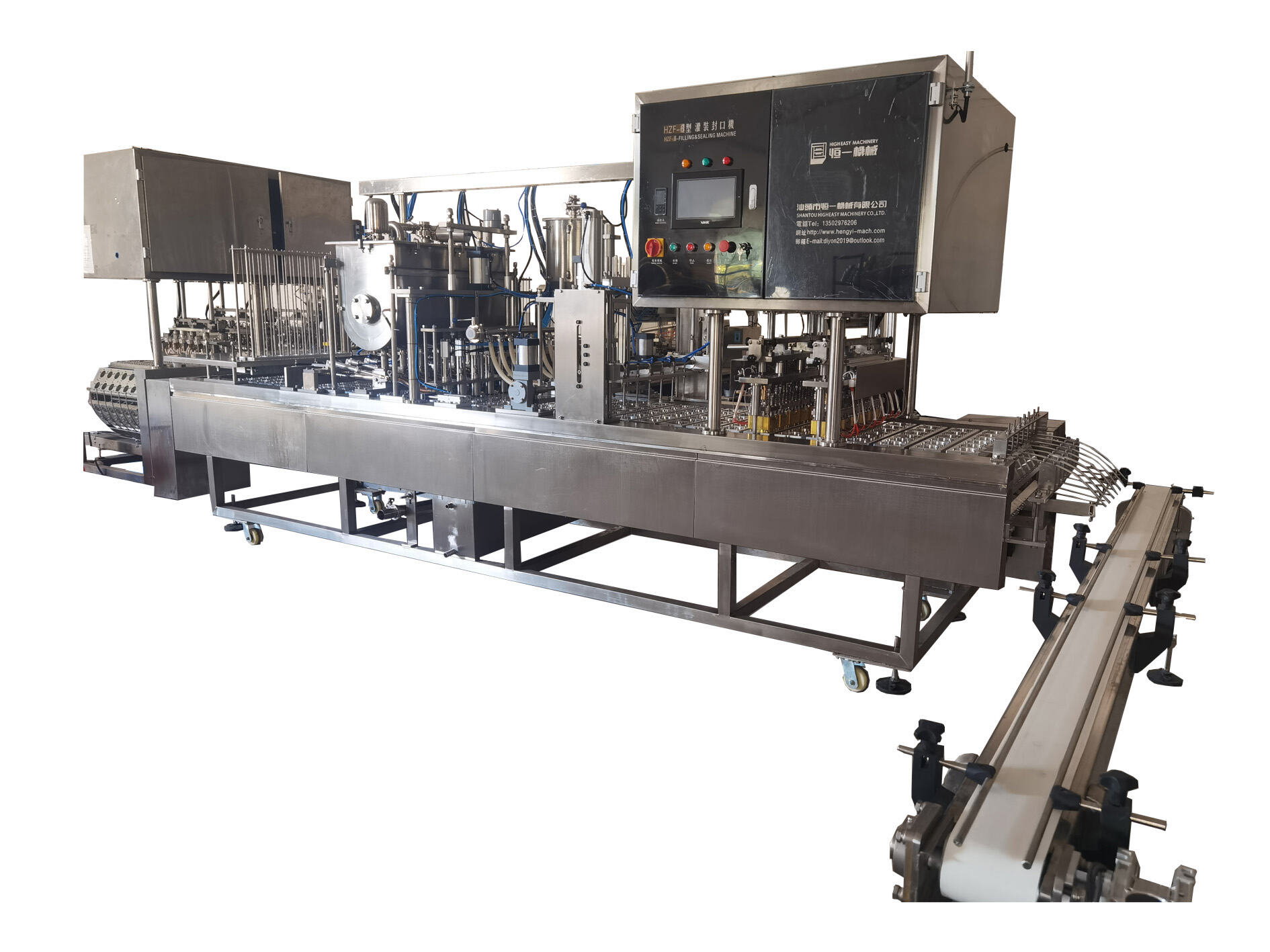
These AI vision systems examine a sealed cup at a rate higher than 200 frames per second and searches for smaller and smaller leaks (down to 5 microns) with almost 99% precision. Using poorly understood multi-spectral imaging, they locate weak areas in PP and PET plastic, and laminated foil seals, which are the areas even the most diligent operators miss. For larger problems, pressure decay sensors leak greater than 5 cubic centimeters per minute. Industry testing has shown this level works well enough to stop 98% of leaks. Once a fault is detected, the system is capable of removing defective cups in less than half a second.
Integrated feedback loops that automatically change sealing parameters with every batch.
Issues with sealing don't just take complaints and resolve themselves. In modern systems, closed loop control will fine-tune sealing parameters as new problems arise. This also drastically improves your control over temperature. With servo driven thermal regulation, we can go from temp control with a range of +/- 8 degrees Celsius to control within +/- 1.2 degrees Celsius. This high rate of temperature consistency is the reason why we can cover a large range of temperature sealing requirements. Real life examples back this up as one customer reported a 40% reduction in complaints post installation of this cooled thermal regulation system from that last year's Packaging Efficiency Report. It is the first time in history when a system can be adjusted 24/7 with no human intervention to capture and respond to data. For batch materials or disruptive worker shifts, the systems will maintain peak productivity.
FAQ
Q: What effect do adjustments of dynamic pressure have on the integrity of the seals?
A: Dynamic pressure adjustments make sure there is sufficient contact between the film and the cup rim that makes use of accommodating volume differentials to avoid leakage.
Q: What is the significance of thermal profile adjustments for the sealing?
A: The alteration of sealing temperatures as a function of material types are of great significance in avoiding seals that are too hot to handle as well as seals that do not seal at all.
Q: What is the importance of bands of tolerances for fill volume?
A: Bands of tolerances for fill volume ensure that there are no leaks by providing the sealing contact pressure to fall within the desired range.
Q: What are the benefits of the AI-assisted vision systems for leak detection?
A: AI-assisted vision systems offer the capability for real-time monitoring and the detection of weaknesses within the system and the ability to initiate a response within the system.
Table of Contents
- Dynamics of Pressure Calibration to Ensure Seal Integrity Across Fill Levels
- Common Cup Films (PP, PET, Laminated Foil) Thermal Profile Optimization
- The Threshold Effect: Why Too Much Heat Or Pressure Weakens The Bond
- Cup Filling and Film Placement: Important Elements Before Sealing for Leak Protection
- Integrated feedback loops that automatically change sealing parameters with every batch.
- FAQ