
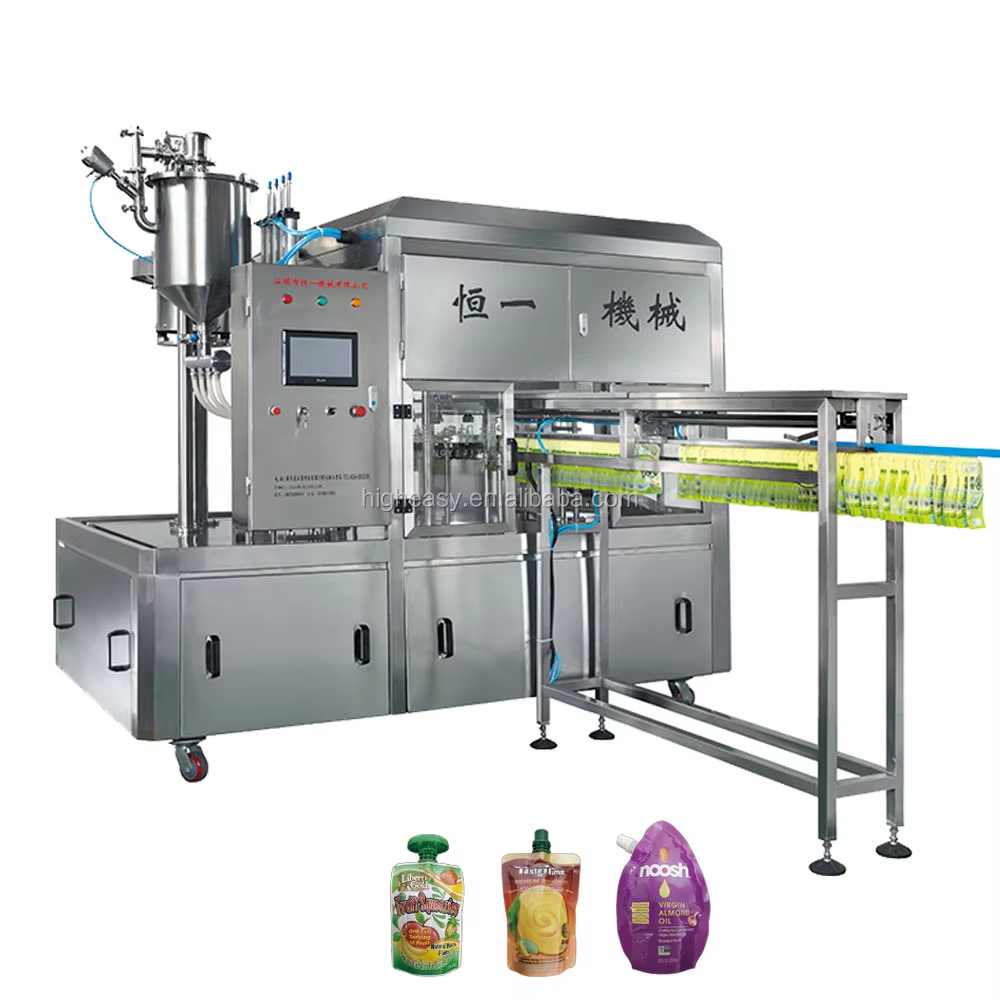
High-Speed Performance of Cup Filling Sealing Machines
Modern cup filling sealing machines deliver critical speed capabilities for snack producers. Throughput ranges vary significantly based on automation level and product requirements. Semi-automatic systems typically handle 400–500 cups/hour—ideal for small-scale operations prioritizing flexibility over volume. Fully automatic packaging systems achieve superior outputs, processing 500–650+ cups/hour in optimized snack production environments. Advanced models maintain consistent quality at speeds exceeding 300 cups/hour, supporting businesses from pilot batches to full commercial runs.
Throughput Range: From 60 to 300+ Cups/Hour in Modern Cup Filling Sealing Machines
Snack producers must align machine speed with both current production volumes and product characteristics. Key throughput distinctions by automation level are summarized below:
| Automation Level | Typical Output Range | Ideal Use Case |
|---|---|---|
| Semi-Automatic | 400–500 cups/hour | Small batches, frequent recipe changes |
| Fully Automatic | 500–650+ cups/hour | High-volume production with consistent products |
| Advanced Systems | 300+ cups/hour | Complex snacks requiring precision filling |
At peak output, high-speed machines sustain ±1% filling accuracy—preventing costly overfills while ensuring uniform portion control. Synchronized mechanisms reduce cycle times by up to 22% compared to traditional equipment, directly lowering labor costs per unit. When selecting a system, manufacturers should evaluate not only current peak demand but also realistic growth projections over the next 3–5 years.
How Automation and Line Integration Maximize Speed Without Compromising Control
Integrated automation transforms standalone cup filling sealing machines into cohesive, high-efficiency packaging lines. Servo-driven filling stations adjust volumetric settings in milliseconds between snack varieties—eliminating manual changeovers that typically cause 15–20 minutes of downtime. Precision indexing mechanisms position cups at rates exceeding 360 units/minute, while advanced sensors provide closed-loop feedback during sealing, detecting temperature fluctuations within ±1°C to ensure consistent seal integrity.
Predictive maintenance algorithms monitor critical components—including heating elements and servo drives—and alert technicians before failures occur, reducing unplanned downtime by up to 35% versus reactive approaches. Real-time data sharing across filling, sealing, and labeling stations prevents bottlenecks that can erode effective throughput by 18–22%. As a result, automated systems maintain defect rates below 0.4%, even at maximum rated speeds—a performance benchmark essential for shelf-stable and refrigerated snack applications.
Snack-Specific Adaptability of Cup Filling Sealing Machines
Handling Diverse Snack Types: Gels, Dry Mixes, and Refrigerated Ready-to-Eat Portions
Modern cup filling sealing machines accommodate extreme viscosity ranges—from thin gels and fruit purees to thick hummus and particulate-laden dry mixes. Dynamic flow control systems preserve ±1% fill accuracy regardless of rheology, eliminating underfills in low-viscosity items and air pockets in dense preparations. For refrigerated ready-to-eat (RTE) snacks, integrated chill zones maintain a precise 2–4°C environment during filling to uphold food safety without compromising line speed.
Hygienic design is non-negotiable for temperature-sensitive products: fully stainless steel contact surfaces, CIP/SIP compatibility, and smooth, crevice-free construction minimize microbial risks and support compliance with FDA and EU hygiene standards.
Adjustable Cup Size, Fill Volume, and Recipe Switching for Multi-SKU Snack Lines
Leading cup filling sealing machines enable rapid, tool-free changeovers—switching between 50 mL dessert cups and 500 mL meal containers in under five minutes. Digital recipe management stores 50+ SKU configurations, each defining fill volumes (5–5000 g), sealing parameters, conveyor speeds, and cooling profiles. This agility supports short-run, seasonal, or limited-edition snack production without sacrificing efficiency.
Modular architectures allow seamless integration of features like multi-compartment filling (e.g., yogurt + granola layers) or inline weight verification—scaling capability without full line overhauls or extended commissioning timelines.
Seal Integrity and Material Compatibility at High Speed
Hot-Forming vs. Pre-Cut Lid vs. Induction Sealing: Trade-offs in Speed and Shelf-Life Assurance
For snack producers operating at high speed, sealing technology critically influences both throughput and shelf-life assurance. Hot-forming integrates lid forming and sealing into one step—maximizing speed—but demands precise thermal control to avoid weak seals or leaks. Pre-cut lid sealing offers faster format changes and highly repeatable seal quality, making it ideal for multi-SKU lines where consistency outweighs marginal speed gains. Induction sealing delivers superior hermeticity for extended ambient shelf life but adds electromagnetic cycle time, limiting its use to applications where barrier performance is paramount.
| Sealing Method | Speed (relative) | Shelf-Life Assurance | Common Snack Application |
|---|---|---|---|
| Hot-Forming | High | Moderate | Yogurt, gelatin desserts |
| Pre-Cut Lid | Medium-High | High | Ready-to-eat puddings, fruit cups |
| Induction | Medium | Very High | Shelf-stable, high-moisture snacks |
The optimal choice depends on the snack’s moisture activity, target distribution channel (refrigerated vs. ambient), and required shelf life. For example, pre-cut lid systems balance speed and reliability for refrigerated RTE snacks, whereas induction is preferred for ambient-stable, high-barrier applications like nut butter or dairy-free dips.
Key Selection Criteria for Snack Producers Investing in Cup Filling Sealing Machines
Snack producers face critical decisions when investing in cup filling sealing machines—balancing throughput needs against operational flexibility, regulatory compliance, and long-term cost of ownership. Key evaluation criteria include:
- Production Volume Alignment: Match machine speed (400–650+ cups/hour) to current output and credible 3–5 year growth forecasts—avoiding underutilization or line bottlenecks
- Material Compatibility: Confirm the machine handles both current packaging formats (e.g., PET, PP) and emerging sustainable alternatives such as certified compostable films or mono-material laminates
- Changeover Efficiency: Prioritize systems with tool-free adjustments, digital recipe memory, and modular tooling to minimize downtime between SKUs
- Seal Integrity Assurance: Assess sealing technology against the snack’s specific barrier, microbiological, and shelf-life requirements—not just speed metrics
- Total Cost Analysis: Evaluate ROI beyond purchase price—factoring in energy consumption, maintenance frequency, consumable costs (lids, films, cleaning agents), and predictive maintenance readiness
Industry data shows 32% of packaging line downtime stems from poorly matched equipment specifications (Packaging Digest, 2023), underscoring the value of rigorous technical vetting. Leading snack manufacturers increasingly adopt modular cup filling sealing machines with embedded predictive maintenance and FSMA 204–compliant traceability—reducing unplanned stoppages by up to 40% and strengthening audit readiness for ready-to-eat refrigerated products.
FAQs
Q: What is the typical output range for cup filling sealing machines?
A: Semi-automatic systems handle 400–500 cups/hour, fully automatic systems achieve 500–650+ cups/hour, and advanced models support speeds exceeding 300 cups/hour for more complex applications.
Q: How do cup filling sealing machines maintain product quality at high speeds?
A: Features like servo-driven filling stations, precision indexing mechanisms, and advanced temperature sensors ensure consistent filling accuracy (±1%) and seal integrity at maximum rated speeds.
Q: What types of snacks can these machines handle?
A: These machines are versatile, accommodating thin gels, thick hummus, fruit purees, dry mixes, and refrigerated ready-to-eat snacks, among others.
Q: What sealing technologies are available, and how do they differ?
A: Options include hot-forming (high speed, moderate shelf life), pre-cut lids (medium-high speed, high reliability), and induction sealing (medium speed, very high hermeticity for extended shelf life).
Q: What are the key factors to consider when selecting a cup filling sealing machine?
A: Evaluate production volume alignment, material compatibility, changeover efficiency, seal integrity, and total cost of ownership.